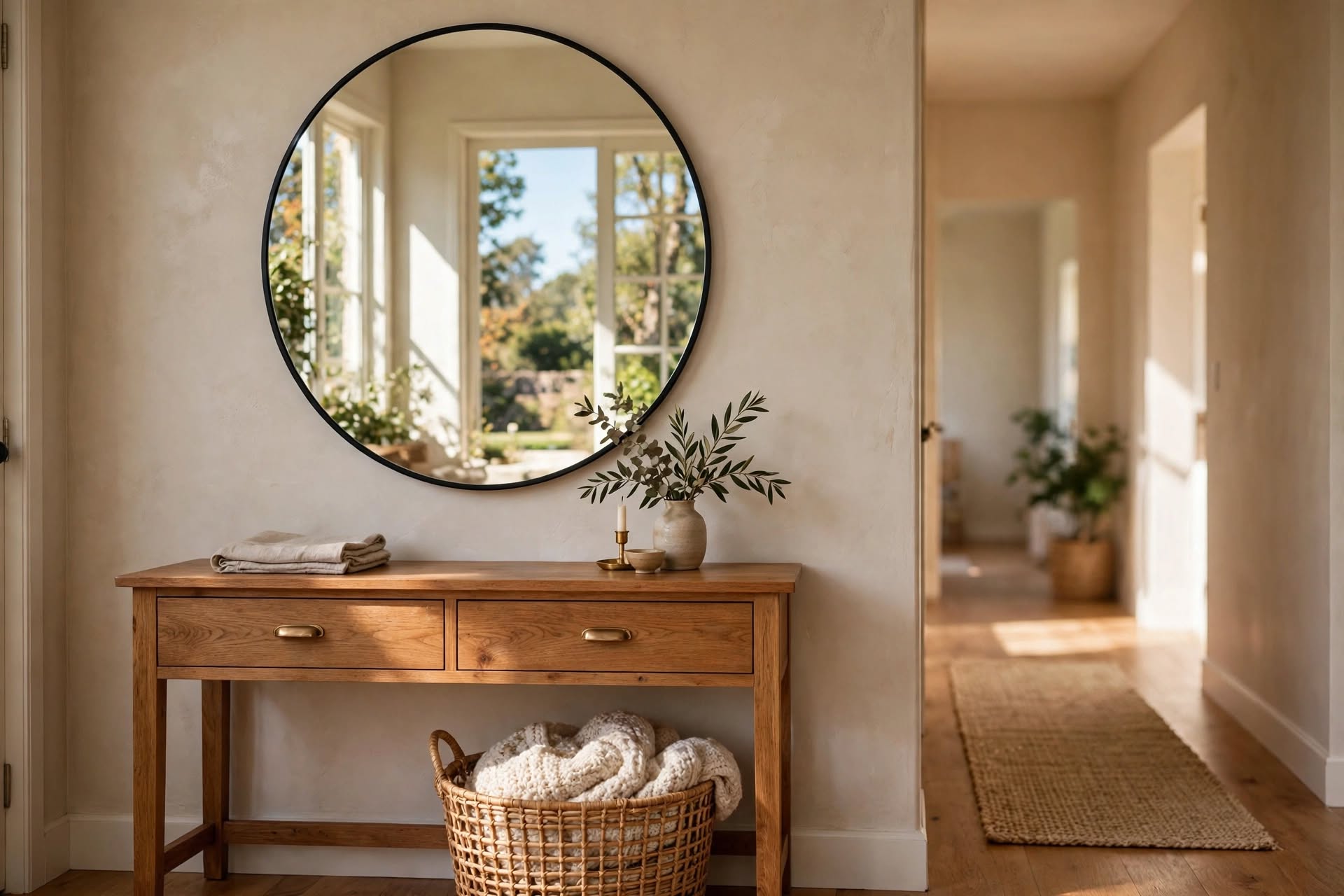
An entryway is a small space with an unusually important job. It welcomes you home, gives guests their first impression of your interior, and quietly handles the everyday chaos of shoes, coats, keys, bags, and everything else that comes through the front door.

Yet it is often the last area to receive any decorating attention.
A hallway may be narrow, dark, awkwardly shaped, or barely large enough for two people to pass each other. That does not mean it has to feel forgotten. With thoughtful furniture, useful storage, warm lighting, and a few carefully chosen decorative details, even a very small entrance can feel inviting and beautifully put together.
The secret is not to fill every available corner. It is to give each element a purpose while creating a look that feels connected to the rest of your home.
Whether you have a spacious foyer or a tiny apartment entrance, these 15 beautiful entryway ideas will help you create a stylish first impression without sacrificing everyday practicality.
1. Create a Welcoming Console Table
A console table can give an entryway an immediate sense of structure. It creates a place for everyday essentials while providing a surface for a few decorative objects.
The best choice depends on the available space.
In a narrow hallway, look for a slim console with a shallow profile. A wall-mounted shelf can provide a similar effect when there is not enough room for freestanding furniture. In a larger entrance, a wooden console with drawers offers more storage and creates a stronger visual focal point.
Style the surface with a simple arrangement:
- A small ceramic bowl for keys.
- A vase with fresh or dried branches.
- A table lamp or compact decorative light.
- One framed photograph or piece of artwork.
The trick is to leave some empty space. A console covered in small accessories quickly becomes another place where clutter collects.
For a cohesive look, choose materials that appear elsewhere in your home. Natural oak, walnut, aged brass, ceramic, and stone all work particularly well in warm, understated interiors.
Small entryway tip: If a console makes the walkway feel cramped, replace it with a floating shelf. You will keep the decorative effect without taking up valuable floor space.
2. Add a Large Mirror to Reflect Light
A mirror is one of the most useful decorative elements in an entryway. It provides a practical place for a final check before leaving while reflecting light and creating a greater sense of space.
The shape can influence the overall mood.
A round mirror softens an interior with straight lines and rectangular furniture. A tall rectangular mirror creates a more formal, architectural appearance. An arched mirror adds a gentle decorative detail that works especially well with traditional, Mediterranean, and contemporary interiors.
Placement matters as much as shape.
A mirror above a console table creates a familiar, balanced arrangement. A full-length mirror mounted on a wall or placed securely against it can be more useful in a dressing-style entrance.
If the hallway has a window or receives natural light from an adjoining room, position the mirror where it can reflect that light into the darker part of the space.
Avoid placing it where it reflects an unattractive storage area or an untidy corner. A mirror does not just make a room feel larger; it also draws attention to whatever appears in its reflection.
Styling idea: Pair a large round mirror with a simple wooden console, a textured ceramic vase, and a small lamp for a welcoming, timeless arrangement.
3. Use Stylish Storage Baskets to Hide Everyday Clutter
An attractive entryway still needs to function on busy mornings. Shoes, scarves, gloves, shopping bags, and seasonal accessories need somewhere to go.
Storage baskets offer a simple way to keep these items accessible without making the hallway look like a storage room.
Woven seagrass, rattan, water hyacinth, and natural cotton baskets introduce texture and warmth. For a more contemporary look, choose structured fabric baskets or simple lidded containers.
Give each basket a clear purpose:
- One for everyday shoes.
- One for scarves, hats, and gloves.
- One for reusable shopping bags.
- One for miscellaneous accessories.
Place them under a console table or beside a bench, leaving enough room to move comfortably.
For a more polished appearance, choose baskets in similar colors and materials rather than mixing too many different styles.
Keep in mind that woven baskets are not always ideal for wet footwear. Shoes should be allowed to dry before being stored, and a washable shoe tray can be a better solution for muddy or snowy conditions.
Small entryway tip: Two or three baskets that fit neatly beneath existing furniture are often more useful than a large storage unit that dominates the room.
4. Incorporate Natural Materials for Warmth and Texture
An entryway can feel cold when it contains only painted walls, hard flooring, and metal fixtures. Natural materials help soften the space and make it feel more connected to the rest of the home.
Wood, stone, rattan, linen, ceramic, and woven fibers each bring a different kind of texture.
A wooden bowl on a console table adds an organic detail. A rattan basket introduces a relaxed, natural finish. A stone or ceramic vase gives the arrangement a little weight and contrast.
You do not need to use all these materials at once.
A simple combination of warm wood, textured ceramics, and one woven accessory is often enough.
For a modern rustic entryway, try oak furniture with a stoneware vase and a natural fiber runner. For a more contemporary look, combine smooth wood with black metal details and a softly textured wall finish.
The aim is to create contrast without visual clutter.
Design tip: Repeat one or two natural materials in nearby rooms. This helps the entryway feel like part of a complete interior rather than a separate decorative project.
5. Choose Statement Lighting That Makes the Entrance Feel Special
Lighting can change the entire atmosphere of an entryway.
A basic ceiling fixture may provide enough illumination, but a thoughtfully selected pendant, chandelier, or wall sconce can make the entrance feel more considered.
The fixture should suit the scale of the space.
In a large foyer, a sculptural pendant or chandelier can become a focal point. In a narrow hallway, a compact flush-mount fixture or a series of wall sconces may be more practical.
Warm white lighting generally creates a welcoming atmosphere. The exact color temperature should complement the finishes and lighting used in the adjoining rooms.
Consider layering the light:
- A ceiling fixture provides general illumination.
- A table lamp adds a softer glow near the console.
- Wall sconces help illuminate darker sections of a long hallway.
- Motion-activated lighting can be useful near entrances and storage areas.
Pay attention to ceiling height and door clearance when choosing a pendant. A beautiful fixture should never become an obstacle.
Styling idea: A glass globe pendant with warm metal details looks particularly elegant with natural wood, neutral walls, and a large mirror.
6. Add Fresh Green Plants
Plants can make an entryway feel more alive, but the right choice depends on how much natural light the space receives.
A bright entrance with indirect sunlight may accommodate several different houseplants. A darker hallway needs more careful selection or an alternative decorative approach.
Some options to consider include:
- Pothos: A trailing plant that works well on a shelf or console.
- Snake plant: An architectural plant with upright leaves that can suit a compact corner.
- ZZ plant: Often chosen for its ability to tolerate lower-light conditions, although it still needs appropriate care.
- Cast-iron plant: A useful option for some lower-light interiors.
- Peace lily: A leafy option for suitable bright, indirect-light conditions.
Remember that low-light tolerant does not mean no-light tolerant. Plants still need appropriate light, water, and care.
If the entrance receives very little daylight, a realistic high-quality artificial plant may be a better decorative choice than a struggling live one.
Choose a planter that complements the interior. Terracotta adds a rustic touch, textured ceramic feels more refined, and a simple woven basket can create a relaxed natural look.
One well-placed plant is often more effective than several small pots competing for attention.
7. Create a Gallery Wall That Tells a Story
An empty entryway wall offers an opportunity to introduce personality.
A gallery wall can display family photographs, illustrations, vintage prints, landscapes, or artwork collected over time. It turns a simple hallway into a space with a more personal character.
There are several ways to arrange the frames.
A symmetrical arrangement creates a neat, traditional appearance. Choose frames of similar sizes and align them carefully.
An eclectic gallery wall combines different frame sizes and artwork styles. It feels more collected and relaxed, but benefits from a common element such as a consistent color palette.
A single oversized artwork is a good alternative when the hallway is narrow or when a large gallery arrangement would feel too busy.
Before hanging anything, arrange the frames on the floor or make paper templates to test the composition.
Use artwork that relates to the colors and style of the rest of the home. Black-and-white photography, muted landscapes, botanical illustrations, and abstract prints all work well in neutral interiors.
The result should feel personal rather than like a collection of unrelated decorations.
8. Use a Decorative Rug or Runner to Define the Space
An entryway rug adds texture, introduces color, and helps visually define the transition between the outside world and the interior.
In a long hallway, a runner can make the space feel more connected. In a square entrance, a small rectangular or round rug may work better.
The size is important.
A runner should leave some visible flooring along its sides rather than filling the entire width of the corridor. It should also avoid interfering with door movement.
Choose a material that suits the amount of traffic.
- Flatweave rugs are often practical for busy entrances.
- Washable rugs can make cleaning easier.
- Wool offers a soft, natural texture.
- Durable synthetic fibers may be suitable for areas exposed to frequent dirt.
A non-slip backing or suitable rug pad is important, particularly on smooth flooring.
For the design, consider muted geometric patterns, vintage-inspired motifs, subtle stripes, or natural earthy colors.
A patterned runner can become the main decorative feature of an otherwise simple hallway. If the space already contains a gallery wall, patterned wallpaper, and several decorative objects, a quieter rug may create a better balance.
9. Install Wall Hooks for Everyday Convenience
Coats and bags need a convenient place to hang. Without suitable storage, they quickly end up on chairs, door handles, or the nearest available surface.
Wall hooks are a simple solution that can look decorative as well as practical.
Choose a style that suits the interior:
- Matte black hooks for a modern industrial look.
- Brass hooks for a warmer, more traditional finish.
- Wooden pegs for Scandinavian and rustic interiors.
- Minimalist metal hooks for contemporary spaces.
Think about who will use them.
A family entrance may benefit from hooks installed at different heights, allowing children to reach their own coats. A guest entrance may need a separate row of hooks for visitors.
If several coats will hang in the same area, leave enough space between hooks to prevent everything from becoming tangled.
Check the wall construction before installation and use suitable fixings for the weight of the items being hung.
Small entryway tip: A short row of attractive hooks above a narrow shoe cabinet can provide useful storage without requiring a separate coat stand.
10. Add a Bench That Makes Getting Ready Easier
A bench can make an entryway feel more comfortable while providing a practical place to sit when putting on or removing shoes.
It is especially useful in family homes, where several people may need to get ready at the same time.
The right design depends on the available space.
A storage bench combines seating with space for shoes, baskets, or seasonal accessories.
A slim upholstered bench introduces softness and works well in a more decorative entrance.
A built-in bench can make excellent use of an awkward alcove or unused wall.
A simple wooden bench offers a timeless look and can be styled with a cushion for extra comfort.
If the hallway is narrow, choose a compact model that does not obstruct the main walking route. Avoid oversized cushions and decorative pillows that take up valuable seating space.
For a cohesive arrangement, place the bench beneath a gallery wall or beside a row of coat hooks.
A bench is not just another piece of furniture. It creates a small pause in the daily routine — a place to sit, take off your shoes, and settle in.
11. Keep the Color Palette Calm and Cohesive
The colors in an entryway influence how the rest of the home feels when someone walks through the door.
Neutral colors are popular because they create a calm background for furniture, artwork, and natural materials. But a neutral interior does not have to look plain.
The key is to combine different tones and textures.
Here are three palettes worth considering:
Warm and natural
- Warm white walls.
- Natural oak furniture.
- Beige or oatmeal textiles.
- Soft brown accents.
- A little muted green.
This palette creates a relaxed, welcoming atmosphere.
Modern and sophisticated
- Soft greige walls.
- Dark wood or walnut furniture.
- Matte black details.
- Cream accessories.
- Subtle brass accents.
This combination feels polished without becoming overly formal.
Soft Scandinavian
- Pale warm-gray or off-white walls.
- Light wood.
- Natural linen.
- Muted sage green.
- Simple black or brushed-metal details.
This palette works particularly well in smaller spaces where a visually light interior is desirable.
Before choosing paint, test samples in the actual hallway. Colors can appear different under daylight, warm artificial lighting, and reflected light from adjoining rooms.
If the entryway is dark, very cool gray tones may feel unwelcoming. Warmer whites and soft neutrals can help create a gentler impression.
12. Refresh the Entryway With Seasonal Decor
Seasonal decorations are an easy way to refresh an entryway without changing its main furniture or color scheme.
The most effective approach is to keep the basic design consistent and update just a few small details.
In spring, a vase of tulips, fresh branches, or a simple botanical print can introduce a lighter feel.
In summer, natural textures, a bowl of lemons, or a small arrangement of greenery can create a fresh appearance.
In autumn, consider dried grasses, warm-toned foliage, a ceramic pumpkin, or a textured runner.
In winter, evergreen branches, subtle fairy lights, and natural pinecones can make the entrance feel festive without overwhelming it.
The important thing is to avoid turning every season into a complete decorating project.
A single vase, a small tray, or a seasonal wreath may be enough.
Choose decorations that fit the available space and can be stored easily when the season changes.
13. Make the Most of Vertical Space
When floor space is limited, the walls become especially valuable.
Vertical storage can make a small entryway more functional without filling it with bulky furniture.
Consider these options:
- Floating shelves for keys and small accessories.
- Tall, narrow cabinets for shoes and seasonal items.
- Wall-mounted coat rails.
- Hooks installed above a bench.
- High shelves for items that are not needed every day.
A tall storage unit can use an otherwise empty wall, but it should not make the hallway feel enclosed.
Choose furniture with a shallow depth where possible, and keep frequently used items within comfortable reach.
Vertical space can also be used decoratively. A tall mirror, a vertical artwork arrangement, or a narrow wall sconce can draw the eye upward and create a greater sense of height.
Small entryway tip: A combination of a floating shelf, a few wall hooks, and a compact shoe cabinet may provide more useful storage than a traditional console table.
14. Add a Decorative Tray to Organize Small Essentials
Keys, sunglasses, coins, lip balm, and other small everyday objects can quickly make a console table look untidy.
A decorative tray gives these items a defined place.
It also creates a simple visual arrangement by grouping several small objects together.
Choose a tray that complements the furniture:
- Marble or stone for a refined look.
- Wood for a natural interior.
- Brass for a warmer decorative accent.
- Ceramic for a softer, more handcrafted appearance.
- Black metal for a contemporary style.
Keep the contents limited to items that are genuinely useful near the entrance.
A small dish for keys, a compact container for loose change, and perhaps one decorative object are usually enough.
Avoid turning the tray into a miniature storage box for everything that has no other home.
If the console is very small, a wall-mounted key holder or a narrow shelf may be a more practical alternative.
15. Keep the Entryway Clean, Clear, and Easy to Maintain
The most beautiful entryway can quickly lose its appeal if everyday clutter takes over.
A practical organization system is more effective than relying on occasional large decluttering sessions.
Start by deciding what genuinely belongs near the front door.
Everyday shoes, frequently used coats, keys, bags, and weather-related accessories may deserve a place there. Items used only occasionally can be stored elsewhere.
A simple daily routine helps maintain order:
- Return shoes to their designated storage.
- Hang coats and bags instead of leaving them on furniture.
- Put keys back in the same bowl or tray.
- Remove unwanted mail and packaging.
- Wipe down surfaces when needed.
- Check baskets regularly so they do not become hidden clutter collectors.
It is also worth considering the practical details that are easy to overlook.
A washable mat can protect the floor from dirt. A shoe tray can collect water and mud. A small cleaning brush or cloth stored nearby makes it easier to deal with everyday mess.
An entryway should not look perfect only when nobody is using it. It should remain attractive while supporting the routines of the people who live there.
How to Make a Small Entryway Look More Expensive
You do not need a large foyer or an expensive renovation to create a polished entrance.
A few thoughtful choices can make a surprisingly big difference.
Choose fewer, better-looking pieces. A slim wooden console, an attractive mirror, and one beautiful lamp can look more refined than a collection of unrelated accessories.
Repeat materials. Matching wood tones, similar metal finishes, and consistent textiles create a more intentional appearance.
Use warm lighting. A well-chosen light fixture can make even a plain hallway feel more inviting.
Hide everyday clutter. Closed storage and attractive baskets help keep the space visually calm.
Pay attention to small details. Door hardware, light switches, hooks, frames, and handles all contribute to the overall impression.
Leave breathing room. Empty space is not wasted space. It allows the furniture and decorative objects to stand out.
A stylish entryway is rarely about how much you buy. It is about choosing the right things and giving them enough room to work.
Final Thoughts: Make Your Entryway Feel Like Home
An entryway may be one of the smallest areas in a home, but it sets the tone for everything that follows.
It does not need an elaborate makeover or a collection of expensive furniture. Sometimes a mirror that reflects the afternoon light, a bench that makes everyday routines easier, or a simple wooden console is enough to change the atmosphere.
Start with the practical needs of the space. Give shoes, coats, bags, and keys a proper home. Then add the details that make the entrance feel personal: natural materials, soft lighting, artwork, greenery, and a rug that brings everything together.
The best entryways are not simply beautiful in photographs. They are welcoming on ordinary mornings, useful on rainy evenings, and comfortable to return to after a long day.
Because a first impression matters.
But the feeling of coming home matters even more.