
A modern kitchen should do more than look beautiful in photographs. It should make everyday routines easier, provide enough room to cook comfortably, and create an atmosphere that makes people want to gather around the table.
The best kitchen designs balance clean lines with warmth, practical storage with attractive details, and modern materials with elements that make a space feel personal. You don’t necessarily need a complete renovation to achieve that look. Sometimes, a new lighting scheme, updated cabinet hardware, or a better use of vertical space can make a surprising difference.
Whether you’re planning a full kitchen makeover or looking for a few manageable updates, these 21 modern kitchen ideas offer inspiration for creating a space that feels fresh, functional, and welcoming.
1. Choose a Warm Neutral Color Palette
White, beige, soft gray, and warm wood tones remain popular choices for modern kitchens because they create a calm foundation that works with many different styles.
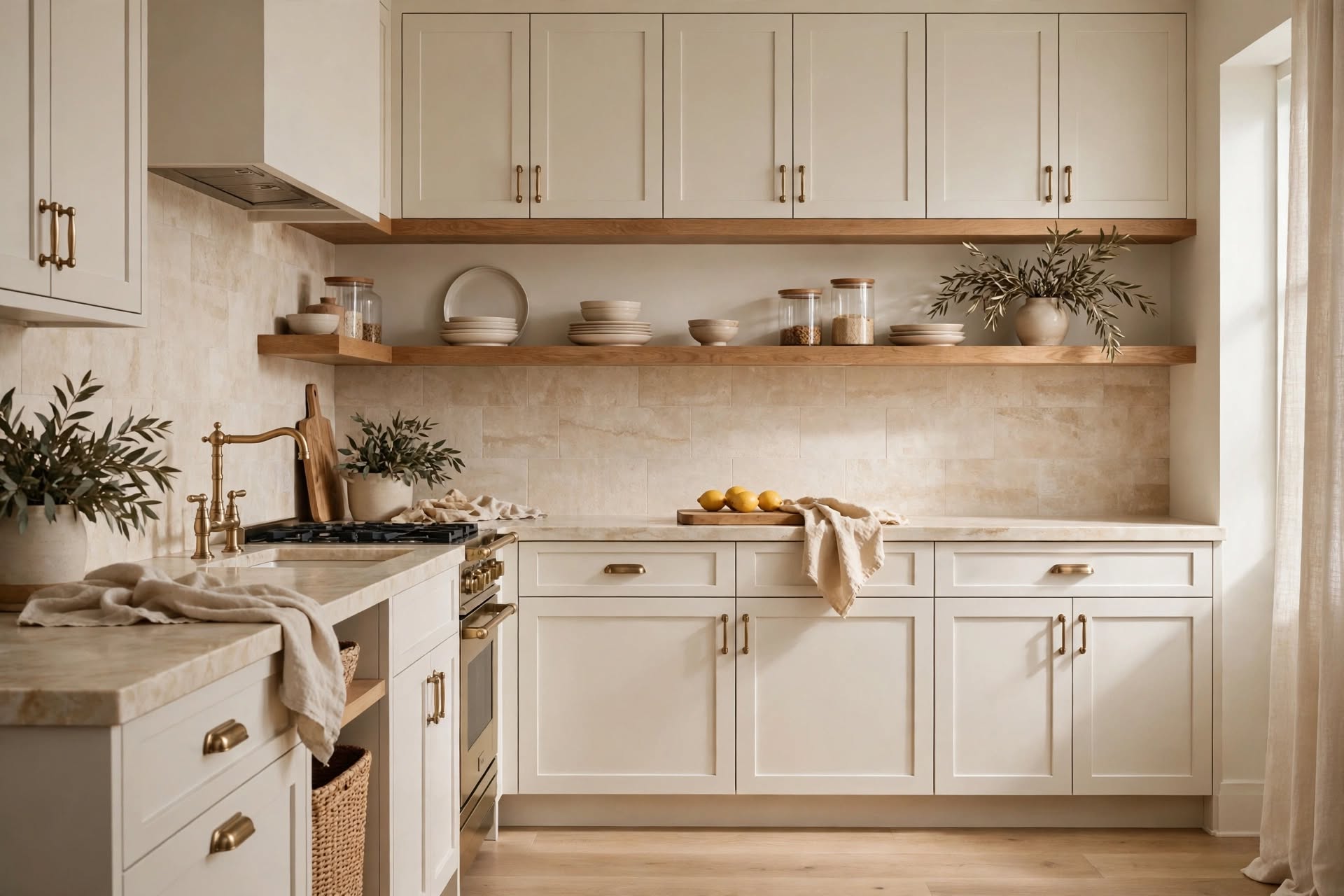
However, a neutral kitchen doesn’t have to feel plain. The secret is to combine shades with different undertones and textures. Warm white cabinets, a creamy stone countertop, natural oak shelves, and brushed brass details can create depth without introducing too many competing colors.
For a more contemporary appearance, consider greige, mushroom, or soft taupe cabinetry. These shades offer more warmth than traditional cool gray while remaining easy to coordinate with other finishes.
Design tip: If your kitchen receives limited natural light, choose warm, light-reflective finishes rather than several dark surfaces. Test paint samples in the room at different times of day before committing.
2. Add Under-Cabinet Lighting
Good kitchen lighting is about more than choosing an attractive pendant. The work surfaces need to be properly illuminated, especially in areas where overhead cabinets create shadows.
Under-cabinet LED lighting provides direct illumination across countertops, making food preparation easier while adding a soft layer of ambient light.
Warm-white LEDs can make wood and natural stone look inviting, while dimmable options allow the atmosphere to change from bright morning preparation to relaxed evening dining.
For a polished finish, hide the LED strips behind a discreet channel or diffuser so that the light appears continuous rather than dotted.
Design tip: Choose lighting with a color temperature that complements your other fixtures and finishes. If possible, use a high color-rendering option so food and materials look more natural.
3. Install Open Shelving
Open shelving gives a modern kitchen a lighter, more relaxed appearance. It can also provide convenient access to frequently used dishes, glasses, and everyday essentials.
Natural wood shelves work particularly well against white, cream, or muted green walls. For a more industrial look, consider slim black metal brackets or a combination of wood and metal.
The key is to treat open shelving as both storage and display. Arrange frequently used items together, keep the color palette relatively consistent, and leave some empty space between objects.
You don’t need to display every plate and mug you own. A few stacked dishes, a ceramic bowl, a glass jar, and a small plant can be enough.
Design tip: Open shelves are best for items that are used regularly or easy to keep clean. Store less attractive equipment and rarely used kitchenware behind closed cabinet doors.
4. Bring in Natural Wood Accents
Wood is one of the easiest ways to soften a modern kitchen. It introduces warmth, texture, and a natural contrast to smooth stone, glass, and metal surfaces.
You can incorporate it through oak cabinet fronts, walnut shelves, a wooden island, bar stools, or smaller accessories such as cutting boards and serving bowls.
For a balanced appearance, repeat the same wood tone in two or three places rather than introducing several unrelated finishes.
Light oak creates an airy Scandinavian-inspired atmosphere, while walnut and darker timber add richness and contrast.
Design tip: If your cabinets are white or gray, a natural wood island or a pair of wooden shelves can become the visual element that makes the whole room feel more welcoming.
5. Make the Backsplash a Design Feature
A backsplash doesn’t have to disappear into the background. In a modern kitchen, it can become one of the most distinctive elements in the room.
Classic subway tiles remain versatile, but there are many other possibilities: handmade-look ceramic tiles, vertical stacked tiles, geometric patterns, natural stone, and full-height slab backsplashes.
A green herringbone pattern can introduce color without overwhelming neutral cabinets. Large-format stone creates a quieter, more seamless appearance, while textured tiles add character to a simple kitchen.
Consider how the backsplash relates to the countertop and cabinet color. These surfaces should work together rather than compete for attention.
Design tip: A full-height backsplash behind the cooking area or countertop can create a more unified appearance. Check the material’s maintenance requirements and suitability for its intended location before choosing it.
6. Create a Dedicated Coffee Station
A small coffee station can turn an unused kitchen corner into a functional and attractive part of the room.
Start with a convenient countertop area or a dedicated cabinet section. Add a coffee machine or pour-over setup, a few mugs, storage for coffee supplies, and perhaps a small shelf for accessories.
If counter space is limited, wall-mounted shelves or a compact coffee cabinet can keep everything organized without taking over the kitchen.
For a cohesive look, repeat materials and colors already used elsewhere in the room. A wooden tray, ceramic mugs, and a small framed print can make the corner feel intentional.
Design tip: Keep the coffee station close to an appropriate power outlet and away from areas where splashing water or cooking activity could create problems.
7. Add Comfortable Seating to the Kitchen Island
A kitchen island can serve several purposes: additional preparation space, informal dining area, homework station, and a natural place for conversation.
The right bar stools make it more inviting. Upholstered seats add comfort, woven designs introduce texture, and simple wood or metal frames suit a more minimalist interior.
Before choosing stools, check the island’s height, available knee clearance, and the space needed to move around each seat. The number of stools should reflect the actual width of the seating area rather than simply filling every available space.
Design tip: If you want a softer, more relaxed kitchen, try woven seats or warm wood finishes instead of matching every detail to the cabinets.
8. Incorporate Greenery and Fresh Herbs
Plants bring life into a kitchen and create a natural contrast with hard surfaces such as stone, tile, and stainless steel.
A windowsill herb garden is both decorative and practical. Basil, rosemary, thyme, and mint can provide fresh ingredients while adding color to the room.
If your kitchen has limited natural light, choose plants suited to its conditions rather than relying on appearance alone. Pothos and certain other adaptable houseplants may work in suitable locations, while many culinary herbs need several hours of direct sunlight.
Use simple ceramic pots, terracotta containers, or a narrow planter to keep the arrangement visually consistent.
Design tip: Avoid placing plants where they obstruct preparation areas, interfere with cooking equipment, or become exposed to excessive heat.
9. Keep Countertops Visually Calm
Clear countertops can make even a modest kitchen feel more spacious and organized.
This doesn’t mean removing every decorative object. Instead, choose a few items that are useful or visually attractive and give everything else a designated storage space.
A wooden cutting board, a ceramic utensil holder, and a small bowl of fresh fruit can create a simple arrangement without making the surface feel crowded.
Small appliances that are not used every day can be stored inside cabinets or appliance garages, provided there is enough accessible storage.
Design tip: Group everyday items on a tray. It creates a defined area for frequently used objects and makes it easier to clear the counter when necessary.
10. Update Cabinet Hardware
Changing cabinet handles and knobs is a relatively simple way to refresh an existing kitchen.
Matte black hardware creates a crisp contrast against white or light-colored cabinets. Brushed brass adds warmth, while stainless steel and brushed nickel suit understated contemporary designs.
For a more minimalist appearance, consider integrated pulls or handleless cabinet fronts. These create a clean visual line, although the best option depends on the cabinet construction and everyday usability.
Pay attention to the shape and scale of the hardware. Long, slim pulls often complement modern flat-panel doors, while rounded knobs can soften a more traditional kitchen.
Design tip: Before purchasing new handles, measure the existing fixing-hole distance. This can help avoid unnecessary drilling or cabinet repairs.
11. Install Statement Pendant Lighting
Pendant lights can define a kitchen island or dining area while adding an architectural detail to the room.
Glass globes, sculptural metal shades, simple cylinders, and natural woven pendants can all work in modern kitchens, depending on the overall style.
For a cohesive design, consider how the pendants relate to cabinet hardware, faucets, and other metal finishes. They don’t have to match exactly, but the combination should look deliberate.
The size and number of fixtures matter just as much as their appearance. A large pendant may suit a spacious island, while two smaller fixtures can work better over a compact counter.
Design tip: Check the manufacturer’s recommended hanging height, sightlines, and clearance requirements before installation. The lights should illuminate the island without obstructing conversation or movement.
12. Make Storage Work Harder
A modern kitchen should be organized around the way people actually use it.
Pull-out pantry units, drawer dividers, corner organizers, vertical tray storage, and adjustable shelves can make awkward cabinet spaces much more useful.
Instead of storing everything according to appearance, group items by task. Keep cooking utensils near the stove, everyday dishes near the dishwasher, and frequently used ingredients in an accessible pantry area.
Internal cabinet organizers are especially useful because they improve functionality without changing the kitchen’s exterior design.
Design tip: Measure cabinet interiors before purchasing organizers. A product that looks useful online may not fit around hinges, plumbing, or existing drawer mechanisms.
13. Introduce a Kitchen Runner Rug
A runner rug can soften a kitchen dominated by hard surfaces and introduce color or pattern without changing the permanent finishes.
It works particularly well along a long countertop, in front of a sink, or in a galley-style kitchen.
Natural-looking patterns, muted stripes, and vintage-inspired designs can complement both contemporary and transitional interiors. Choose a material that is suitable for kitchen use and easy to clean.
Safety matters here. The rug should have a suitable non-slip backing or a compatible rug pad, and it should not interfere with doors, drawers, or appliances.
Design tip: A low-pile, washable runner is often more practical than a thick decorative rug in a busy cooking area.
14. Mix Materials for a Layered Look
Modern kitchens can feel cold when every surface is smooth, glossy, and uniform. Combining different materials adds depth and makes the space feel more considered.
Try pairing natural wood with stone, matte cabinets with polished metal, or textured ceramic tiles with glass lighting.
The goal is not to use as many materials as possible. A successful combination usually has a few dominant finishes and one or two contrasting accents.
For example, a kitchen with warm oak cabinetry, a pale stone countertop, black metal details, and softly textured ceramic tiles can feel contemporary without becoming visually busy.
Design tip: Create a small material palette before making major purchases. Place samples next to one another and view them under the kitchen’s actual lighting.
15. Choose Appliances That Complement the Design
Kitchen appliances are essential, but they also influence the room’s overall appearance.
Integrated refrigerators, concealed dishwashers, built-in ovens, and discreet range hoods can create a cleaner visual effect by reducing the number of competing surfaces.
For a more expressive design, stainless steel appliances can introduce a professional kitchen feel, while black or white finishes may blend more quietly with the cabinetry.
Small appliances deserve attention too. A coordinated coffee machine, toaster, or kettle can make an exposed countertop look more organized.
Design tip: Choose appliances according to their size, energy requirements, features, and installation needs first. Appearance should support functionality rather than dictate it.
16. Create a Breakfast Nook
A breakfast nook can make a kitchen feel more welcoming, especially when there is an unused corner near a window.
A small round table, a built-in bench, or two compact chairs can create a comfortable place for breakfast, coffee, or an informal meal.
For smaller rooms, a wall-mounted table or a narrow bench can provide seating without taking up as much floor space as a traditional dining set.
Soft cushions, simple pendant lighting, and a small vase can help distinguish the nook from the rest of the kitchen.
Design tip: Keep enough room around the table for chairs to move comfortably and for people to pass through the kitchen without obstruction.
17. Replace Some Lower Cabinets With Deep Drawers
Deep drawers can make everyday cookware easier to access than conventional lower cabinets.
Instead of reaching into the back of a dark cupboard, you can pull out a drawer and see pots, pans, lids, and cooking equipment at once.
Wide drawers are particularly useful for heavier items, while narrower ones work well for utensils and smaller kitchen tools. Internal dividers help prevent everything from sliding around.
You don’t necessarily need to replace all your lower cabinets. Even converting one section into drawers can improve the way the kitchen functions.
Design tip: Check the drawer runners’ weight capacity and the dimensions of your cookware before planning the layout.
18. Display Decorative Bowls and Everyday Ceramics
A few carefully chosen objects can give a kitchen personality without creating clutter.
Handmade ceramic bowls, simple serving dishes, textured vases, and attractive storage jars can add visual interest to open shelves and countertops.
Natural shades such as cream, clay, muted green, and warm brown work particularly well in kitchens with wood and stone finishes.
The trick is to display objects that have a purpose or a clear decorative role. Too many small accessories can make the room look crowded.
Design tip: Use one larger statement piece alongside a few smaller objects rather than arranging many unrelated decorations together.
19. Add Soft Textures
Modern kitchens often rely on hard materials, but a few softer details can make them feel more comfortable.
Linen tea towels, woven baskets, upholstered seating, wooden accessories, and textured runners introduce contrast without changing the overall design.
These elements work particularly well in minimalist kitchens, where a restrained palette allows differences in texture to become more noticeable.
Choose fabrics that can be washed easily and keep textiles away from open flames, hot surfaces, and other potential hazards.
Design tip: Repeat one or two textures in different parts of the room. For example, woven bar stools and a natural-fiber pendant can create a subtle visual connection.
20. Design Around Functionality
A beautiful kitchen is only successful when it works for the people using it.
Think about the relationship between the refrigerator, sink, cooking area, preparation surfaces, and storage. These areas should be arranged to minimize unnecessary movement while allowing enough room for more than one person to work when needed.
Consider where groceries are unloaded, where dishes are stored, where waste is sorted, and where small appliances are used.
In some kitchens, a traditional work triangle is useful. In larger or open-plan spaces, separate work zones may provide a more practical arrangement.
Design tip: Before changing the layout, observe how you use the existing kitchen. Identify the places where movement feels awkward or storage is inconvenient. Those are often the most valuable problems to solve first.
21. Make the Kitchen Feel Brighter
Natural light can make a kitchen feel larger, more open, and more inviting.
If you’re fortunate enough to have large windows, avoid covering them with heavy treatments that block daylight. Sheer curtains or simple window coverings can provide privacy while allowing light to enter.
In darker kitchens, use a combination of reflective surfaces, light cabinet finishes, carefully placed mirrors, and layered artificial lighting.
Glossy backsplashes and pale countertops can help reflect light, while under-cabinet LEDs and ceiling fixtures provide illumination after sunset.
If a kitchen has no attractive outside view, the design can still feel bright and welcoming. A well-planned lighting scheme, uncluttered windows, and a thoughtful color palette can make a substantial difference.
Design tip: Don’t rely on one central ceiling fixture. Combine general lighting, task lighting, and accent lighting to make the room comfortable throughout the day.
How to Make a Small Kitchen Look More Modern
A small kitchen doesn’t need a large island or an expensive renovation to look contemporary. The most effective changes often involve making the available space work more intelligently.
Consider these practical approaches:
- Use vertical storage: Extend cabinets closer to the ceiling and use wall space for frequently needed items.
- Choose a consistent palette: Fewer competing colors can make a compact kitchen feel more visually spacious.
- Consider a peninsula: It can provide additional preparation space and informal seating without requiring a freestanding island.
- Use integrated appliances: Concealed appliances can create a cleaner appearance when the layout allows.
- Keep countertops selective: Store rarely used equipment elsewhere and leave enough clear space for everyday tasks.
- Add layered lighting: Under-cabinet fixtures and well-positioned ceiling lights help reduce dark corners.
- Choose appropriately scaled furniture: Slim stools, compact tables, and shallow storage can make movement easier.
The most important principle is to protect usable space. A kitchen that looks spacious but is difficult to move around in is not a successful design.
Final Thoughts
The best modern kitchen ideas are not necessarily the most expensive or dramatic. They are the ones that make a room feel more comfortable, organized, and suited to everyday life.
A new backsplash can introduce personality. Better lighting can change the entire atmosphere. Deep drawers can make cooking less frustrating, while natural wood and soft textures can turn a clean-lined kitchen into a warmer place to spend time.
You don’t have to change everything at once. Start with the part of your kitchen that causes the most frustration or feels the least inviting. Make one thoughtful improvement, see how it changes the room, and build from there.
A modern kitchen should look good, certainly. But above all, it should be a place where cooking feels easier, conversations happen naturally, and everyday moments have room to unfold.