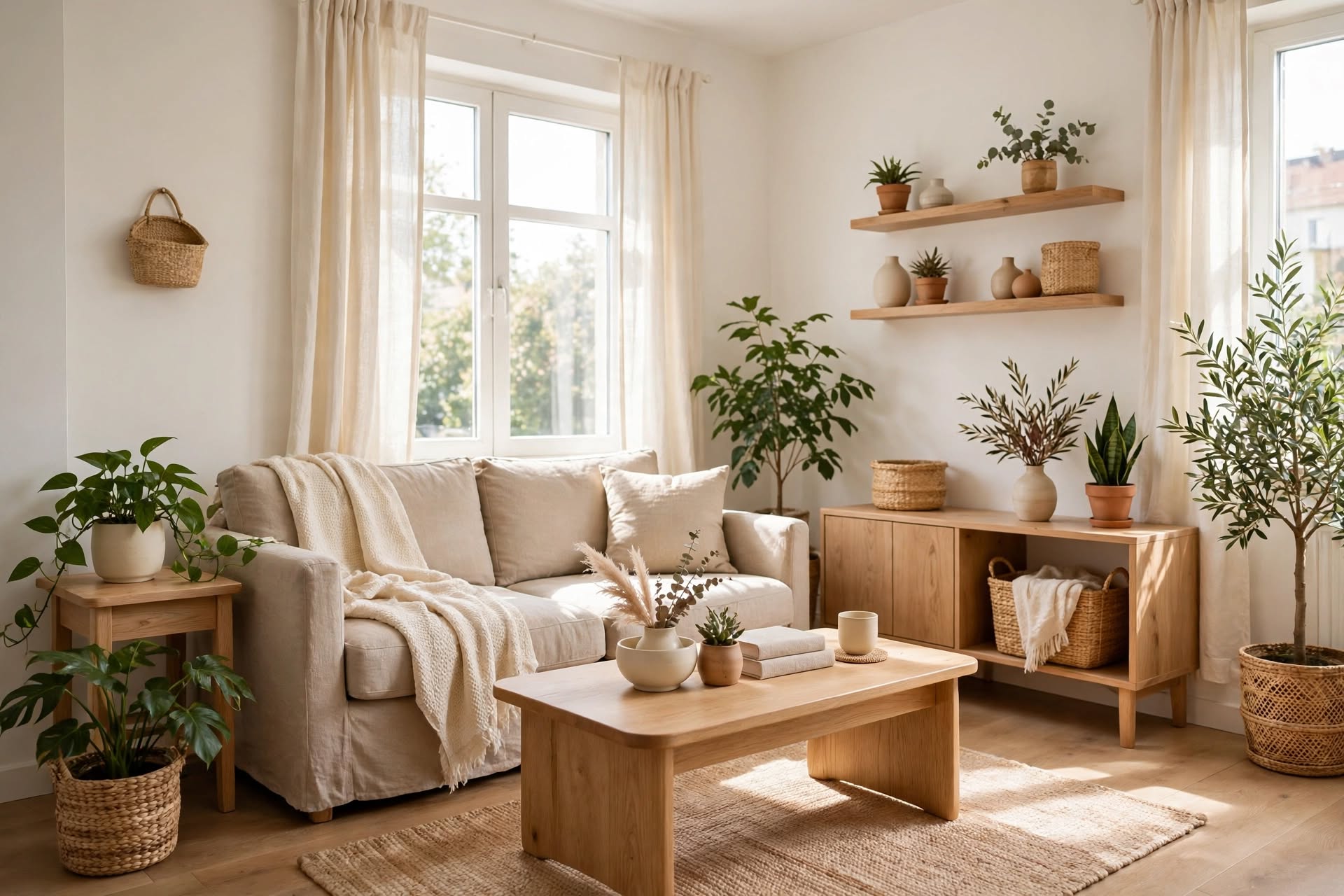

Living in a small apartment doesn’t mean giving up on beautiful interiors, comfortable furniture, or the feeling of having room to breathe. In fact, a compact home can be surprisingly stylish when every piece has a purpose and the layout works with the space rather than against it.
The secret is not simply buying smaller furniture or painting every wall white. It’s about making thoughtful choices: using vertical space, choosing furniture that does more than one job, creating distinct areas, and keeping the overall design visually calm.
Whether you’re decorating a studio, a small one-bedroom apartment, or a compact city home, these 25 small apartment decor ideas can help you make the most of every square foot without sacrificing personality.
1. Choose a Light, Warm Color Palette
Light colors can make a small apartment feel brighter and more open by reflecting available natural light. Warm white, ivory, soft beige, pale greige, and muted sand are particularly versatile choices.
This doesn’t mean every surface needs to be white. A warm neutral palette can include several related shades, giving the interior depth without making it feel visually crowded.
For a balanced look, try:
- Warm white walls.
- Beige or oatmeal-colored upholstery.
- Light oak furniture.
- Cream curtains.
- A few darker accents in lamps, frames, or decorative objects.
The goal is to create a consistent visual background that allows furniture and accessories to work together.
2. Invest in Multifunctional Furniture
In a small apartment, furniture should earn its place. Pieces that serve two or more purposes can reduce clutter and free up valuable floor space.
Consider a storage ottoman that works as a coffee table and extra seating, a sofa bed for overnight guests, or a dining table with drawers for everyday essentials.
Other useful options include:
- A bench with hidden storage.
- A nesting coffee table set.
- A desk that doubles as a dressing table.
- A bed frame with built-in drawers.
- A side table that can be moved wherever it’s needed.
Before buying anything, consider how often you’ll use each function. The most useful multifunctional furniture solves a real problem rather than adding another complicated feature to the room.
3. Use Mirrors to Create a Sense of Space
Mirrors are among the simplest ways to make a compact room feel brighter and more open.
A large mirror placed opposite or near a window can reflect daylight deeper into the room. A full-length mirror can also add visual depth without taking up much floor space.
Try a few different approaches:
- Lean a tall mirror against an empty wall.
- Hang a round mirror above a console table.
- Use mirrored wardrobe doors.
- Place a mirror where it reflects an attractive part of the room.
Pay attention to what the mirror reflects. A beautiful view, a window, or a carefully styled corner will make a better reflection than a pile of laundry or a crowded shelf.
4. Keep the Main Color Scheme Consistent
A small apartment often feels more spacious when its rooms and functional areas share a connected color palette.
Using the same family of colors throughout the living room, bedroom, and dining area creates visual continuity. This is especially helpful in studio apartments, where several activities happen in one open space.
You can still introduce different moods through textures and accents. For example, a living area might feature beige upholstery and oak, while the sleeping corner uses softer cream textiles and warm brown details.
The colors don’t need to match perfectly. They simply need to feel as though they belong to the same home.
5. Make the Most of Vertical Storage
When floor space is limited, look upward. Walls offer valuable storage opportunities that are often overlooked.
Tall shelving, wall-mounted cabinets, and floating shelves can provide storage without taking up much of the room’s footprint.
Useful vertical storage ideas include:
- Shelves above a desk.
- Tall bookcases that reach close to the ceiling.
- Wall-mounted cabinets in the bathroom.
- Hooks for bags, coats, and accessories.
- Narrow shelving beside a refrigerator or wardrobe.
Keep frequently used objects within easy reach and reserve higher shelves for items you don’t need every day. This makes the storage practical as well as attractive.
6. Bring in Plants Without Overcrowding the Room
Plants add color, texture, and a natural feeling to an apartment. But in a small home, too many pots can quickly occupy the surfaces you need for everyday living.
Instead of filling every corner, choose a few plants that suit the available light and your routine.
A tall floor plant can soften an empty corner, while a small plant on a shelf adds greenery without taking up a table. Hanging planters can also work well where there is enough light and suitable ceiling support.
If floor space is especially limited, consider:
- A narrow plant stand.
- A wall-mounted planter.
- A small herb garden near a bright kitchen window.
- One larger plant instead of several tiny pots.
The best arrangement feels intentional rather than crowded.
7. Layer Different Types of Lighting
One ceiling light rarely creates the most comfortable atmosphere. A small apartment benefits from several sources of light at different heights.
Combine general lighting with task lighting and softer accent lighting.
For example:
- A ceiling fixture provides overall illumination.
- A floor lamp makes the living room more comfortable in the evening.
- A table lamp adds warmth beside the sofa or bed.
- Under-cabinet lighting makes kitchen work easier.
- A wall light can illuminate a reading corner without requiring another table.
Choose warm-toned bulbs for relaxing areas and brighter task lighting where you cook, read, or work.
Good lighting also helps distinguish different areas in an open-plan apartment without the need for walls.
8. Create Separate Zones in a Studio Apartment
A studio apartment may combine a living room, bedroom, dining area, and workspace in one room. Without some visual separation, the entire space can feel like one large storage area.
You don’t necessarily need walls to create distinct zones.
Try:
- Placing a sofa with its back toward the bed.
- Using a rug to define the living area.
- Adding an open shelving unit between sleeping and living spaces.
- Positioning a small dining table near the kitchen.
- Using a different lighting arrangement for each zone.
The trick is to preserve an easy path through the apartment. Dividers should help organize the room, not make it feel smaller.
9. Keep Surfaces Clear and Give Everything a Home
A crowded coffee table or kitchen counter can make even a beautifully decorated apartment feel smaller.
Try to keep the most visible surfaces relatively clear. This doesn’t mean removing every decorative object. It means choosing a few items that deserve attention instead of displaying everything at once.
A simple approach is to give everyday belongings a designated place:
- Use a tray for remote controls.
- Keep keys in a small bowl near the entrance.
- Store chargers in a drawer.
- Use a compact organizer for kitchen essentials.
- Put frequently used toiletries in a bathroom cabinet or basket.
When objects have a home, tidying becomes easier and the apartment feels calmer.
10. Choose Furniture with Visible Legs
Furniture raised slightly off the floor can create a lighter visual impression than bulky pieces that sit directly on the ground.
A sofa with slim legs, an open-frame coffee table, or a raised sideboard allows more of the floor to remain visible. This can make a compact room feel less crowded.
Look for:
- Sofas with exposed wooden or metal legs.
- Open-frame side tables.
- Raised bedside tables.
- Slim dining chairs.
- TV units with visible space underneath.
This doesn’t mean every piece needs to be delicate. A comfortable sofa can still have generous proportions while maintaining an open, elevated base.
11. Use Textiles to Add Warmth Without Visual Clutter
A small apartment can feel cold if it contains only hard surfaces and plain furniture. Textiles make a room more comfortable, but too many competing patterns can make it look busy.
Choose a few complementary materials and repeat them throughout the space.
For example, combine:
- A textured wool or cotton rug.
- Linen-look curtains.
- A soft throw blanket.
- Two or three cushions in related shades.
- A woven basket for blankets or magazines.
Texture adds depth even when the color palette is neutral. It is often more effective than introducing many additional colors.
12. Consider a Murphy Bed for a Very Small Home
When a bed takes up most of the available floor space, a Murphy bed can be worth considering.
This wall bed folds vertically or horizontally into a cabinet when not in use, allowing the same area to function as a living room, office, or hobby space during the day.
Some designs include integrated shelving, lighting, or a desk. Others are simple folding beds that disappear behind cabinet doors.
Before choosing one, check:
- The wall structure and installation requirements.
- The clearance needed to open and close the bed.
- The available space when the bed is extended.
- Whether the mattress size and mechanism suit everyday use.
A Murphy bed is not the right solution for every apartment, but it can make a meaningful difference in a very compact studio.
13. Decorate with Objects That Have Meaning
A small home doesn’t need dozens of decorative accessories to feel personal.
Instead, choose objects that contribute something to the room: a favorite photograph, a handmade ceramic vase, a piece of artwork, or a travel souvenir.
A few carefully selected objects can tell a story without overwhelming shelves and tables.
Try grouping accessories in small arrangements rather than scattering them across every available surface. Vary their heights and shapes, and leave some empty space around them.
That breathing room helps each object stand out.
14. Make Natural Light a Priority
Natural light can transform the atmosphere of a small apartment. Whenever possible, keep windows unobstructed and avoid placing bulky furniture directly in front of them.
A few simple changes can help:
- Use curtains that can be pulled fully to the sides.
- Choose lighter window treatments.
- Keep window sills relatively clear.
- Position a desk or reading chair near a bright window.
- Avoid tall storage units that block daylight.
If the apartment has limited natural light, use mirrors and layered artificial lighting to create a brighter, more welcoming environment.
15. Use Baskets for Attractive Everyday Storage
Storage baskets are useful for items that need to remain accessible but don’t necessarily need to be on display.
They can hold blankets, children’s toys, shoes, magazines, or extra bathroom supplies.
Choose baskets that fit the room’s style. Woven natural fibers add texture, while fabric or felt baskets can create a softer, more understated look.
For a tidy result, use a few baskets of similar materials or colors rather than collecting many unrelated styles.
A basket should make an area easier to organize, not become another place where miscellaneous clutter accumulates.
16. Choose Wall Art That Suits the Scale of the Room
Wall art adds personality without taking up floor space. However, the scale and arrangement matter.
One larger artwork can sometimes make a stronger statement than a collection of many tiny frames. In a narrow hallway or above a sofa, a carefully proportioned piece can create a clear focal point.
Other options include:
- A small gallery wall with consistent frames.
- A large abstract print in muted colors.
- A framed textile or woven wall hanging.
- A pair of complementary artworks.
- A simple black-and-white photographic print.
Leave enough empty wall around the arrangement. Art should complement the room rather than compete with every other detail.
17. Add a Fold-Down Desk or Dining Table
A conventional desk or dining table can occupy a surprising amount of space, especially when it is used only for a few hours each day.
A wall-mounted fold-down table provides a practical alternative. It can serve as a small workspace, breakfast table, or occasional dining surface and fold away when it is no longer needed.
This solution works particularly well in:
- Narrow kitchens.
- Studio apartments.
- Small living rooms.
- Compact home offices.
- Apartments without a dedicated dining area.
Check the table’s open dimensions, mounting requirements, and weight capacity before installation. Make sure there is enough room to sit comfortably when it is in use.
18. Make the Entryway Work Harder
A small apartment entrance often becomes a collection point for shoes, coats, bags, keys, and everyday clutter.
Even a narrow entryway can be organized with a few compact pieces.
Consider:
- A slim shoe cabinet.
- Wall hooks instead of a bulky coat rack.
- A narrow shelf for keys and small accessories.
- A mirror that makes the entrance feel brighter.
- A small bench with hidden storage, if space allows.
If there is no separate hallway, define the entrance with a runner rug, a wall-mounted hook rail, or a compact console. A clearly organized entrance makes the entire apartment feel more intentional.
19. Keep the Bedroom Area Calm and Uncomplicated
In a small apartment, the bedroom may be a separate room or simply a sleeping corner within a studio.
Either way, it should feel comfortable and uncluttered.
Start with the essentials: a bed that fits the available space, accessible bedside lighting, practical storage, and textiles that create a restful atmosphere.
Useful ideas include:
- Wall-mounted bedside shelves instead of large nightstands.
- A bed with built-in drawers.
- A simple headboard with integrated storage.
- Matching bedding in a restrained color palette.
- A small wall light to free up bedside surface space.
Avoid filling the sleeping area with unnecessary furniture. A calm layout can make even a compact bedroom feel like a proper retreat.
20. Hang Curtains High and Choose the Right Length
Curtains can influence how tall and spacious a room feels.
Hanging the curtain rod closer to the ceiling rather than directly above the window can create the impression of greater height. Curtains that reach the floor also give the room a more finished appearance.
For a small apartment, consider:
- Light-filtering linen-look fabric.
- Soft white or warm neutral shades.
- Simple curtain tracks or slim rods.
- Full-length panels with a clean finish.
Avoid overly heavy fabrics if the room receives little daylight. The aim is to frame the window without making it feel smaller.
21. Create a Compact Reading Corner
A reading corner doesn’t need an entire spare room. A comfortable chair, good lighting, and a small place for a book can be enough.
Look for an unused corner near a window or beside a bookcase.
A practical arrangement might include:
- A compact armchair or comfortable accent chair.
- A slim floor lamp.
- A small side table.
- A soft cushion or throw.
- One narrow shelf for books.
If there isn’t enough room for an armchair, use a comfortable chair that can also serve as extra seating in the living area.
The best reading corner is one that fits naturally into the apartment rather than interrupting its layout.
22. Use Floor-to-Ceiling Cabinets to Maximize Storage
Low cabinets and scattered storage pieces can leave valuable wall space unused. Tall built-in or freestanding cabinets make better use of the room’s full height.
In a small apartment, a floor-to-ceiling storage wall can hold clothing, household supplies, books, and everyday belongings while keeping the overall appearance organized.
For a more integrated look:
- Choose cabinet fronts close to the wall color.
- Use simple handles or handleless designs.
- Combine closed storage with a small open display section.
- Add interior drawers and adjustable shelves.
- Store seasonal or rarely used belongings on higher shelves.
If custom cabinetry is outside the budget, a tall wardrobe or modular shelving system can provide a similar sense of order.
23. Try Transparent Furniture in Tight Areas
Transparent furniture can be useful where a solid piece would visually interrupt the room.
A clear acrylic dining chair, glass coffee table, or transparent side table allows more of the background to remain visible. This can make a small room feel less crowded.
These pieces work particularly well in:
- Small dining areas.
- Narrow living rooms.
- Compact home offices.
- Rooms with limited walking space.
Transparent furniture is not automatically the best choice for every home. Consider comfort, durability, cleaning, and the overall style of the room before buying.
A single transparent piece is often enough to create the desired effect.
24. Use the Space Under the Bed
The area beneath a bed is valuable storage space, especially in apartments without generous closets.
If the bed doesn’t have built-in drawers, use low-profile storage boxes or containers designed to fit underneath it.
This space can hold:
- Seasonal clothing.
- Spare bedding.
- Extra towels.
- Shoes.
- Bags and travel accessories.
Choose containers with lids to protect belongings from dust, and label them so items are easy to find.
If you’re buying a new bed, consider a model with drawers or a lift-up storage base. The right design can eliminate the need for additional storage furniture.
25. Choose a Layout That Supports Everyday Life
The most beautiful small apartment is still difficult to enjoy if its furniture blocks walkways or makes daily routines inconvenient.
Before buying new decor, think about how you move through the space.
Ask yourself:
- Can you open drawers and cabinet doors comfortably?
- Is there enough room to walk around the bed?
- Does the sofa block access to the balcony or window?
- Can the dining table be used without moving several pieces of furniture?
- Is there a practical place for everyday belongings?
Sometimes moving a sofa, changing the direction of a bed, or replacing a bulky table can improve the room more than buying another decorative accessory.
A good layout should make the apartment feel easy to live in, not simply attractive in photographs.
How to Make a Small Apartment Feel Bigger Without Renovating
A full renovation is rarely necessary to improve a compact home. A few carefully chosen changes can make a noticeable difference.
Start with the layout. Move furniture away from important walkways and avoid blocking windows. Leave enough open floor space for comfortable movement.
Reduce visual clutter. Store everyday objects in cabinets, drawers, and baskets. Keep only a few decorative pieces on visible surfaces.
Repeat materials and colors. Similar wood tones, coordinated textiles, and a consistent color palette help separate areas feel connected.
Use lighting strategically. Combine ceiling lights, table lamps, and wall lights to make the apartment feel comfortable throughout the day.
Choose furniture carefully. Prioritize pieces that fit the room, provide useful storage, or serve more than one purpose.
The aim isn’t to make a small apartment look empty. It’s to make every part of it feel considered.
Final Thoughts
A small apartment can be stylish, comfortable, and full of personality. The key is to treat limited space as a design challenge rather than a disadvantage.
Choose furniture that works harder, use the walls as well as the floor, create clear functional zones, and make room for the details that make a home feel personal.
Not every idea needs to be used at once. Start with the biggest problem in your apartment, whether that’s a lack of storage, an awkward layout, or a living area that feels crowded.
A few thoughtful changes can make a compact home feel more spacious, more organized, and much more enjoyable to live in.