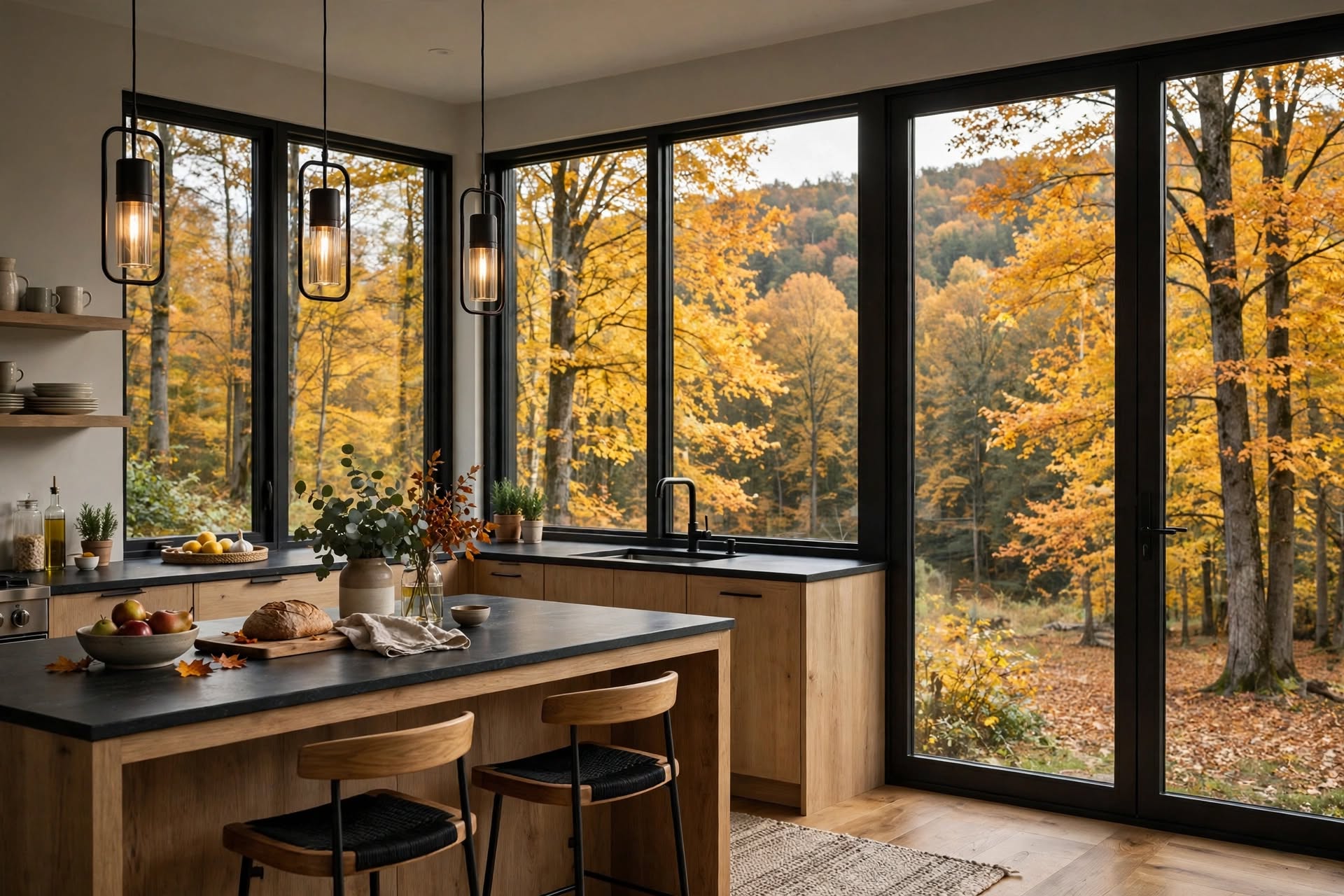
There is something quietly extraordinary about a kitchen with dark cabinets, warm wooden surfaces, and a window overlooking an autumn forest. The colors feel deeper. The light seems softer. Even an ordinary morning cup of coffee becomes an occasion to slow down.

Imagine a kitchen where charcoal cabinets meet a natural oak island, where a brass pendant glows above the countertop, and where the trees outside turn copper, amber, and gold as the season changes. Nothing needs to be particularly grand. The view does most of the decorating.
I once rented a cabin for a long weekend where the kitchen was nothing but a single counter, a small sink, and a window the size of a cinema screen. Outside, the maple trees had turned the color of burnt copper. Inside, the cabinets were painted a deep charcoal that seemed to absorb the light rather than reflect it. I made coffee every morning just to stand at that counter and watch the leaves fall. By the third day, I had forgotten to check my phone. By the fifth, I was convinced I could live there forever.
That kitchen taught me something I have never forgotten: the most powerful design element in any room is not the cabinetry, the countertop, or the pendant lights. It is the relationship between what is inside and what is outside.
You do not need a remote cabin or a wall of glass to recreate that feeling. The right colors, natural materials, thoughtful lighting, and a few carefully chosen details can bring the same atmosphere into an ordinary home.
Here is how to design an autumn-inspired kitchen that feels grounded, warm, and connected to the landscape beyond its windows.
3 Mistakes That Ruin a Kitchen With a View
Before choosing cabinets, countertops, or lighting, consider what can weaken the connection between the kitchen and its surroundings.
A kitchen with a beautiful view should feel like a frame around the landscape, not a room competing with it.
Mistake 1: Fighting the Darkness
Many homeowners hesitate when they consider dark kitchen cabinets. White is often treated as the automatic solution for making a room feel brighter.
But a kitchen overlooking deep green trees and golden autumn leaves does not necessarily need more white. It may benefit from a darker, more grounded palette.
Charcoal, deep forest green, and muted black can create a beautiful contrast with the changing landscape. Instead of competing with the view, the cabinetry becomes a quiet background.
The effect is particularly striking when the window is large enough to bring natural light deep into the room.
The fix: Choose a dark cabinet color that works with the natural light available. Pair it with warm wood, lighter walls, and carefully placed task lighting.
Dark cabinetry can create depth, but it does not magically make every small room appear larger. In kitchens with limited daylight, balance it with reflective surfaces, lighter flooring, and a thoughtful lighting plan.
Mistake 2: Choosing the Wrong Countertop Finish
A polished countertop can look beautiful, but highly reflective surfaces may introduce unwanted glare when large windows bring strong daylight into the kitchen.
The ceiling, pendant lights, and window reflections can compete with the view, especially when several glossy surfaces are used together.
A softer finish often feels more natural in an autumn-inspired kitchen.
The fix: Consider honed stone, matte quartz, natural wood, or a low-sheen surface. These finishes create a quieter visual backdrop and allow the landscape to remain the main attraction.
This does not mean polished marble or glossy quartz should never be used. The important thing is to consider the direction of daylight and how the surface will look at different times of day.
Mistake 3: Pendant Lights That Compete With the View
Oversized industrial pendants can be attractive, but a row of bulky fixtures may interrupt the view through a large kitchen window.
In a room where the landscape is the main feature, lighting should complement the architecture rather than dominate it.
The fix: Choose fixtures with a relatively simple silhouette: matte black, aged brass, dark bronze, or understated glass.
Consider smaller pendants over an island, or a single well-proportioned fixture if the space is compact. Keep the fixtures positioned so they do not obstruct important sightlines.
Warm light around 2700–3000K can create a comfortable atmosphere. Use brighter, suitable task lighting where food preparation takes place.
The goal is not to make the kitchen dim. It is to make the light feel as welcoming after sunset as the natural light does during the day.
[IMAGE 1 — Place after the introduction to the three mistakes. Create a wide editorial photograph of a charcoal kitchen with a wooden island and a large window overlooking golden autumn trees. ALT: Autumn kitchen with charcoal cabinets, a warm wooden island and golden forest views through large windows.]
Dark Cabinets: The Color That Lets the Forest Speak
Dark cabinetry gives an autumn-inspired kitchen its visual foundation.
Against a landscape of green branches, copper leaves, and changing skies, deeper colors can create a sense of continuity between the interior and exterior.
They also provide a beautiful backdrop for natural wood, ceramics, stone, and metallic details.
Best Dark Cabinet Colors for Forest Views
| Color | Undertone | Best wood pairing | Overall mood |
|---|---|---|---|
| Charcoal | Neutral or slightly warm gray | White oak, ash | Modern and quiet |
| Deep forest green | Blue-green or earthy green | Walnut, natural oak | Organic and immersive |
| Soft matte black | Neutral black | Reclaimed oak, teak | Dramatic and architectural |
| Deep navy | Blue | Light oak, maple | Refined and crisp |
| Dark brown | Warm chocolate | White oak, walnut | Rustic and grounded |
The undertone matters. A cool charcoal can look sophisticated beside gray stone, while a warmer charcoal may work better with honey-colored wood.
Before committing to a cabinet color, test a sample in the actual kitchen. Look at it in morning daylight, afternoon light, and artificial lighting after sunset. The same paint can look surprisingly different throughout the day.
Choosing Cabinet Hardware
Hardware should support the cabinetry rather than compete with it.
Slim black pulls, brushed brass handles, dark bronze fittings, and integrated finger pulls can all work beautifully.
For a restrained modern look, choose simple hardware with clean lines. For a more traditional cabin-inspired kitchen, slightly more decorative handles may add character.
There is no need to eliminate brass entirely. A few warm metallic details can connect dark cabinets with the golden tones of autumn outside.
Wood Countertops: The Warmth Between Dark and Light
A kitchen with dark cabinets and a forest view needs a material that softens the contrast. Natural wood does exactly that.
Its grain introduces movement, its color brings warmth, and its texture prevents dark cabinetry from feeling too formal.
The choice of wood can change the entire personality of the kitchen.
Best Wood Species for Kitchen Countertops
White oak
White oak has a relatively light color and an attractive grain. It can brighten a dark kitchen without creating an overly sharp contrast.
It works especially well in modern, Scandinavian-inspired, and rustic-modern interiors.
Walnut
Walnut has a deeper chocolate-brown tone, often with beautiful natural variations. It creates a richer, more intimate palette when paired with charcoal or forest-green cabinets.
Choose walnut when you want the kitchen to feel more like a woodland retreat than a bright contemporary showroom.
Reclaimed pine
Reclaimed pine brings visible knots, marks, and irregularities. These details create a sense of history and make a newly designed kitchen feel less polished and more personal.
It is particularly suitable for rustic-modern and farmhouse-inspired spaces, although its softness means it requires thoughtful protection in hardworking areas.
Teak
Teak contains natural oils and is relatively resistant to moisture compared with many other woods. Its warm golden-brown color works beautifully with dark cabinetry.
However, it is not waterproof. Proper finishing and maintenance are still important, especially near sinks and areas where water frequently collects.
The Maintenance Truth About Wood Countertops
Wood countertops are beautiful, but they require more attention than many stone surfaces.
The right maintenance routine depends on the wood, finish, and manufacturer’s recommendations.
For an oil-finished countertop:
- Use a food-contact-safe product specifically intended for kitchen wood surfaces.
- Follow the manufacturer’s instructions for application and maintenance intervals.
- Wipe standing water promptly, especially around the sink.
- Use cutting boards rather than cutting directly on the surface.
- Avoid leaving wet cloths or sponges on the countertop.
- Repair scratches and worn areas before moisture causes more significant damage.
Mineral oil and polymerizing finishes such as tung-oil-based products are not interchangeable. Always choose a finish suitable for the intended kitchen use and follow its instructions.
A wood countertop will develop character with use, but that does not mean every dark mark or water stain should be ignored. A little maintenance keeps the natural material beautiful for years.
Windows: The Wall That Should Not Exist
In a kitchen with a forest view, the window is more than an architectural feature. It becomes part of the room’s visual composition.
The aim is to create a strong connection with the landscape while keeping the kitchen comfortable and functional.
Choose Window Frames That Complement the Landscape
Black and dark bronze frames can create a clean outline around trees, branches, and changing leaves.
They often work particularly well with charcoal cabinets and dark hardware.
However, dark frames are not the only option. Timber frames can create a softer connection with a wooded setting, while lighter frames may suit a more traditional cottage or Scandinavian interior.
Choose a frame color that works with the home’s exterior architecture as well as the kitchen.
Keep the View as Open as Practical
Large panes of glass can create a beautiful sense of immersion, particularly when the kitchen faces mature trees or a garden.
If you are planning a renovation, consider whether the existing window can be enlarged or whether a different configuration would improve the view.
A wide horizontal window can frame the landscape like a painting. A taller window can capture tree trunks, branches, and the changing sky.
If structural changes are involved, consult the appropriate building professional. Window placement, support, insulation, and moisture management all need to be considered.
Think Carefully About Window Treatments
A kitchen with a beautiful view may not need heavy curtains, but completely removing window treatments is not always practical.
Consider:
- Discreet roller blinds fitted within the window recess.
- Minimal linen curtains in a color close to the walls.
- External shading to control strong sunlight.
- Appropriate privacy glazing where needed.
- Smart window treatments for convenient adjustment.
Think about privacy after dark, glare during the day, and the possibility of summer overheating.
The ideal solution is one that protects the view without sacrificing comfort.
Let the Landscape Become the Artwork
If the window overlooks a forest, avoid placing too many decorative objects directly in front of it.
Keep the sill relatively simple. A small herb pot, a ceramic vessel, or one carefully chosen plant may be enough.
The view changes every hour. Give it room to do its work.
The Autumn Palette: Bringing the Forest Into Your Kitchen
This is where the kitchen begins to feel unmistakably seasonal.
The colors outside can become a starting point for the interior palette. Copper leaves, warm bark, golden grasses, mossy greens, and muted earth tones offer a natural collection of colors that work beautifully with dark cabinetry.
Colors Worth Bringing Inside
Burnt orange and rust
Use these shades in small doses through ceramics, cushions on a nearby breakfast bench, or decorative textiles.
They create a warm contrast against charcoal and forest-green cabinets.
Muted ochre and golden yellow
These colors echo autumn leaves without becoming too bright. They work well in pottery, artwork, and smaller accessories.
Moss and olive green
These shades connect the kitchen to the forest while remaining softer than deep emerald.
Warm cream and oatmeal
These neutrals create visual breathing room between dark cabinets and richer autumn accents.
Terracotta and clay
Terracotta brings a natural, earthy quality. It can appear in ceramic bowls, plant pots, backsplash details, or decorative objects.
Use Seasonal Decor Without Turning the Kitchen Into a Theme Set
An autumn kitchen should feel connected to the season, not overloaded with pumpkins and artificial leaves.
Try a more restrained approach:
- A ceramic bowl filled with pears or apples.
- A few small pumpkins in muted cream or warm orange.
- Linen tea towels in rust, olive, or natural beige.
- A vase with a few seasonal branches.
- Handmade pottery with an irregular glaze.
- A wooden tray that gathers everyday objects into one arrangement.
The most beautiful seasonal interiors often use ordinary materials in thoughtful combinations.
How to Design a Kitchen Around a Forest View
Beautiful materials are important, but a kitchen still needs to work.
If you are planning a renovation or designing a new kitchen, think about the relationship between the window, the work surfaces, and the main movement through the room.
Position the Sink to Make the Most of the View
If the layout allows, placing the sink near a window can make everyday tasks feel more pleasant.
Washing vegetables or preparing a cup of tea becomes a little less ordinary when the landscape is visible.
However, consider the practical details:
- Is the window easy to open and clean?
- Will the faucet interfere with the window?
- Is there enough space for the sink and draining area?
- Can the window be protected from splashes?
- Will the position work with plumbing and ventilation requirements?
A beautiful view is valuable, but the sink should remain comfortable to use.
Arrange the Island Without Blocking the Landscape
A kitchen island can provide additional storage, preparation space, and seating.
If the forest view is the main feature, avoid placing a tall structure or bulky shelving between the main working area and the window.
A lower island with a simple profile can preserve sightlines. If you include seating, make sure there is enough space for people to sit comfortably without obstructing the main walkway.
Plan Storage to Keep the Countertops Calm
The original appeal of this kitchen concept depends on visual simplicity.
That does not mean the kitchen must be empty. It means everyday items need sensible storage.
Use:
- Deep drawers for pots and pans.
- Pull-out organizers for pantry items.
- Tall cabinets for appliances.
- Integrated bins.
- Drawer dividers for utensils.
- A dedicated place for small appliances.
The fewer objects that need to remain on the main work surface, the more clearly the materials and the view can stand out.
Make Room for Practical Lighting and Electrical Needs
Plan task lighting beneath cabinets and suitable lighting around the island and sink.
Make sure outlets are positioned where appliances will actually be used, and that electrical installations meet local requirements.
A beautiful kitchen should not require an extension cord running across the countertop.
Remember Ventilation
If the kitchen includes a cooktop, ventilation needs to be considered from the beginning.
The extractor or ventilation system should be appropriate for the appliance and room layout. Its position should not compromise the window design or the overall composition.
Pendant Lights: Small, Warm, and Thoughtful
The pendant lights in an autumn kitchen should make the countertop usable after sunset without competing with the landscape during the day.
The right fixture adds character, but its scale and placement matter more than its decorative label.
Choose the Right Shape
Consider:
- Small globe pendants in frosted glass.
- Simple matte black metal fixtures.
- Aged brass pendants with understated silhouettes.
- Dark bronze fixtures with warm detailing.
- Slim linear lights above a long island.
The best choice depends on the island’s size and the rest of the kitchen’s architecture.
Get the Height and Scale Right
Pendants over an island are often positioned roughly 75–90 cm above the countertop, but this is a starting point rather than a universal rule.
The final height depends on ceiling height, fixture size, sightlines, and the height of the people using the kitchen.
Avoid placing fixtures where they obstruct the view when someone is standing or sitting at the island.
For a long island, several smaller pendants may create a more balanced effect than one oversized fixture. In a compact kitchen, a single well-proportioned light may be enough.
Layer the Lighting
Do not rely on pendants alone.
A comfortable kitchen benefits from several lighting layers:
- General ceiling lighting for overall visibility.
- Under-cabinet lighting for food preparation.
- Pendant lights for the island or dining area.
- Accent lighting for shelves or architectural details.
A warm 2700K setting can create a cozy evening atmosphere. Around 3000K may be useful where a slightly clearer working light is preferred.
Dimmers are worth considering, provided the lamps and dimmer controls are compatible.
At six in the evening in October, the kitchen should feel welcoming, not like an operating theater.
The One Detail That Separates Good From Unforgettable
After the dark cabinets, the wooden countertop, the window frames, and the warm pendants, there is one final element: what you choose to leave on the counter.
A kitchen with a forest view benefits from a little restraint. The eye should be able to travel from the interior to the landscape without navigating a collection of unrelated objects.
Try creating one small arrangement rather than decorating every available surface.
Start with three simple elements:
A wooden cutting board
Lean a beautiful wooden board against the backsplash. Its grain will connect the countertop to the natural landscape outside.
A ceramic bowl
Choose an understated bowl in cream, olive, rust, or earthy brown. Fill it with seasonal fruit, garlic, or a few pears.
One living plant
A small herb pot on the windowsill can bring life into the kitchen. Rosemary, thyme, and other suitable herbs are practical choices if the window provides enough light.
You can add a linen tea towel or a small vase with seasonal branches, but leave some empty space.
The view is the decoration. The kitchen is the frame.
How to Create This Look in a Small Kitchen
Not every home has a panoramic window or a spacious island. Fortunately, the same design principles can work in a much smaller kitchen.
Use Dark Cabinets Selectively
If the room receives little natural light, consider using dark cabinets on the lower units and lighter finishes above.
Another option is to use dark cabinetry on one wall and keep the remaining surfaces warm and light.
This creates contrast without making the entire room feel enclosed.
Choose a Compact Wood Surface
A wooden countertop, breakfast bar, or small preparation area can introduce the warmth of natural timber without requiring a full wooden worktop.
Even a wooden shelf can help connect the kitchen with an autumn-inspired palette.
Use Simple Window Treatments
In a small kitchen, heavy curtains can take up visual space and make the window feel smaller.
Consider discreet roller blinds or minimal curtains that can be drawn back completely.
Keep the Island Proportional
A large island is not essential. A narrow peninsula, compact movable island, or small breakfast table may provide the necessary workspace without blocking the view or circulation.
Use Lighting to Add Depth
Under-cabinet lighting, a small pendant, and a warm ceiling fixture can make the kitchen feel layered and welcoming.
Avoid relying on a single bright ceiling light.
Frequently Asked Questions
What color cabinets work best with a forest view?
Charcoal, deep forest green, matte black, dark brown, and navy can all work beautifully. Choose a shade that complements the natural light and the colors visible outside. Warm wood and lighter surrounding surfaces help balance darker cabinetry.
Are wood countertops practical for kitchens?
Yes, provided they are properly finished and maintained. Wood is warmer to the touch than many stone surfaces, but it can scratch and is sensitive to prolonged moisture. Choose a suitable kitchen finish, wipe spills promptly, and pay particular attention to areas around sinks.
What kind of pendant lights work in a kitchen with a view?
Simple fixtures in matte black, aged brass, dark bronze, or understated glass are good options. Choose a size and hanging height that suit the island and preserve important sightlines through the window.
Should I install curtains in a kitchen with large windows?
Not necessarily, but some form of privacy or solar control may be useful. Discreet roller blinds, minimal linen curtains, external shading, or suitable glazing can help manage privacy, glare, and heat without dominating the design.
How do I prevent dark cabinets from making a kitchen feel small?
Use dark colors strategically and balance them with lighter countertops, walls, flooring, and good lighting. Keep the layout visually simple and avoid oversized upper cabinets if they make the room feel crowded.
Can this kitchen style work without a forest view?
Absolutely. The same combination of dark cabinets, natural wood, warm lighting, and earthy seasonal colors can create a cozy kitchen even when the windows overlook a garden, courtyard, or neighboring buildings. The landscape is an inspiration, not a requirement.
The Final Cup of Coffee
The best autumn kitchens are not necessarily the largest, the most expensive, or the ones with the most impressive appliances.
They are the ones that make ordinary moments feel worth lingering over.
A dark cabinet that gives the room depth. A wooden counter that grows more beautiful with use. A window that catches the last golden light of the afternoon. A small ceramic bowl that always seems to have something in it.
These details create a kitchen that feels connected to the world outside and comfortable enough to make you forget about it for a while.
Choose the charcoal. Bring in the wood. Keep the window clear.
And when the leaves turn copper and the evening light settles over the countertop, you may find yourself making coffee simply for the pleasure of standing there.
That is when a kitchen becomes more than a room. It becomes home.