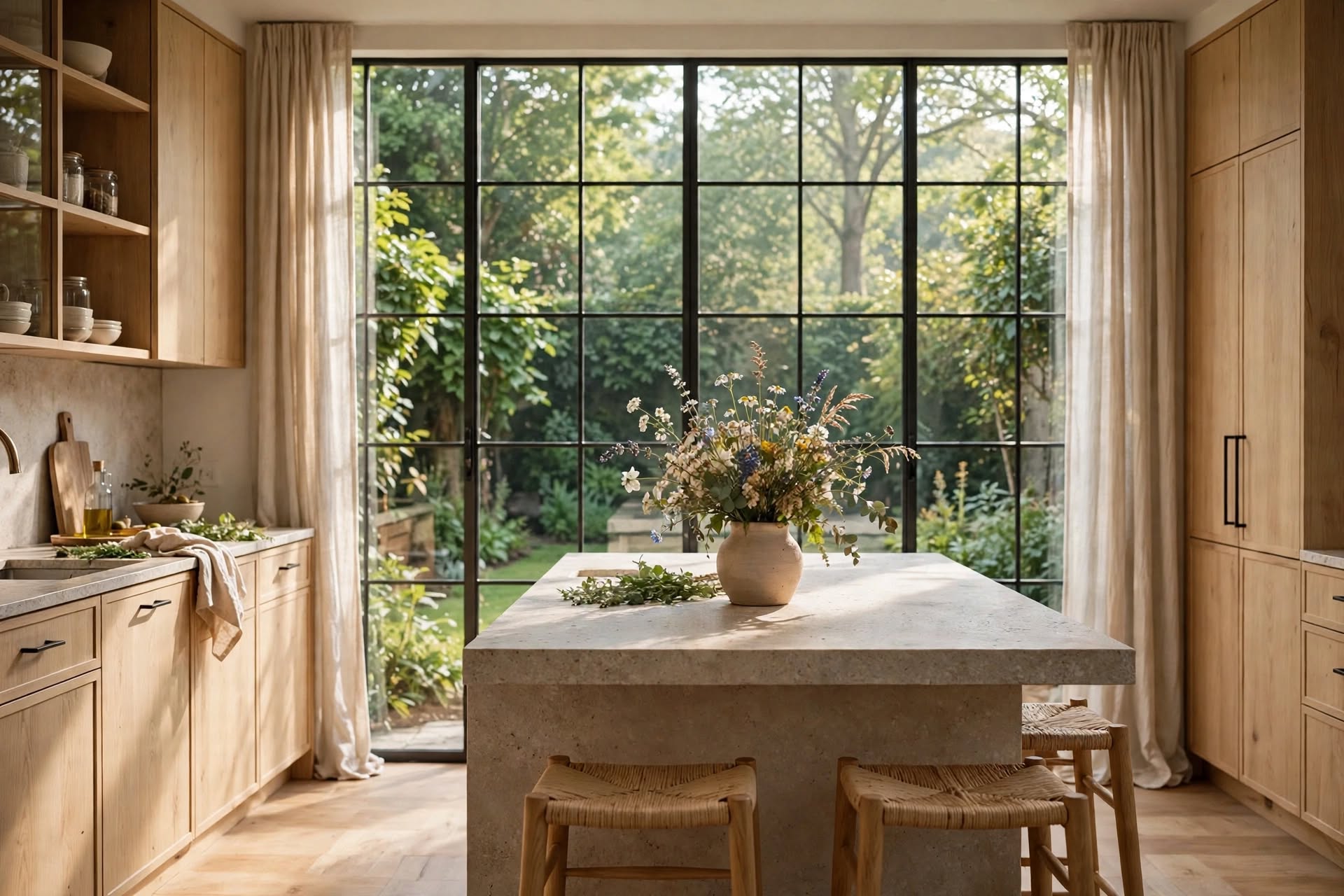
A kitchen is usually planned from the inside out. First come the cabinets, then the countertops, appliances, lighting, and finally the finishing touches. But there is another way to approach the room: start with the view.

A window overlooking a garden, a quiet courtyard, a tree-lined street, or even the rooftops of a city can influence the entire atmosphere of a kitchen. It changes where the sink might go, how the dining area feels, which materials look most natural, and how much decoration the room actually needs.
The view does not have to be spectacular. Sometimes it is simply a patch of green outside the window or the changing light across neighboring buildings. The important thing is to make the kitchen feel connected to the world beyond its walls.
That is one of the most appealing ideas in modern kitchen design: instead of filling every surface with visual interest, allow the architecture, natural light, and surroundings to do some of the work.
1. Let the Window Guide the Kitchen Layout
Before choosing cabinet colors or countertop materials, look at the windows.
Where does the natural light enter? What can be seen from the main working area? Is there a garden, a terrace, a courtyard, or a distant view worth framing?
These questions can help determine the most comfortable arrangement.
In a kitchen with a generous window, placing the sink nearby can make everyday tasks feel less enclosed. Washing vegetables or preparing dinner becomes a little more pleasant when there is something to look at beyond the glass.
However, the sink does not always need to sit directly beneath the window. Plumbing, storage requirements, window height, and the available wall space may make another arrangement more practical.
Consider a few common layouts:
- L-shaped kitchen: Works well when two adjoining walls provide enough space for cabinets while leaving an open side toward a window or dining area.
- U-shaped kitchen: Offers generous worktop and storage space, but should be planned carefully so the room does not feel enclosed.
- Kitchen with an island: Can create a natural connection between the cooking area and the view, especially when the island faces a garden or large window.
- Single-wall kitchen: A useful option for smaller rooms, where keeping the cabinetry along one wall can preserve light and an open feeling.
The best layout is not necessarily the one with the most cabinets. It is the one that makes movement, cooking, and looking outside feel effortless.
2. Make the Window Part of the Design
In some kitchens, the window becomes the most interesting surface in the room.
A wide opening above the countertop can bring in daylight and visually connect the kitchen to the outdoors. When the surrounding finishes are relatively simple, the changing scenery becomes a natural focal point.
This does not mean every kitchen needs floor-to-ceiling glass. A well-positioned standard window can be just as effective.
A few design choices can help emphasize it:
- Keep the area immediately around the window visually uncluttered.
- Choose a window frame that complements the cabinetry rather than competing with it.
- Avoid placing tall appliances or bulky storage where they unnecessarily block the light.
- Use a simple backsplash material that does not compete with the view.
- Consider privacy and sunlight throughout the day before deciding on window treatments.
The backsplash deserves particular attention. If the kitchen already has a beautiful view, it may not need a dramatic pattern behind the sink or countertop.
A quiet surface in stone, porcelain, or a subtle tile finish can create balance. The goal is not to make the window disappear behind an elaborate design, but to let the two elements work together.
3. Choose Materials That Feel Connected to the Outdoors
A kitchen overlooking a garden, forest, or courtyard often feels most harmonious when its materials echo the natural surroundings.
This does not mean covering every surface in wood or stone. Too many strong textures can make the room feel heavy. Instead, choose a few materials with character and let the rest provide a calm background.
Natural wood brings warmth to modern cabinetry. Walnut, oak, and other wood finishes can soften a room with clean lines and large expanses of glass.
Stone adds texture and visual depth. Veined marble, limestone-inspired finishes, granite, and other stone surfaces each create a different atmosphere. Their suitability depends on the intended use, maintenance requirements, and the specific material.
Matte finishes can create a softer, more understated appearance, particularly when paired with natural textures. Glossy finishes can also work beautifully, especially in smaller kitchens where reflected light may be useful. The choice should depend on the desired look and how the surfaces will be maintained.
Black or dark metal details can give a kitchen definition. Window frames, handles, pendant lights, and tapware can introduce contrast without overwhelming the room.
One effective combination is warm oak cabinetry, a softly textured stone countertop, and dark window frames. It feels contemporary without becoming cold.
4. Work With the View You Actually Have
Not every kitchen looks out onto a forest or a Mediterranean garden. Some face neighboring buildings, a narrow courtyard, or an ordinary street.
That does not make the idea any less useful.
The purpose is not to pretend that every window offers a postcard landscape. It is to create a more pleasant connection between the kitchen and its surroundings.
If the view is mostly urban, consider emphasizing the natural light and the shapes visible outside. A simple window frame, a clean countertop, and a restrained palette can make even a city view feel intentional.
If the window overlooks a courtyard, greenery can soften the scene. Outdoor planters, climbing plants, or a small tree may help create a more inviting outlook where the space allows.
If privacy is important, consider solutions such as:
- Light-filtering roller blinds.
- Simple curtains that can be drawn when needed.
- Frosted or textured glazing in appropriate areas.
- Adjustable external shading where practical.
- Carefully positioned plants that soften the view without blocking all the light.
Window treatments should respond to the direction of sunlight, privacy needs, and the room’s daily use. A beautiful window is not much help if glare makes the countertop uncomfortable or the room becomes too hot in summer.
5. What If Your Kitchen Has No Beautiful View?
A modern kitchen can still feel open and connected to nature even when the window faces a wall or the room has very limited natural light.
In this situation, the design can borrow some of the qualities that make a good view appealing: daylight, greenery, visual depth, and a sense of openness.
Start with the light you have. Avoid unnecessarily heavy window coverings, and use a combination of general lighting, task lighting, and softer ambient light.
If the kitchen is dark, consider lighter finishes in areas where they will help reflect available light. This does not mean everything must be white. Warm cream, pale oak, muted beige, and soft stone tones can create a welcoming atmosphere.
A few other ideas can help:
- Use a glazed door or opening to connect the kitchen visually with an adjoining room, where the layout permits.
- Add a mirror only where it reflects something attractive, such as light or a pleasant part of the room.
- Bring in herbs or suitable indoor plants near a bright window.
- Keep upper cabinetry visually balanced so the room does not feel crowded.
- Choose a backsplash and countertop with subtle variation rather than several competing patterns.
The aim is not to manufacture a view. It is to make the kitchen feel less isolated.
6. Bring Greenery Into the Kitchen Without Turning It Into a Greenhouse
Plants can make a kitchen feel more relaxed, especially when the room has a view of a garden or trees.
A small collection of herbs on a bright windowsill is both decorative and useful. Basil, rosemary, mint, and thyme can all be considered, depending on the available light and growing conditions.
For a more decorative approach, choose one or two plants with a shape that complements the kitchen.
A trailing plant can soften an open shelf. A small potted herb can add life to a countertop. A larger plant may work in an unused corner if there is enough light and space.
There is no need to fill every available surface. Plants should add a natural accent, not become another source of clutter.
Also consider the practical conditions. Kitchens can experience changes in temperature, humidity, and light, so choose plants that suit the location rather than selecting them only for their appearance.
7. Choose Lighting That Supports Natural Daylight
Natural light is one of the strongest features of a kitchen with a view, but the room still needs to work after sunset.
A single ceiling fixture rarely provides everything a kitchen needs. A more flexible approach combines several layers of light.
Task lighting helps illuminate work surfaces. Under-cabinet lights are particularly useful because they brighten the countertop without relying entirely on overhead fixtures.
Ambient lighting provides general illumination. Recessed ceiling lights, a central fixture, or other suitable sources can help distribute light throughout the room.
Decorative lighting adds atmosphere. Pendant lights above an island or dining table can introduce shape and personality.
The color temperature should suit the materials and the atmosphere you want. Warmer light often complements wood and warm neutral finishes, while a more neutral white may be useful in areas where clear task lighting is important.
It is also worth thinking about the view after dark. If the kitchen is brightly lit while the outside is dark, reflections in the glass can become more noticeable. Adjustable lighting and suitable window treatments can help manage this.
8. Don’t Forget the Floor
Flooring is easy to overlook when planning a kitchen around a window, but it has a significant influence on the overall feeling of the room.
Natural wood flooring can create continuity with wooden cabinetry, particularly in open-plan spaces. However, the specific product must be suitable for the moisture, spills, and cleaning demands of a kitchen.
Porcelain tile is another practical option, available in finishes that resemble stone, concrete, or wood. Natural stone can provide beautiful texture, although its maintenance requirements vary depending on the material and finish.
For a calmer modern look, consider:
- Warm-toned wood or wood-effect flooring.
- Large-format porcelain tiles.
- Soft stone-inspired surfaces.
- Subtle patterns that do not compete with the cabinetry.
A runner can add warmth and color, but it should be suitable for kitchen use, easy to clean, and positioned where it will not create a slipping or tripping hazard.
The floor does not need to become the main attraction. It should quietly support the rest of the design.
9. Keep the Countertops Calm and Functional
When a kitchen has an attractive view, the countertops do not need to compete for attention.
A practical countertop should provide enough room for food preparation and everyday tasks. It should also suit the way the kitchen is used.
Stone, engineered surfaces, solid-surface materials, and other countertop options have different advantages and maintenance needs. Before choosing one, consider resistance to staining, heat, scratches, and the care recommended by the manufacturer.
For the visual design, a simple approach often works well:
- Keep frequently used items within easy reach.
- Store appliances that are not used every day.
- Use trays to group small objects.
- Leave a useful area of clear worktop.
- Choose a few decorative pieces rather than filling every corner.
A wooden chopping board, a ceramic bowl, or a simple vase can bring warmth without making the countertop feel crowded.
The kitchen should look good, but it should also be ready for cooking.
10. Make the Dining Area Part of the View
If the kitchen has enough space, position the dining area so that people can enjoy the window too.
A small round table near a garden-facing window can create an intimate breakfast corner. In a larger kitchen, an island with seating may provide a more casual place to eat while keeping the view in sight.
Think about the relationship between the table, the window, and the main circulation paths. Chairs should be easy to pull out, and the dining area should not obstruct access to appliances or work surfaces.
Furniture can also help establish the mood.
A wooden table introduces warmth. Upholstered chairs make the space feel softer. Woven textures can add a relaxed, natural note, especially when paired with stone and wood.
The most successful dining corners are not necessarily elaborate. They simply make people want to sit down for a little longer.
11. Small Modern Kitchens Can Benefit From the Same Idea
A kitchen does not need a panoramic window or a large island to make the most of its surroundings.
In a small room, even a modest window can become an important design feature. The key is to avoid blocking it with unnecessary visual weight.
Consider these approaches:
- Use a compact layout that keeps the main working area efficient.
- Choose upper cabinets selectively rather than covering every wall.
- Use open shelving only where it will remain practical and uncluttered.
- Keep the window area as clear as possible.
- Select a restrained palette that allows natural light to move through the room.
- Use reflective finishes thoughtfully, without relying on them to solve every lighting problem.
If the kitchen opens into a living or dining space, consistent flooring and a coordinated color palette can make the entire area feel larger.
A small kitchen can feel generous when it is planned around light, movement, and useful space rather than simply maximizing the number of cabinets.
12. The Best Modern Kitchens Feel Connected, Not Perfect
A beautiful modern kitchen is not defined only by expensive appliances, oversized islands, or dramatic stone surfaces.
It is a room where the practical details and the atmosphere support each other.
The window brings in light. The materials add warmth. The lighting works after dark. The layout makes cooking comfortable. The view, whether it is a garden, a courtyard, or a city street, becomes part of the room rather than something forgotten beyond the glass.
And if there is no remarkable view, the same principles still apply. Natural light, thoughtful proportions, greenery, and a calm material palette can create a kitchen that feels open and welcoming.
The best design does not have to make the kitchen look like a showroom. It should make the room feel like somewhere worth spending time.
Sometimes the most important design decision is not what you put inside the kitchen, but what you choose to leave visible beyond the window.
Frequently Asked Questions
How do you design a modern kitchen around a window?
Start by considering the window’s position, natural light, privacy, and the view outside. Then plan the layout so the window remains visible and useful without compromising storage or the main cooking areas. A simple material palette can help make the window a natural focal point.
What is the best kitchen layout for a kitchen with a view?
There is no single best layout. L-shaped kitchens, single-wall kitchens, U-shaped kitchens, and island layouts can all work. The right choice depends on the room’s dimensions, window placement, plumbing, storage needs, and how people move through the space.
How can I make a kitchen feel brighter without a large window?
Use available daylight carefully, avoid unnecessarily heavy window coverings, and choose finishes that help distribute light. Layered artificial lighting, pale or warm-neutral surfaces, and a visually uncluttered layout can also make a kitchen feel more open.
What materials work well in a modern kitchen with a view?
Wood, stone, porcelain, metal, and simple painted cabinetry can all work well. The best combination depends on the desired style, budget, maintenance requirements, and how the kitchen is used. Mixing a few complementary materials usually creates a more balanced result than using too many competing finishes.
Should a kitchen sink be placed under the window?
It can be a practical and attractive choice, particularly when the window offers natural light and a pleasant outlook. However, it is not essential. Plumbing, window height, available counter space, and the overall layout should determine the final position.
How do I make a kitchen window more private without losing natural light?
Light-filtering blinds, sheer curtains, textured glazing, and suitable external shading can provide different levels of privacy while allowing daylight into the room. The right solution depends on the window’s orientation and how much privacy is needed.