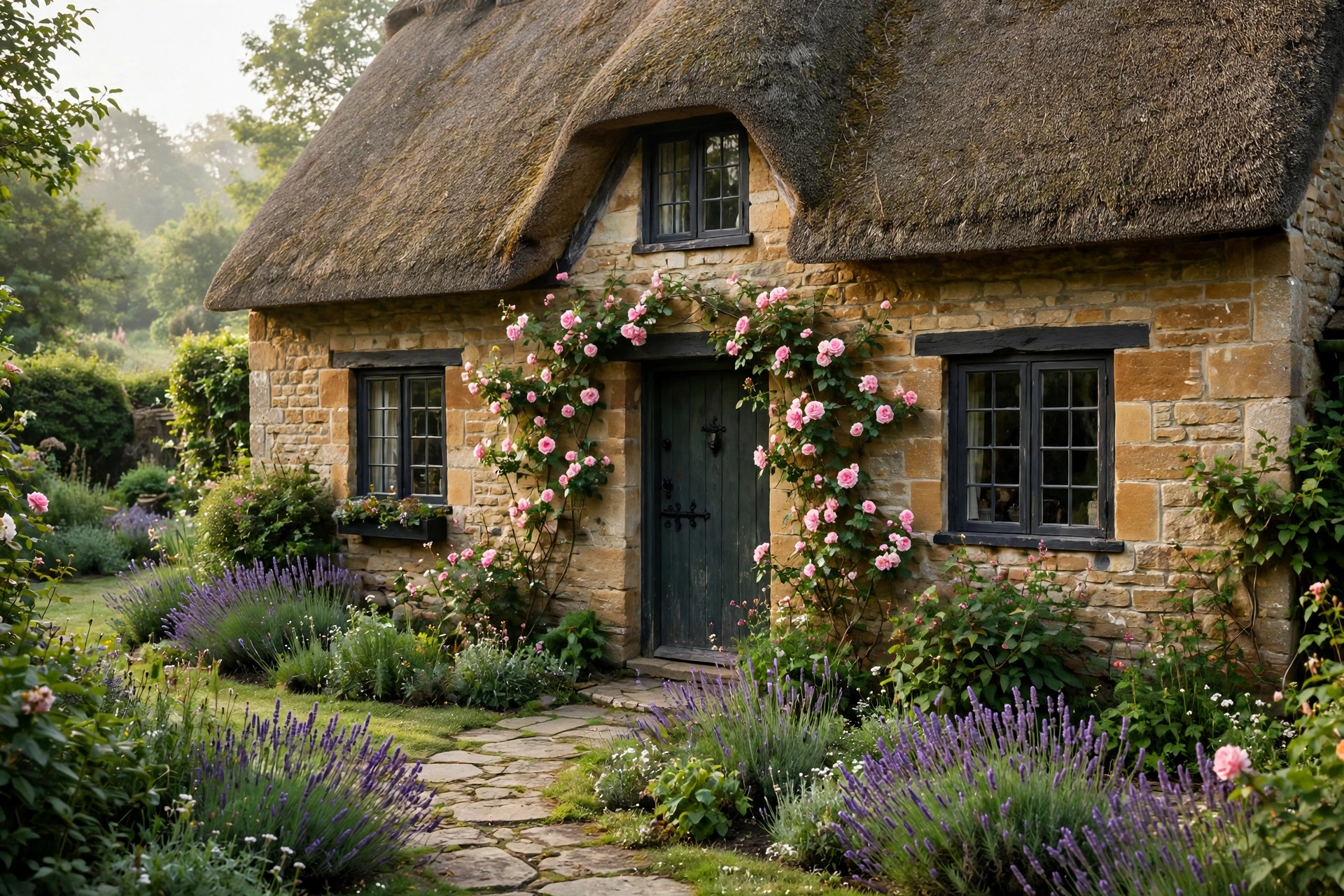

A fairytale English cottage has a particular kind of charm. Warm stone walls, dark windows, climbing greenery, an inviting front door, and a garden that seems to have been growing there for generations. Nothing feels too polished, too new, or too carefully arranged.
The magic is in the details. A little weathering on the stone. A climbing rose near the entrance. A winding path that disappears behind a patch of lavender. Warm light glowing through the windows as evening settles over the garden.
Recreating this look is not simply a matter of adding ivy and painting the windows black. The most convincing English cottage exteriors have a sense of belonging. Their materials, colors, architecture, and planting feel connected to the landscape around them.
The good news is that you do not need a centuries-old house in the Cotswolds to capture that atmosphere. Whether you are renovating a traditional cottage or giving a modern home a softer, more romantic character, a thoughtful combination of natural materials, restrained colors, and layered greenery can make a remarkable difference.
Here is how to bring the look together without turning your home into a theatrical imitation of an English village.
1. Start With Natural Materials, Not Decorative Stone
Stone is one of the defining features of traditional English cottage architecture. Its color and texture give a building much of its character, but there is no single stone that represents every English cottage.
Travel through the Cotswolds, Yorkshire, the Peak District, or parts of Wales, and the local architecture changes with the geology. Some cottages have warm golden limestone walls. Others are built from gray slate, darker sandstone, or irregular local rubble stone.
That regional variation is part of the appeal.
Choosing the right stone appearance
Cotswold limestone
The warm honey and pale golden tones of Cotswold limestone are among the most recognizable features of the region’s cottages. It works beautifully with dark timber details, muted green planting, and traditional roof materials.
Yorkshire sandstone
Sandstone can range from pale buff and golden brown to deeper reddish shades. Its texture creates a more rustic appearance, particularly when combined with slate roofing and restrained dark details.
Slate and darker fieldstone
In areas where darker local stone is traditional, irregular gray surfaces create a more subdued, weathered appearance. These materials can look especially attractive alongside soft green planting and natural timber.
Granite
Granite has a stronger, more substantial appearance. Depending on the local architectural tradition, it can be used across a facade or as a contrasting material for selected architectural details.
The important consideration is not simply which stone looks most attractive in a photograph. The material should suit the building, the local climate, the construction method, and the surrounding architecture.
What if natural stone is outside your budget?
Natural stone is not the only way to create a convincing cottage exterior.
Quality stone veneer can provide texture and depth when it is selected and installed carefully. It is particularly useful for smaller architectural features, such as entrance surrounds or selected facade sections.
Another option is to combine a stone base or accent area with a warm mineral-looking render or lime-based finish, where appropriate for the building.
The secret is to avoid making every surface look artificially uniform. Traditional buildings often have subtle changes in color, texture, and age. A little visual variation is what makes a facade feel believable.
2. Build a Warm English Cottage Color Palette
Stone provides the foundation, but the surrounding colors determine whether the house feels romantic, rustic, traditional, or contemporary.
The most successful English cottage exteriors usually rely on a restrained palette. Instead of introducing several strong colors, combine a few natural shades that complement one another.
Here are four combinations worth considering.
The Classic Honey Stone Palette
- Warm golden limestone.
- Charcoal or deep brown window frames.
- Natural oak or dark-stained timber door.
- Soft green planting.
- Terracotta accents.
This palette creates the familiar Cotswold-inspired appearance: warm, welcoming, and timeless.
The Soft Gray Cottage Palette
- Gray or weathered stone.
- Muted sage or olive green.
- Dark bronze or charcoal frames.
- Natural slate roofing.
- Cream-colored flowers and pale gravel.
This combination feels quieter and works particularly well with mature trees and woodland gardens.
The Romantic Garden Palette
- Warm cream or pale stone walls.
- Deep forest-green door.
- Dark window frames.
- Blush climbing roses.
- Lavender and soft purple flowers.
It is a lovely choice when the garden is an important part of the home’s identity.
The Modern Cottage Palette
- Warm off-white render.
- Natural stone accents.
- Deep olive or charcoal trim.
- Oak entrance door.
- Simple planting with grasses, evergreen shrubs, and flowering climbers.
This is an especially useful approach for newer homes that need cottage character without pretending to be centuries old.
3. Use Dark Trim to Give the Cottage Definition
Dark window frames are one of the easiest ways to introduce contrast to a warm stone facade.
Charcoal, deep brown, dark bronze, and near-black shades can make windows feel more defined. They also create an attractive relationship between the building and the darker shadows beneath rooflines, around doorways, and between architectural details.
But black is not a compulsory ingredient.
The right shade depends on the stone, the roof, and the overall atmosphere you want.
Four dark trim colors to consider
Jet black
A strong, dramatic choice against golden stone and pale render. It creates a crisp, almost illustrated outline.
Charcoal
Softer than pure black and often easier to combine with gray stone, timber, and muted garden colors.
Deep olive
A more natural alternative that connects the facade to the surrounding greenery.
Dark bronze
A warm, understated option that works particularly well with oak doors, brown stone, and traditional metal details.
For paint inspiration, RAL 9005 is a familiar deep black reference. Farrow & Ball’s Railings and Down Pipe are also worth exploring for darker, more nuanced tones. Always check the actual finish and a sample in outdoor light before making a final choice.
Bring the details together
Window frames, fascia boards, bargeboards, and the front door can share a coordinated color without every element needing to be identical.
Gutters and downpipes also deserve attention. Their material and finish should complement the building rather than become an accidental focal point.
Copper, traditional-looking metalwork, and appropriately finished modern systems can all work. The best choice depends on the building, maintenance expectations, and budget.
The aim is a coherent facade, not a collection of matching black objects.
4. Add Climbing Greenery Carefully
A cottage covered in greenery has an unmistakable romantic quality. Leaves soften hard edges, frame windows, and create the impression that the house has been part of the landscape for a long time.
However, climbing plants need to be chosen with care.
Not every plant is suitable for every wall, and not every wall is suitable for direct climbing growth.
English ivy
English ivy (Hedera helix) is an evergreen climber associated with traditional cottage gardens.
It can provide year-round greenery and eventually create substantial coverage. However, its aerial rootlets attach directly to surfaces, and mature growth can become difficult to manage.
Ivy may conceal cracks, interfere with gutters, reach roof structures, and make building inspections more difficult. It can also cause problems on walls with deteriorating mortar, damaged finishes, or vulnerable surfaces.
Before planting it against a building, assess the condition and construction of the wall. Check local guidance too, because English ivy is invasive in some regions.
Boston ivy
Boston ivy (Parthenocissus tricuspidata) is another attractive option.
It attaches using adhesive pads rather than the rootlets used by true ivy. Its most distinctive feature is its autumn color, when the leaves can turn brilliant shades of red and orange before falling.
That seasonal change creates a different look from evergreen ivy.
However, adhesive pads may leave marks or cause problems when the plant is removed from painted or delicate surfaces. It should not automatically be treated as a risk-free choice for every facade.
Climbing roses
Climbing roses are perfect for the romantic cottage look, particularly around entranceways and garden walls.
Varieties such as ‘New Dawn’ and ‘Zephirine Drouhin’ are popular choices for cottage-style planting. Their growth habits and disease resistance can vary with local conditions, so check their suitability before purchasing.
Unlike self-clinging ivy, climbing roses generally need a suitable support system and regular pruning.
A safer way to create a living facade
If you are uncertain about growing directly against the wall, consider a separate trellis or freestanding support system.
It can provide the visual effect of a green facade while allowing more control over plant growth and access to the building for maintenance.
Keep climbing plants away from windows, gutters, roof edges, and other vulnerable details. Their mature size and pruning requirements should be considered before planting.
A cottage garden should look abundant, but the house itself still needs to be accessible and well maintained.
5. Give the Roof a Traditional Silhouette
The roof has a powerful influence on the character of a cottage. Its shape, material, and color can make the difference between a building that feels rooted in traditional architecture and one that looks like a modern house with decorative additions.
English cottage roofs are not all identical. Their appearance varies across regions and building periods.
Some have steep pitches and natural slate. Others use clay tiles, stone slates, or thatch. The right choice should reflect the architecture and practical requirements of the building.
Natural slate
Natural slate is valued for its durability, understated texture, and subtle variations in color. It can create a beautiful relationship with gray stone, dark window frames, and mature planting.
Its suitability and expected lifespan depend on the slate quality, installation, roof design, and maintenance.
Clay tiles
Traditional clay tiles bring warmth and texture to a roof. Their natural color can complement honey-colored stone and warm render.
Weathered terracotta tones are particularly attractive in cottage-inspired designs.
Concrete tiles
Concrete tiles can provide a more accessible alternative to natural slate or clay. Modern products are available in a variety of profiles and finishes.
The key is choosing a material and shape that suit the building rather than selecting the darkest or cheapest option automatically.
What about the roof pitch?
A steep roof can create the familiar storybook cottage silhouette, but there is no universal ideal angle.
Roof pitch must be appropriate for the building’s structure, climate, roofing material, drainage requirements, and local building regulations.
If the project involves a roof replacement or structural changes, work with a qualified roofing professional.
The most attractive result is one that looks architecturally natural and performs properly in real weather.
6. Make the Front Door the Heart of the Exterior
A cottage entrance should feel welcoming before anyone reaches the doorstep.
The front door is often the strongest visual feature of the facade. It provides an opportunity to introduce a deeper color, natural wood, traditional hardware, and a little personality.
A dark forest-green door against warm stone creates a classic English country look. A black or charcoal door feels more dramatic. Natural oak brings warmth and a quieter rustic character.
Details that make an entrance memorable
- A traditional brass, bronze, or iron door knocker.
- A simple lantern-style wall light.
- Natural stone or brick steps.
- A pair of planters with seasonal flowers.
- A small bench where space allows.
- A restrained house number and letter plate.
Hardware does not have to look artificially antique. A well-made modern piece in a traditional shape can be more convincing than decorative hardware that imitates age.
If you choose brass or iron, allow the finish to develop naturally where appropriate. The goal is character, not forced distressing.
A small entrance can be just as effective as a grand doorway. A beautiful door, one good light, and a carefully chosen plant can create a welcoming focal point.
7. Choose Exterior Lighting That Creates a Gentle Glow
The most charming cottage exteriors do not need dramatic floodlights.
At dusk, the house should feel warm and welcoming, with light illuminating the entrance, making paths visible, and allowing the windows to glow from within.
A layered approach usually works better than relying on one bright outdoor fixture.
Wall lanterns
Traditional lantern-style sconces work beautifully beside an entrance or near a garage door.
Black metal, dark bronze, and aged brass finishes all complement cottage architecture.
Choose fixtures designed for outdoor use and install them at a height that provides useful illumination without creating glare.
Path lighting
Low-level path lights can help define a garden walkway and make it easier to move around after dark.
Rather than placing too many fixtures in a straight line, use lighting to highlight important points such as steps, changes in level, and the direction of the path.
Warm window light
A table lamp or pendant visible through the front window can make a cottage feel particularly inviting in the evening.
A warm white light source is often a good choice for creating a relaxed atmosphere. The exact color temperature should complement the interior finishes and the surrounding outdoor lighting.
Practical lighting considerations
Outdoor fixtures should be suitable for their location and exposure to weather. Electrical work should be completed in accordance with local requirements by a qualified professional where necessary.
Also consider neighbors, wildlife, and light pollution. Well-directed, appropriately dimmed lighting can create atmosphere without illuminating the entire garden.
8. Create a Cottage Garden That Looks Naturally Established
The garden is not simply decoration around an English cottage. It is part of the architecture’s character.
A convincing cottage garden often combines structure with a slightly relaxed appearance. There may be a curved path, a climbing rose, a small evergreen shrub, and flowers that soften the edges of the building.
The planting should feel abundant, but it still needs a plan.
Climbing roses
Roses can frame doorways, soften garden walls, and add color during the flowering season.
Choose varieties according to your climate, available space, and support structure. Give them enough room for mature growth and keep them away from gutters and other vulnerable building details.
Lavender
English lavender (Lavandula angustifolia) is a familiar cottage-garden plant, valued for its fragrant foliage and purple flowers.
It generally prefers sunny positions and well-drained soil. It may struggle in heavy, persistently wet conditions, so drainage is an important consideration.
Lavender can work beautifully along a path, near a sunny entrance, or in repeated groups within a border.
Evergreen structure
Traditional cottage gardens are not made entirely of flowers. Evergreen shrubs and carefully placed structural plants help the garden retain shape when flowering plants are dormant.
Boxwood (Buxus sempervirens) is one traditional option, although boxwood blight and box tree moth can be concerns in some regions.
Alternatives such as suitable compact yew varieties, holly, or other locally appropriate evergreen shrubs may provide a similar sense of structure.
A relaxed planting mix
For a layered cottage-garden appearance, combine plants of different heights and flowering seasons.
Consider:
- Climbing roses for vertical color.
- Lavender for low, fragrant borders.
- Hardy geraniums for softer ground-level planting.
- Foxgloves for height and a traditional woodland-garden feel.
- Salvia for long-lasting color.
- Ornamental grasses for movement and texture.
Always check plant suitability, mature size, and potential invasiveness in your region. A plant that thrives in a mild English garden may not perform the same way in a colder or wetter climate.
9. Design a Path That Leads Somewhere Beautiful
A straight, uninterrupted concrete walkway can sometimes make a cottage exterior feel more formal than intended.
Natural-looking paths often suit the style better, especially when they connect the entrance with planting areas, a gate, or a small seating space.
Possible materials include:
- Irregular natural flagstones.
- Traditional clay pavers.
- Gravel with stable edging.
- Reclaimed bricks.
- Stone-effect paving suitable for outdoor use.
A gently curved path can create a sense of discovery, particularly when plants partially frame the route.
However, appearance should never come at the expense of practicality. Paths need a suitable base, drainage, stable surfaces, and safe transitions at steps and entrances.
If you use gravel, make sure it is appropriate for the expected foot traffic. If you choose paving, consider slip resistance in wet or icy conditions.
A small path can become one of the most memorable parts of the entire exterior when it is surrounded by the right planting.
10. How to Create the Cottage Look on a Budget
A full exterior renovation involving natural stone, new windows, and a replacement roof can be expensive. Fortunately, many of the visual qualities associated with English cottage style can be introduced gradually.
The best approach is to decide which features will make the greatest difference from the street.
Low-budget refresh
Start with the details that are relatively easy to change:
- Repaint the front door in a suitable dark or muted green shade.
- Replace dated exterior hardware.
- Add a traditional-style entrance light.
- Introduce a few well-chosen planters.
- Refresh the path and tidy the planting around the entrance.
- Paint suitable existing trim in a coordinated color.
These changes will not transform the architecture, but they can make the facade feel more considered.
Mid-range exterior update
If the budget allows for more substantial work, consider:
- Improving selected facade sections with suitable stone or render.
- Replacing outdated exterior lighting.
- Adding a properly designed trellis for climbing plants.
- Updating the entrance steps or pathway.
- Improving window and door finishes where replacement is not necessary.
Focus on the most visible areas rather than spreading the budget too thinly across the entire property.
Major renovation
A larger project might include:
- Replacing unsuitable or deteriorated roofing.
- Installing new windows and doors.
- Repairing or restoring existing masonry.
- Reworking drainage and exterior details.
- Redesigning the garden and entrance.
These projects require proper assessment and professional advice. Costs vary substantially according to location, building size, materials, access, labor, and the condition of the existing structure.
There is no reliable universal price for creating an English cottage exterior. A small decorative refresh and a complete facade renovation are entirely different projects.
The smartest investment is usually the one that improves both the appearance and the long-term condition of the house.
11. How to Bring English Cottage Style to a Modern Home
Not everyone lives in a traditional stone cottage, and that is perfectly fine.
The style can be adapted to a newer house without adding artificial stone everywhere or trying to imitate an old building.
The trick is to borrow the atmosphere rather than copy every architectural detail.
Start with the entrance
A dark green or charcoal door, attractive hardware, and a warm exterior light can immediately soften a modern facade.
If the entrance is surrounded by plain render, natural stone accents or well-designed planting may provide additional character.
Introduce natural textures
Wood, stone, brick, and textured render can help a modern home feel more connected to its surroundings.
Choose one or two materials that complement the existing architecture. Too many competing finishes can make the facade look busy.
Add a layered garden
Use a combination of evergreen structure, flowering plants, and climbing greenery on suitable supports.
A small garden can still have cottage character if the planting is varied and thoughtfully arranged.
Avoid forced historical details
A modern house does not need fake beams, artificial aging, or oversized decorative stone corners to become charming.
It is better to create a coherent design that acknowledges the building’s actual architecture.
A contemporary home with a beautiful entrance, natural materials, dark trim, and a relaxed garden can capture much of the same feeling.
12. The Details That Make a Cottage Feel Real
Once the major elements are in place, small details help complete the picture.
Think about the objects and finishes that connect the house to everyday life.
A wooden bench near the entrance. A simple ceramic pot beside the door. A traditional house number. A small window box filled with seasonal flowers. A warm light visible through the glass on a rainy evening.
These details should feel useful and natural rather than arranged purely for a photograph.
Avoid covering every available surface with decorative objects. The charm of cottage style comes partly from restraint: the house, the garden, and the materials should remain the main characters.
And remember that weathering cannot be rushed. Natural stone changes gradually. Timber develops its own character. Gardens mature over seasons, not weekends.
A cottage becomes more convincing when its details have room to settle into the landscape.
Frequently Asked Questions
What makes an English cottage exterior look authentic?
Natural-looking materials, a restrained color palette, traditional architectural proportions, climbing plants, and a layered garden all contribute to the appearance. Authenticity also comes from respecting the building’s local architectural style rather than applying the same decorative formula to every house.
What color should I paint the windows on an English cottage?
Charcoal, black, dark bronze, deep brown, and muted olive are all attractive options. The best choice depends on the stone or render, roof color, and surrounding landscape. Pure black creates stronger contrast, while softer dark shades produce a more understated result.
Is ivy safe to grow on a stone cottage?
Not always. Ivy can conceal defects and create maintenance problems, particularly on walls with damaged mortar, vulnerable finishes, or existing defects. Before allowing it to grow directly on a building, assess the wall and consider a separate trellis or support system.
What plants create an English cottage garden?
Climbing roses, lavender, hardy geraniums, foxgloves, salvia, and suitable evergreen shrubs are popular choices. The right selection depends on sunlight, soil, moisture, local climate, and the mature size of each plant.
Can I create an English cottage exterior on a modern house?
Yes. Focus on a welcoming entrance, natural materials, coordinated dark or muted trim, traditional-style lighting, and layered planting. You do not need to imitate every feature of a historic cottage to capture its atmosphere.
How can I make my house look like a cottage without a major renovation?
Start with the front door, exterior lighting, hardware, planters, and garden path. Then introduce climbing plants on suitable supports and coordinate the visible exterior colors. Small changes can make the entrance feel much more welcoming without requiring a complete facade replacement.
The Beauty of a House That Belongs to Its Garden
The most memorable English cottage exteriors do not look as though every detail was installed at once.
They feel as if the stone has settled into the landscape, the garden has gradually found its shape, and the entrance has welcomed generations of visitors.
That atmosphere cannot be created with one particular paint color, one variety of ivy, or an expensive roof.
It comes from the relationship between the house and everything around it.
Choose materials that suit the architecture. Use dark trim to create definition, not as an inflexible rule. Let climbing plants soften the facade where they can grow safely. Give the entrance warmth and the garden room to mature.
And above all, resist the temptation to make everything look brand new.
A beautiful cottage does not need to look perfect. It needs to feel as though it belongs.