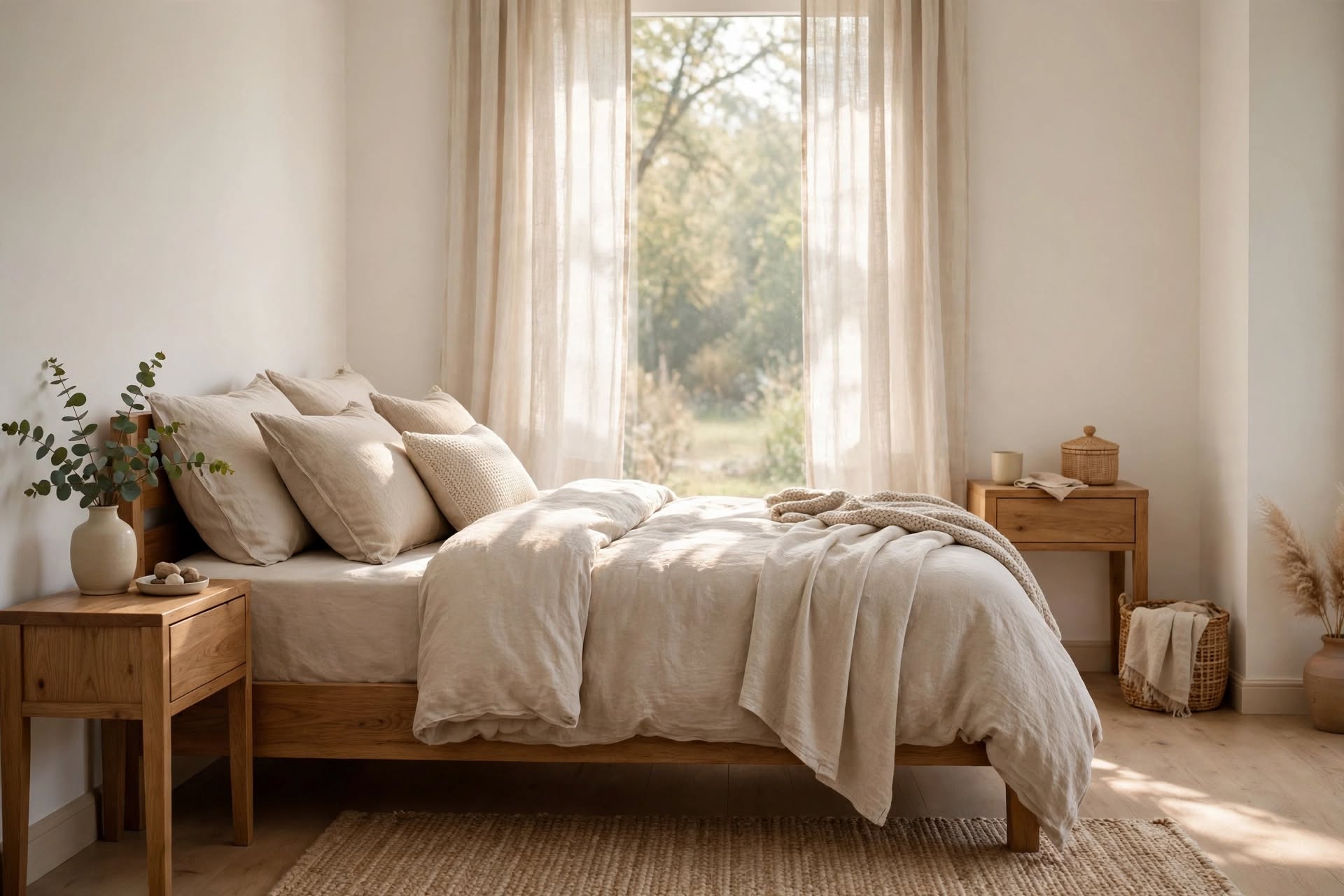

A bedroom should be more than the place where the day ends. Ideally, it is the room that helps the pace slow down — where the lighting is softer, the textures feel familiar, and nothing demands too much attention.
You do not need a full renovation or a complete furniture replacement to get there. More often, the difference comes from smaller decisions: better lighting, more comfortable bedding, a calmer colour range, fewer objects competing for space, and a layout that simply works.
The goal is not a perfect hotel room. It is a bedroom that feels like yours — welcoming at the end of a long day and easy to live in.
Here are 21 ideas that help create that kind of space, whether the room is generous or has to work a little harder.
1. Choose a Calming Color Palette
Colour sets the mood before anything else enters the room. For a more restful bedroom, warm whites, soft beige, muted sage, pale taupe, dusty blue and gentle greys are reliable starting points. They create a quiet background that works well with wood, textured fabrics and warm light.
Darker colours can also work. Deep olive, charcoal, muted navy or warm brown can make a room feel more intimate, provided there is enough lighter bedding and balanced lighting to keep the space from feeling heavy.
I usually stick to two or three main colours and let them repeat quietly through the room. It creates consistency without looking overly coordinated.
2. Layer Your Bedding
The bed is the largest visual element in most bedrooms, so how it is dressed matters.
A single flat duvet often looks unfinished. Combining a comfortable fitted sheet, a duvet cover, a lighter quilt or coverlet, a textured throw and a few pillows in different fabrics creates more depth and comfort.
The point is not to pile on as many cushions as possible. It is to create a layered look that still feels easy to maintain. Mixing cotton with linen or a knitted throw usually works better than using several surfaces that all feel the same.
3. Add a Statement Headboard
A good headboard can quietly turn an ordinary bed into the focal point of the room.
Upholstered designs add softness. Wood brings warmth. A wider or slightly architectural headboard can give the wall behind the bed more presence without requiring a full feature wall.
In a smaller room, a slim upholstered or wooden headboard often works better than something bulky. Whatever you choose, it should relate to the rest of the furniture rather than looking like an isolated statement.
4. Use Warm, Layered Lighting
One overhead light is rarely enough for a bedroom that needs to feel calm in the evening.
A more useful approach combines a ceiling light for general illumination, bedside lamps for reading, and perhaps wall sconces if surface space is limited. Warm-white bulbs (around 2700K) make a noticeable difference, and dimmable options give you more control across the day.
The goal is light that supports the way you actually use the room, not just light that fills it.
5. Install Floor-to-Ceiling Curtains
Curtains change both the proportions and the atmosphere of a bedroom.
Hanging the rod closer to the ceiling and letting the fabric reach the floor makes the windows feel taller and softens the architecture. Linen-look and softly textured neutral fabrics work especially well in relaxed rooms.
If you need better light control, pair decorative curtains with a blackout lining or a simple roller blind. Extending the rod slightly beyond the window frame, when possible, also helps the window feel wider when the curtains are open.
6. Bring in Natural Wood
Wood adds warmth that neutral colours alone cannot always provide.
A wooden bed frame, bedside tables, a dresser or even a small stool can change the feel of the room. Oak, walnut, ash and lighter natural finishes all work; the more important thing is balance rather than perfect matching.
Repeating a similar wood tone in two or three places is usually enough to create a quiet connection through the room.
7. Add a Soft Area Rug
A rug makes the bedroom feel more finished and more comfortable underfoot.
A larger rug under the bed anchors the furniture. Smaller rugs on either side can be a more practical option if you do not want a full-size piece. Wool feels cosy, cotton is lighter, and low-pile designs are generally easier to live with.
In a smaller room, a rug that extends beyond the sides of the bed often makes the sleeping area feel more intentional.
8. Create a Balanced Bedside Arrangement
The bedside area is used every day, so it needs to be both practical and calm.
Matching nightstands and lamps create a sense of order, but matching is not essential. Similar proportions and materials are usually enough. Keep the surface useful rather than decorative: a lamp, a book, a small tray and space for a glass of water are often all that is needed.
In a narrow room, wall-mounted shelves can free up floor space while still giving you a convenient surface.
9. Decorate the Walls with Thoughtful Artwork
Empty walls can make a bedroom feel unfinished. Too many pieces can make it feel restless.
One larger work above the headboard often creates a clear focal point. A small, carefully spaced arrangement can also work if the scale feels right in relation to the bed. Soft landscapes, quiet abstracts, botanical prints or simple photography tend to suit a restful room.
Frames that pick up existing finishes in the room help the artwork feel connected rather than added on.
10. Introduce Plants and Natural Details
A plant or two softens the lines of furniture and makes the room feel less static.
Choose according to the light you actually have and the amount of attention you are willing to give. One well-placed plant is usually more effective than several neglected ones. Dried branches or a simple vase of flowers can create a similar effect if live plants are not practical.
11. Choose a Mirror That Reflects Light
A mirror can make a bedroom feel brighter, especially when it reflects a window or a lighter part of the room.
A full-length mirror is useful near a wardrobe. A large leaning mirror adds a more relaxed note, while a framed wall mirror works well above a dresser. Before hanging or placing one, check what it will actually reflect — that detail matters more than people expect.
12. Keep Nightstands Organized
A bedside table should support an evening routine, not collect everything that enters the room.
A drawer or lower shelf helps. A small tray keeps the visible surface clearer. Lamp, book, one small object and a place for the phone or essentials is usually enough. Less attractive items can stay out of sight.
13. Add a Comfortable Reading Corner
If the room allows it, a small reading corner makes the bedroom feel more personal.
An armchair, a good lamp and a small side table are often sufficient. Near a window is ideal, but any quiet corner with decent light can work. In a compact room, a smaller upholstered chair or a storage bench may be more realistic than a full seating arrangement.
A throw and one cushion are usually enough to connect it to the rest of the room.
14. Use Soft, Natural Textures
A restful bedroom should feel comfortable, not just look ordered.
Linen, cotton, wool, knitted throws, woven baskets, wood and simple ceramic or stone objects create depth without relying on strong pattern or colour. Mixing different textures is more effective than repeating the same surface several times.
15. Make Storage Part of the Design
Clutter undermines even a well-decorated room. The solution is rarely more furniture — it is better-fitting storage.
Beds with drawers, a storage ottoman, a simple dresser, wardrobe organisers and baskets for extra bedding all help. Closed storage generally creates a calmer look. Keep everyday items easy to reach and less-used things higher up or further back.
16. Choose a Layout That Fits the Room
A relaxing bedroom needs comfortable movement as much as it needs attractive furniture.
Start with the bed, then arrange the rest around it. In smaller rooms, slim bed frames, wall-mounted bedside surfaces, narrower dressers and furniture with visible legs often preserve a greater sense of space. Sliding wardrobe doors can also help where swing doors feel tight.
Measure before buying anything large. Attractive furniture that does not fit the room simply becomes another obstacle.
17. Use a Subtle Accent Wall
An accent wall can add depth without overwhelming the room. The wall behind the bed is usually the most natural place for it.
Muted paint, textured wallpaper or a quiet panel treatment can all work. The shift does not need to be dramatic — a modest change in tone or texture is often enough.
18. Bring in a Bench or Ottoman
A bench at the foot of the bed can make the room feel more finished while giving you a place to sit or put things down. Upholstered designs add softness; wood adds warmth; a storage ottoman adds function.
In a smaller room, choose something narrow enough that it does not interfere with movement.
19. Use Scent and Small Details Carefully
Decor is not only visual. A candle, a diffuser or a small vase of flowers can change the atmosphere of the evening, provided the scent is one you actually like.
Keep these details optional. A bedroom can feel just as inviting through lighting, textiles and materials alone. If you use candles, treat them with ordinary care and never leave them unattended.
20. Refresh the Room with Seasonal Textiles
A bedroom does not need to look identical all year. Changing a throw, a few cushion covers or the weight of the bedding is often enough to make the space feel more suited to the season.
Lighter layers in warmer months, deeper textures and warmer tones when the weather turns. Store the rest so the change does not create new clutter.
21. Personalize with a Few Meaningful Objects
The most comfortable bedrooms rarely look as if everything was bought at the same time from the same place.
A framed photograph, a favourite book, a handmade object or something brought back from a trip can make the room feel properly lived in. The key is selection — a few pieces with enough space around them usually look better than surfaces filled with everything you like.
How to Make a Small Bedroom Feel More Relaxing
A small bedroom can feel just as calm as a larger one when the decisions support the space rather than fight it.
Keep the colour range limited. Use full-length curtains to emphasise height. Choose furniture in proportion to the room. Wall-mounted lighting and bedside shelves free up floor space. Under-bed storage helps keep seasonal items out of sight. A well-placed mirror can brighten the room if it reflects something pleasant.
Most importantly, leave a little breathing room. Not every corner needs to be filled.
Final Thoughts
A relaxing bedroom does not require perfect symmetry or expensive furniture. It needs a comfortable bed, lighting that suits the way you use the room, materials you do not mind living with, and enough storage to keep daily clutter from taking over.
Start with one change. Swap a harsh bulb for a warmer one. Add a softer throw. Clear the nightstand. Hang curtains that make the windows feel more finished.
Over time, those small decisions add up to something more useful than a carefully styled room: a bedroom that feels like a place you are genuinely glad to come back to.