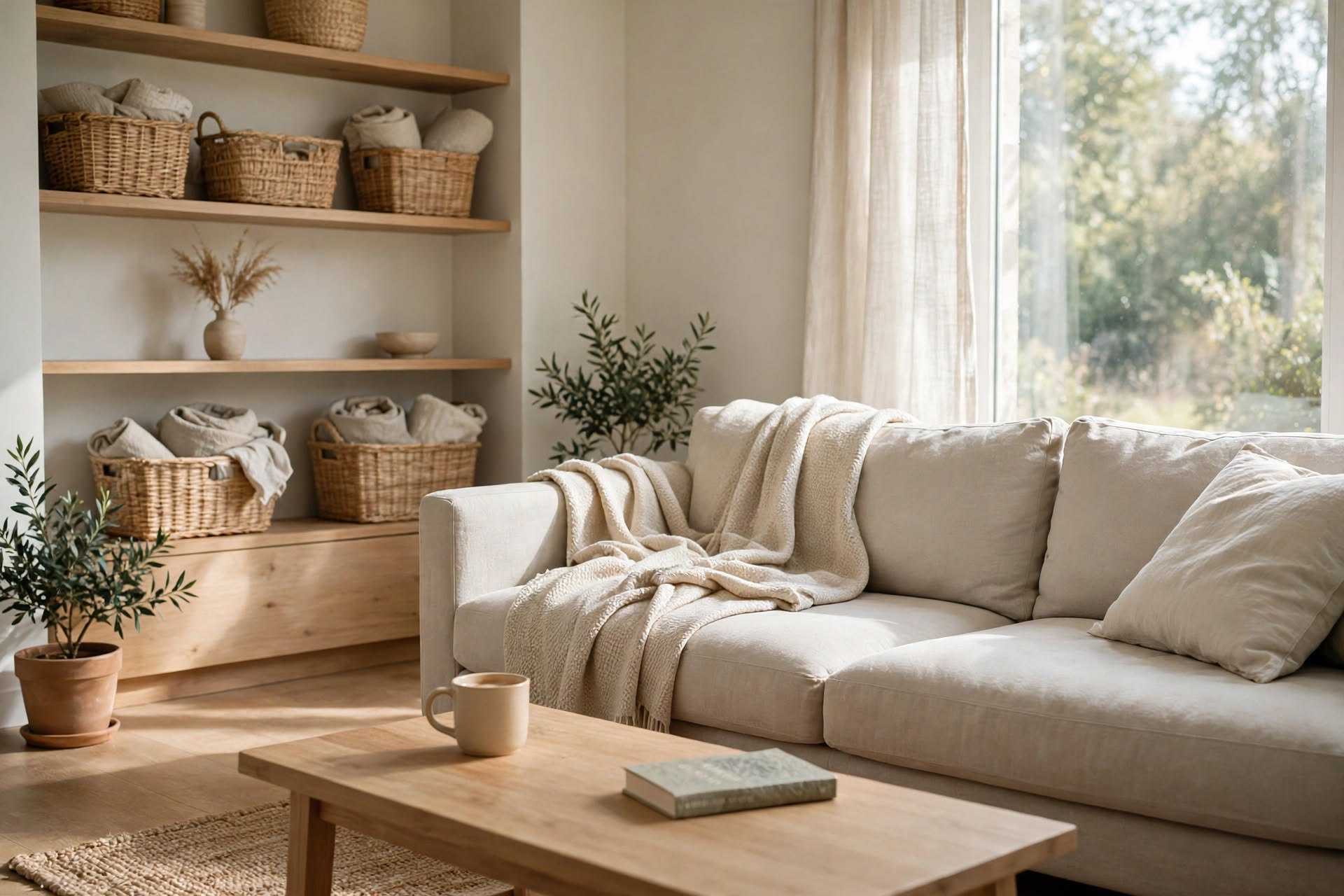
25 Home Organization Ideas to Create a Clutter-Free Space
A clutter-free home does not have to look like a showroom. You do not need matching baskets in every cupboard, perfectly folded towels, or a pantry where every label faces the same direction.

What actually helps is simpler: a place for the things you use, a way to put them back without thinking too hard, and enough order that everyday tasks do not feel heavier than they need to be.
Some of the best changes are small. A drawer divider. A few hooks in the right place. One shelf that finally makes sense. The goal is not to erase the evidence of daily life. It is to make a home where finding your keys or starting dinner does not feel like another problem to solve.
Here are 25 practical ideas that help.
1. Start with a Simple Decluttering System
Before buying any organizers, decide what deserves to stay.
Pick one small area — a kitchen drawer, a bathroom cabinet, a bedside table. Empty it completely and sort into three groups:
- Keep — things you use or genuinely need
- Relocate — things that belong somewhere else
- Donate or discard — the rest
Be honest. Keeping something only because it might be useful one day is how cupboards fill up with objects you never touch. Finish one small area properly. That usually feels better than starting five and finishing none.
2. Organize One Room at a Time
Trying to organize the whole home in a single weekend rarely works. It just creates more piles.
Choose one room and stay with it. Start with the place that frustrates you most often. A practical order for many people looks like this:
- Kitchen
- Bedroom
- Bathroom
- Entryway
- Living room
Adjust it to your own home. The important part is finishing manageable sections instead of opening every cupboard at once.
3. Use Labeled Baskets for Everyday Storage
Baskets work because they group similar things and calm visual noise.
A large one for extra blankets, a smaller one for remotes, a sturdy one for toys or reusable bags. Labels help when more than one person uses the space — simple words are enough.
Measure the shelf or cupboard before buying. And remember: a basket should hold a clear category of useful things. It should not become a place where undecided clutter goes to hide.
4. Make Better Use of Vertical Wall Space
When floor space is tight, the walls often have more to offer.
Floating shelves, rails, pegboards and hooks can take pressure off surfaces without adding furniture. A kitchen rail for everyday utensils, a pegboard in a small office, a narrow shelf in a bedroom — all can help if they are used with restraint.
Keep frequently used items within easy reach. Put lighter, rarely needed things higher up. Vertical storage works best when it reduces clutter, not when it simply moves it upward.
5. Create a Functional Entryway Drop Zone
The entryway collects everything: keys, shoes, bags, coats, post, the receipt you meant to put somewhere safe.
A small drop zone gives those things a predictable place. Hooks for coats and bags, a tray for keys, somewhere for shoes, a basket for reusable bags, a mirror if there is room. Even a narrow hallway can take a few of these.
If there is no real entryway, a hook rail and a slim tray near the door are often enough to stop the daily scatter.
6. Add Drawer Dividers for Small Items
Mixed drawers waste time. Dividers turn them back into something usable.
Separate cutlery and cooking tools in the kitchen. Give socks, belts and small accessories their own sections in the bedroom. You do not need expensive organizers — clean, sturdy boxes that fit the drawer can work as a temporary solution.
The best system is the one that makes things easy to find and easy to put back.
7. Organize Your Pantry by Category
A pantry is calmer when similar foods live together.
Breakfast items, grains, baking ingredients, cans, snacks, everyday cooking essentials — group them in a way that matches how you cook. Use bins for small packets. Keep what you reach for most often at a comfortable height.
Clear containers can help with rice, pasta or oats, but they are not compulsory. Original packaging often carries useful information. Move older products forward so they get used first.
8. Use Clear Containers Where They Actually Help
Transparent containers make it easier to see what you have. They work well for craft supplies, bathroom extras, cleaning cloths and certain pantry staples.
Choose ones that open easily, stack reasonably and clean without fuss. Label them when several look similar or when the storage is shared. For food, use containers suited to what you are storing.
If the original packaging already works, there is no need to replace it just for the sake of matching boxes.
9. Maximize Under-Bed Storage
The space under the bed is useful, especially in a smaller room.
Low boxes or fabric bags can hold extra bedding, seasonal clothes, spare pillows or shoes you do not need every day. Choose containers that fit the clearance and slide out without a struggle.
Keep daily items somewhere easier to reach. And if you prefer the room to feel lighter, leave the space empty. Not every gap needs to become storage.
10. Create a Cable Management Station
Loose chargers make even a tidy surface look restless.
Start by removing cables that no longer belong to anything you own. Keep the useful ones together with simple ties and small labels. A cable box for a power strip, a drawer for spares, and one designated charging spot usually make a noticeable difference.
Avoid bending cables tightly or covering adapters in ways that trap heat. The aim is simply to make cords identifiable and easy to put away.
11. Set Up a Simple Mail and Paperwork Station
Paper piles grow when there is no obvious place for them.
A small station with three categories helps:
- Action — things that need a response
- Keep — important documents to store
- Recycle or discard — the rest
A wall file or a few labeled folders are often enough. Check it regularly instead of letting it become another permanent stack. Important papers deserve secure storage; everything else should move on.
12. Choose Furniture with Built-In Storage
In smaller homes, furniture that does more than one job earns its place.
An ottoman that holds blankets, a bed with drawers, a coffee table with a lower shelf, a bench with shoe storage — all can help if the storage inside has a clear purpose.
A storage piece filled with unrelated clutter does not solve the problem. It only hides it temporarily.
13. Keep Kitchen Countertops Functional
Counters are for preparing food. When they fill up with appliances and jars, cooking becomes harder than it needs to be.
Remove what you rarely use. Keep everyday essentials accessible and give them a defined place — a small tray for oils, a utensil pot near the hob, a compact coffee setup if you want one. Leave a clear stretch of work surface.
You do not need empty counters. You need usable ones.
14. Organize Bathroom Cabinets and Shelves
Bathrooms work better when products are grouped by use.
Daily toiletries together, backups in one place, cleaning products stored safely. Everyday items at an easy height, towels on their own shelf, small tools in simple containers. Check dates and remove empties now and then.
If space is tight, the inside of a cabinet door can take a lightweight organizer, provided it does not interfere with the hinges or shelves.
15. Make Your Closet Easier to Navigate
A closet does not need to look perfect. It needs to make getting dressed simpler.
Group clothes in a way that matches how you dress. Use hangers of a similar type for a calmer look. Fold knitwear that stretches on hangers. Keep everyday pieces easy to reach and seasonal items further away if needed.
The reverse-hanger method can show you what you actually wear: turn hangers one way, reverse them after wearing the item, and review what remains untouched after a few months. Treat it as information, not an automatic rule for throwing things out.
16. Use Hooks Behind Doors and Inside Cabinets
Hooks are one of the simplest upgrades.
They can hold towels, robes, reusable bags, cleaning tools or lightweight kitchen items, depending on the surface and weight. Over-the-door hooks are useful in many rooms; adhesive ones can work for lighter objects when installed properly.
Check clearance and avoid overloading them. A few well-placed hooks often remove daily friction without adding another piece of furniture.
17. Add Floating Shelves for Frequently Used Items
Floating shelves keep surfaces clearer when they hold things you reach for often.
Books and supplies in a small office, a short run of everyday dishes in the kitchen, a few chosen objects in the living room — all can work. Leave some breathing room on the shelves so they stay usable and do not look crowded.
Install them securely for the weight you intend to put on them.
18. Create a Home for Cleaning Supplies
Cleaning is easier when the products live together.
A cabinet, a utility shelf or a portable caddy keeps things in one place. Group by purpose: kitchen, bathroom, general surfaces, laundry, cloths and brushes. Keep products in their original containers when possible and store them safely.
A caddy is especially useful if you move between rooms and do not want to carry items one by one.
19. Organize Toys with Easy-Access Bins
Toys spread unless the system is simple enough for children to use.
Broad categories work better than complicated ones: building sets, figures, puzzles, art supplies, soft toys, outdoor things. Open bins for everyday play, smaller containers for pieces that get lost easily. Put frequent toys at child height and keep heavier or less suitable items out of reach.
Fewer categories usually mean the system lasts longer.
20. Use Stackable Storage in Small Spaces
When floor space is limited, height becomes useful.
Stackable bins and modular boxes can work well in wardrobes and utility cupboards. Measure the full space first, including depth. Make sure you can reach what you need without unstacking everything. Label clearly, keep heavier boxes lower, and avoid unstable towers.
21. Divide Drawers into Everyday Categories
Not every drawer needs a complex insert. Clear categories are often enough.
Socks and accessories in the bedroom, pens and small tools in a desk, everyday grooming items in the bathroom. Give each group a consistent place and leave enough room to take things out and put them back without rearranging the whole drawer.
22. Create a Dedicated Charging Station
Devices end up charging all over the house unless they have a settled place.
Choose a spot near a suitable outlet and keep the everyday devices and their cables together. A simple tray or charging organizer is usually enough. Label chargers if several people share them, and give electrical equipment proper ventilation.
One small station removes a surprising amount of daily scatter.
23. Organize Seasonal Decorations
Seasonal items take up more room than they seem to.
Group them by season or occasion, use labeled containers, and wrap fragile pieces carefully. Before storing everything again, remove anything broken or no longer used. Keep the most frequently needed boxes easiest to reach.
24. Use a Weekly Home Reset Routine
Organization fades without a light regular habit.
Once a week, take a short time to return misplaced items, clear the surfaces you use most, check the fridge and pantry, sort paperwork, put laundry away and empty small bins. It does not need to be a long session. A brief reset often prevents a much larger catch-up later.
The best version is the one you will actually repeat.
25. Follow the One-In, One-Out Rule
A home can be well organized and still fill up if new things arrive faster than old ones leave.
When something new comes in, look at whether something similar can leave — especially with clothes, kitchen tools, books, toys and decorative objects. It does not have to be rigid. Applied to the categories that tend to overflow, it simply helps keep the volume in check.
How to Keep Your Home Organized Without Buying More Storage
More containers are not always the answer.
Before buying anything, try this first:
- Remove what you no longer need
- Give frequent items a convenient home
- Group similar things together
- Use the shelves and drawers you already have more clearly
- Keep everyday storage easy to reach
- Review spaces regularly
If you do need organizers, measure first and choose them for a specific problem. Matching sets are optional. Function matters more.
Final Thoughts
A clutter-free home is not a home with nothing in it. It is a home where the things you own have a purpose and a place.
That neglected drawer, the crowded pantry, the tangle of cables — each one is usually just a decision that has been postponed. Keep what you use. Give it a proper home. Let go of what no longer belongs in your daily life.
You do not have to fix every room this week. Start with one drawer, one shelf, or one small corner. The real improvement is not a perfect photograph. It is being able to find what you need, put it away without effort, and move through your home with a little less friction.