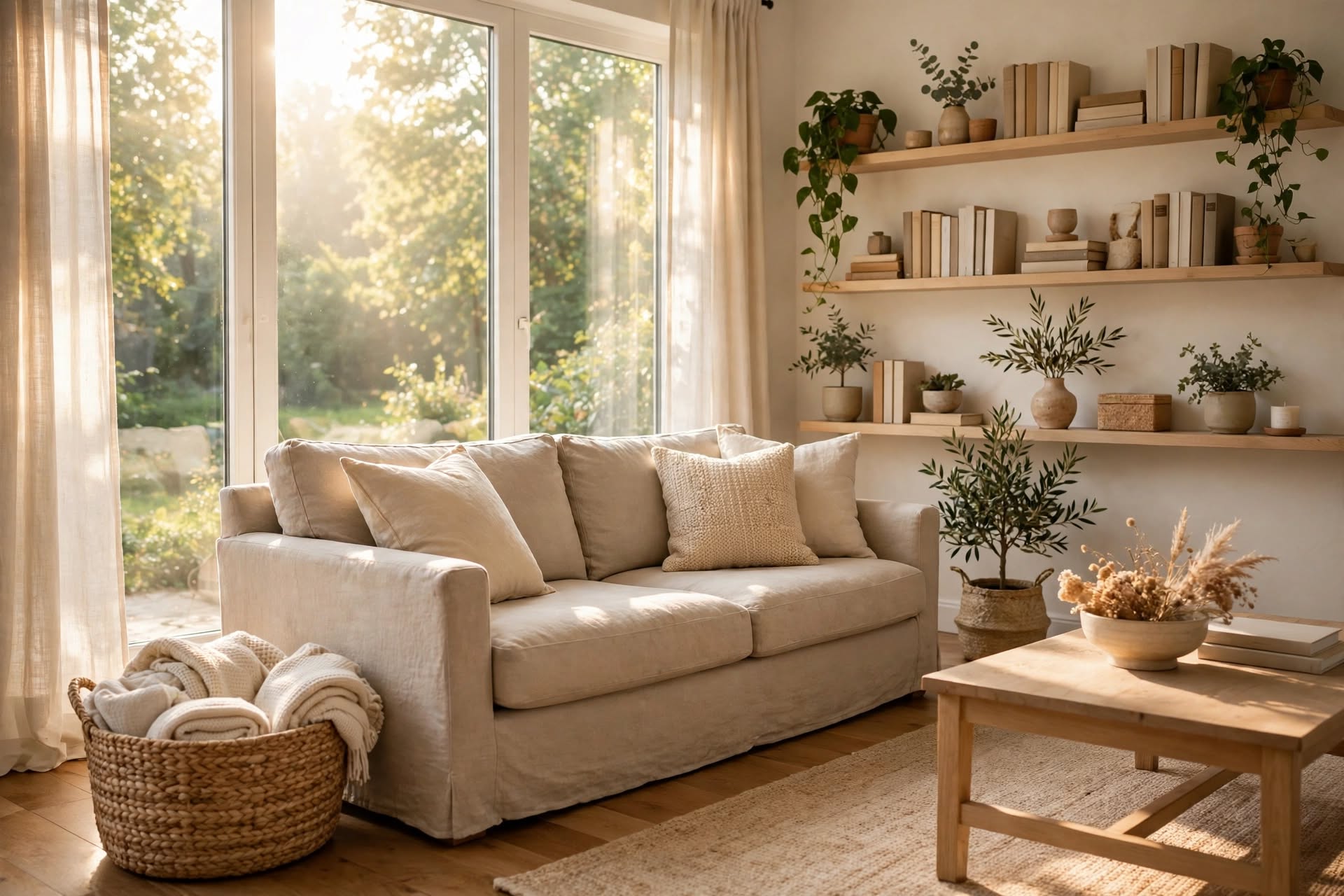

The Organized Home Is Not a Perfect Home
A kitchen drawer should not require a rescue mission.
Yet somewhere between the potato peeler, tangled measuring spoons, spare batteries, and three different types of tape, even a simple search for one utensil can become surprisingly complicated.
The same thing happens throughout the home. Blankets take over the sofa, shoes gather near the front door, bathroom products multiply under the sink, and closets somehow become smaller every season.
The solution is not necessarily more furniture or an entire weekend of decluttering. Often, the best home storage ideas involve using existing space more intelligently.
A few well-chosen organizers, some overlooked vertical surfaces, and furniture that does more than one job can make everyday life considerably easier.
These 23 smart storage ideas cover the kitchen, living room, bedroom, bathroom, entryway, and home office. Whether you live in a small apartment or a larger house, the goal is the same: create a home where everything has a practical place without sacrificing comfort or style.
Kitchen Storage Ideas That Make Everyday Tasks Easier
The kitchen is one of the busiest rooms in the home. It also collects an impressive variety of objects, from cooking utensils and small appliances to pantry supplies and reusable containers.
These ideas help make the most of cabinets, drawers, and unused wall space.
1. Add Drawer Dividers for Kitchen Utensils
Kitchen drawers often become crowded because different utensils are stored together without a clear system.
Adjustable drawer dividers create separate sections for spatulas, measuring spoons, peelers, whisks, and other everyday tools.
Choose dividers that fit the drawer dimensions and leave enough room to open and close it comfortably. Bamboo and wood options can also give the inside of a drawer a more finished appearance.
Best for: Kitchen drawers that contain mixed utensils and small accessories.
2. Store Baking Trays Vertically
Baking sheets, cutting boards, cooling racks, and oven trays can be difficult to stack neatly.
A vertical organizer keeps them upright, making it easier to remove one item without moving everything else.
This solution works particularly well inside a lower kitchen cabinet. It can also be useful for separating lids from pots and pans.
Best for: Narrow cabinets and kitchens with limited drawer space.
3. Use Pull-Out Organizers Under the Sink
The cabinet beneath the kitchen sink is often an awkward storage area because of plumbing pipes and cleaning supplies.
A two-tier pull-out organizer can make better use of the available height. Keep frequently used products on the accessible level and less frequently used supplies farther back.
Before buying an organizer, measure around the pipes and check the cabinet’s usable width and height.
Keep cleaning products in their original labeled containers and store them securely away from children and pets.
Best for: Kitchen cleaning supplies and awkward cabinet spaces.
4. Arrange Pantry Supplies in Clear Containers
Clear containers make it easier to see how much pasta, rice, flour, or cereal remains.
Instead of buying dozens of matching jars immediately, start with the products you use most often. Choose airtight containers appropriate for the food being stored, and label them with the product name and relevant storage information.
A combination of jars, baskets, and original packaging can work just as well as a perfectly matching pantry.
Best for: Pantry shelves and frequently used dry ingredients.
5. Install Wall Hooks for Frequently Used Items
Some kitchen accessories do not need to occupy valuable drawer space.
A small rail or a few sturdy hooks can hold oven mitts, reusable shopping bags, aprons, and selected cooking utensils.
Place hooks where they are convenient but away from heat sources, open flames, and areas where hanging objects could interfere with cooking.
Best for: Small kitchens with limited cabinet and drawer space.
Living Room Storage Ideas That Look Like Part of the Decor
Living rooms need to accommodate everyday life without looking like storage rooms.
The trick is to choose solutions that blend with the furniture and overall interior design.
6. Choose Woven Baskets for Blankets and Cushions
Woven baskets are a simple way to store extra throws, cushions, and other soft accessories.
A large basket beside the sofa can keep blankets within reach while adding texture to the room.
Choose a size that fits the available floor space. In a smaller living room, one generous basket is often more useful than several small containers scattered around.
Best for: Blankets, cushions, and lightweight accessories.
7. Use a Storage Ottoman
A storage ottoman can serve several purposes at once.
It works as a footrest, an additional seat, and a place to keep items that would otherwise remain on the sofa or coffee table.
Depending on the design, it can hold board games, spare cushions, small blankets, or children’s toys.
Choose a model with a lid that is easy to lift and enough interior space for the items you actually want to store.
Best for: Living rooms that need extra seating and hidden storage.
8. Choose a Coffee Table With Built-In Storage
A coffee table with drawers, shelves, or a lift-top surface offers useful storage without adding another piece of furniture.
Drawers are convenient for remotes, coasters, and small accessories. Open shelves work well for books and decorative boxes.
A lift-top table can also provide a practical surface for working or eating, particularly in a small apartment where space is limited.
Best for: Small living rooms and multifunctional spaces.
9. Install Floating Shelves
Floating shelves use vertical wall space that might otherwise remain empty.
They can display books, framed photographs, small plants, and decorative objects while keeping the floor clear.
For a balanced appearance, combine objects of different heights and leave some empty space between groups. Avoid filling every inch of the shelf.
Always choose suitable wall fixings for the wall construction and the weight of the objects being displayed.
Best for: Small living rooms, narrow walls, and unused corners.
Entryway Storage Ideas to Control Everyday Clutter
The entryway is where many household routines begin and end. Shoes, coats, bags, keys, and umbrellas all need a convenient place.
A functional entrance does not need to be large. It simply needs a few well-planned storage points.
10. Install Wall Hooks for Coats and Bags
Wall hooks are among the simplest small-space storage solutions.
A row of hooks can hold everyday coats, handbags, backpacks, scarves, and reusable shopping bags.
Choose a height that suits the people using them. In a family home, lower hooks can make it easier for children to put away their own belongings.
Best for: Narrow hallways and entrances without built-in closets.
11. Add a Shoe Storage Bench
A shoe bench combines a place to sit with a dedicated area for footwear.
Some models have open shelves, while others include drawers or lift-up compartments.
A bench with open storage makes everyday shoes easy to reach. Closed storage creates a cleaner appearance but may need ventilation, depending on the footwear being stored.
Choose a bench that leaves enough room for the entry door to open fully.
Best for: Small entryways and busy family entrances.
12. Create a Small Everyday Essentials Station
Keys, sunglasses, wallets, mail, and other small items often end up scattered across different surfaces.
A narrow console, wall-mounted shelf, or simple tray can create one designated place for everyday essentials.
Add a small basket for incoming mail and a hook for frequently used keys. The idea is to make leaving home easier by keeping important items together.
Best for: Entryways and hallways where small items tend to accumulate.
Bedroom Storage Ideas That Make Better Use of Hidden Space
Bedrooms should feel restful, but clothes, bedding, accessories, and seasonal items can quickly fill the available storage.
These solutions make use of areas that are often overlooked.
13. Use Flat Storage Containers Under the Bed
The space beneath a bed can be useful for storing items that do not need to be accessed every day.
Flat containers are suitable for seasonal clothing, spare linens, and accessories.
Choose containers that slide easily under the bed and have secure lids if you want to protect their contents from dust.
Before purchasing, measure the clearance between the floor and the bed frame.
Best for: Bedrooms without enough closet or dresser space.
14. Add Drawers Beneath the Bed
If your bed frame allows it, built-in or rolling drawers can provide convenient everyday storage.
They work particularly well for extra bedding, pajamas, seasonal accessories, and other lightweight items.
For a coordinated bedroom appearance, choose drawers that match the bed frame or use simple fabric organizers to keep the contents separated.
Best for: Bedrooms where floor space is limited but under-bed clearance is available.
15. Use a Closet Organizer System
A closet organizer can make a standard wardrobe much more functional.
Additional shelves, hanging sections, and drawers help separate clothing by type and make better use of the available height.
You do not necessarily need a completely new closet. Adjustable systems and modular organizers can improve an existing wardrobe without major renovation.
Start by measuring the space and identifying what needs the most room: long garments, folded clothes, shoes, or accessories.
Best for: Small closets and wardrobes with unused vertical space.
16. Use the Back of Closet Doors
The back of a closet door can provide extra storage without taking up floor space.
Over-the-door organizers are available with pockets, hooks, and shelves for different types of belongings.
They can hold scarves, belts, handbags, accessories, and selected smaller items.
Check the door clearance and weight limits before installing one, especially if the organizer will hold heavier objects.
Best for: Small bedrooms and closets with limited shelving.
Bathroom Storage Ideas for a Cleaner, More Practical Space
Bathrooms often have limited storage, especially in apartments and older homes.
The best solutions make everyday products accessible while keeping the room visually calm.
17. Organize the Space Beneath the Bathroom Sink
The area beneath the bathroom sink can become crowded with toiletries, cleaning products, and spare supplies.
Stackable organizers or narrow pull-out drawers can divide the cabinet into useful sections.
Measure around the plumbing before buying anything. Leave room for pipes and make sure containers can be removed easily for cleaning.
Keep products in their original packaging whenever possible so that labels, ingredients, and usage information remain available.
Best for: Bathroom cabinets with unused space around the sink plumbing.
18. Install Shelves Above the Toilet
The wall above a toilet is often an underused storage area.
A slim shelving unit or wall-mounted shelves can hold folded towels, spare toilet paper, and a few decorative accessories.
Choose moisture-resistant materials and secure wall-mounted shelves properly. Avoid placing heavy or fragile objects where they could fall.
A small basket on one shelf can keep extra supplies together without making the arrangement look crowded.
Best for: Small bathrooms with limited cabinet space.
19. Add Vertical Storage for Towels
Bulky towels can take up considerable room in bathroom cabinets.
A narrow wall shelf, towel ladder, or vertical storage rack can create an alternative place for folded or rolled towels.
Keep frequently used towels within easy reach and allow them to dry properly between uses.
For a softer, more decorative look, combine neatly folded towels with a small basket for washcloths.
Best for: Bathrooms without linen closets or generous built-in storage.
Home Office and Small-Space Storage Ideas
A home office or multipurpose room can become cluttered quickly because it often has to accommodate work supplies, paperwork, electronics, and hobby materials.
These final ideas help keep smaller spaces functional.
20. Use a Desk Organizer With Separate Compartments
A desk organizer helps keep frequently used items in one place.
Choose a design with separate sections for pens, notebooks, sticky notes, chargers, and other everyday supplies.
If the desk is particularly small, a vertical organizer can free up more working surface than a wide horizontal tray.
Keep only the items you use regularly on the desktop. Store backup supplies elsewhere.
Best for: Home offices, study corners, and shared desks.
21. Install a Pegboard or Wall-Mounted Organizer
A pegboard can turn an unused wall into flexible storage.
Depending on its design, it can hold baskets, hooks, small shelves, scissors, stationery, headphones, and craft supplies.
One advantage is that the arrangement can change as your needs change. Items can be moved without installing an entirely new storage system.
Make sure the board and fixings are suitable for the wall and the weight of the items.
Best for: Home offices, craft rooms, and hobby corners.
22. Choose Furniture With More Than One Purpose
Multifunctional furniture is especially useful in smaller homes.
Consider a bench with storage, a bed with drawers, a desk that folds away, or a dining table with built-in shelving.
These pieces can reduce the number of separate furniture items needed in a room.
Before buying, think about how often the furniture will be used in each role. A storage feature is only helpful if it is convenient enough to use regularly.
Best for: Studio apartments, guest rooms, and multipurpose spaces.
23. Use the Space Above Cabinets
The area above kitchen cabinets, wardrobes, or other tall furniture can sometimes provide additional storage.
It is suitable for lightweight items that are not needed every day, such as decorative boxes or selected seasonal accessories.
Use matching containers to create a more intentional appearance and label them so their contents are easy to identify.
Avoid storing heavy items overhead or placing belongings where they could fall. If the area is difficult to reach safely, it may be better left empty.
Best for: Rooms with high ceilings and unused space above tall cabinets.
How to Choose the Right Storage Solutions for Your Home
Not every storage idea works in every home.
A large basket might look beautiful in a spacious living room but feel intrusive in a narrow apartment. A tall shelving unit may provide plenty of storage but make a small room feel crowded.
Before buying organizers or furniture, consider these four questions.
1. What needs to be stored?
Start with the objects themselves. Their size, weight, shape, and frequency of use will determine which storage solution makes sense.
2. How often do you need to access them?
Everyday essentials should be easy to reach. Seasonal decorations and spare bedding can be stored in less accessible areas.
3. How much space is available?
Measure the area before buying baskets, drawers, shelving, or furniture. Pay attention to door openings, walking paths, and clearance around other furniture.
4. Does the solution fit the room’s style?
Storage can contribute to the overall appearance of a home. Natural baskets, wooden organizers, fabric boxes, and simple shelving can make practical items feel like part of the decor.
The best storage solutions balance appearance, accessibility, and everyday
function.
The Final Truth: An Organized Home Is a Home That Works
A perfectly organized home is not one where every object sits inside a matching container.
It is a home where everyday things have somewhere to go. Where the kitchen drawer opens without a struggle. Where shoes do not take over the entrance. Where extra blankets are easy to find and the bathroom counter has enough room for the things you actually use.
The goal is not to eliminate every sign of daily life.
It is to make your home easier to live in.
Start with one drawer, one shelf, or one overlooked corner. Choose a storage solution that solves a real problem, rather than buying another basket simply because it looks beautiful.
And remember: a home can be stylish, comfortable, and organized without being perfect.
In fact, it is probably better that way.