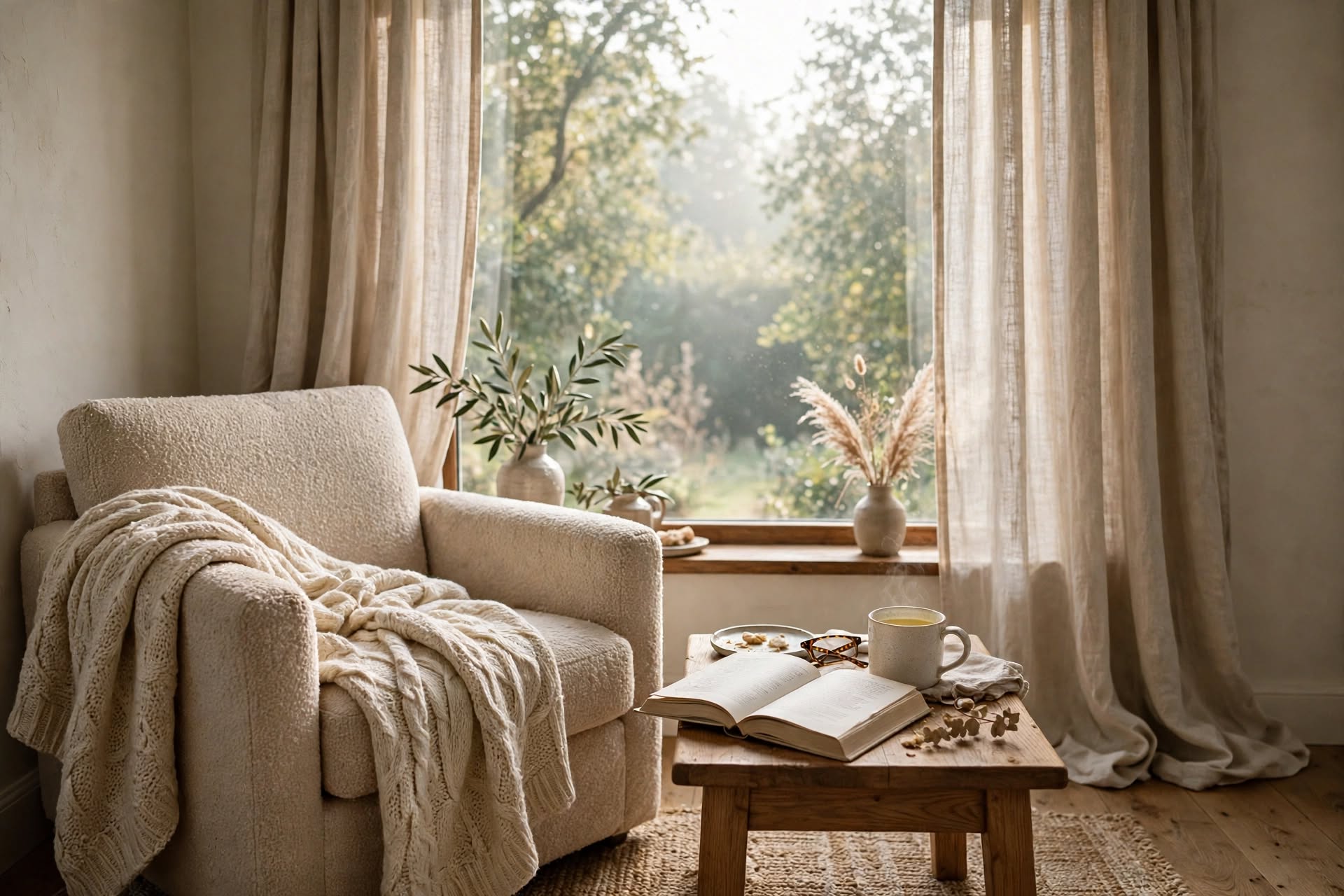

I’ve set up more reading corners than I care to count. Some looked perfect in photos and felt stiff in real life. Others were so comfortable I started disappearing into them for hours. The difference almost never came down to budget or square metres. It came down to a handful of quiet decisions: how the light falls on the page, whether your legs can stretch, and if the space invites you in without effort.
A good reading nook doesn’t need a custom window seat or a wall of bookshelves. It simply needs to make sitting down with a book feel natural.
Begin with the light
A window is still one of the best places to start. Daylight softens everything. The trick is placement. I used to push the chair straight into the strongest light and then spent half the time squinting or adjusting curtains. Now I angle it slightly to the side. You still get the view and the brightness, but the page stays readable.
A small side table, one soft cushion and a light throw usually finish the corner. If the sill is deep, keep only one or two objects on it. More than that and the space starts to feel staged instead of lived-in.
The chair is everything
This is the piece people get wrong most often. A beautiful chair you can’t sit in for more than twenty minutes is useless. Look for real support in the lower back, armrests at a natural height, and a seat that doesn’t force you to perch.
I measure the space first, then choose the chair — never the other way around. In small rooms a compact accent chair with a slightly reclined back often works better than a big statement armchair. The only test that matters is whether you actually want to stay there.
A footrest changes the whole experience. An upholstered ottoman that matches the scale of the chair is ideal. In tighter spaces a woven pouf or low wooden stool works just as well and can slide out of the way when needed. Storage ottomans are especially useful — they hold the extra blanket or stack of magazines without adding visual noise.
Light that works after dark
Natural light is perfect during the day. After dark most reading nooks fail because the light is either too dim or too harsh.
What works best is a combination: soft ambient light in the room and a focused reading light aimed at the page. A floor lamp beside the chair or an adjustable wall lamp above it usually solves the problem. Warm white bulbs around 2700K keep the atmosphere cozy without turning the text yellow. Position the lamp so your body doesn’t cast a shadow across the book — this single adjustment makes more difference than most people expect.
A good floor lamp also does something else: it visually claims the corner. Even in an open living room, the pool of light makes the nook feel intentional.
The small things within reach
You need somewhere for the book, the glasses, the cup of tea. A compact side table or a C-shaped table that slides under the chair arm is usually enough. Round shapes work better in tight corners because there are no sharp edges to navigate. Resist the urge to choose something large “just in case.” The table should support the reading, not become another place for clutter.
One well-chosen throw is better than three decorative ones. Cotton or linen for warmer months, wool or a soft knit when it’s colder. Drape it over the arm of the chair so it’s ready to use, not carefully arranged for photos. The same rule applies to cushions. A lumbar pillow that actually supports your back is more valuable than a pile of pretty pillows that end up on the floor. Two is usually the sweet spot.
Books close, but not overwhelming
If you already have a bookcase, placing a chair nearby is one of the simplest and most satisfying solutions. The books become part of the atmosphere instead of something you have to get up for.
In smaller spaces, floating shelves above or beside the chair work better than a full bookcase. Keep only the books you’re currently reading or likely to reach for. Empty space on a shelf is not a failure — it’s what keeps the corner calm.
Claiming quiet corners
Empty corners are often the easiest places to claim. A chair, a floor lamp, a small rug and a side table are frequently all that’s required. In very narrow spots a compact upholstered bench or small accent chair fits better than a traditional armchair. The goal is to make the corner feel slightly removed from the rest of the room without turning it into an obstacle.
A quiet chair near the bedroom window or in an unused corner can become one of the most used spots in the house. Keep the palette connected to the rest of the room so it doesn’t feel like a separate project. Soft neutrals, muted greens and natural wood tend to work without competing with the bed. In very small bedrooms a cushioned seat at the end of the bed is often enough.
In the living room the reading chair works best when it feels related to the main seating but slightly apart. A change in rug, the back of the sofa or a bookcase can create that gentle separation. The chair should still feel like part of the room — just a quieter part.
The space under the stairs is awkward for almost everything else and surprisingly good for reading. A built-in bench with storage is ideal if the height allows it. Otherwise a compact chair and a well-placed lamp can turn the dead zone into a retreat. Lighting matters more here than almost anywhere else, because natural light is usually limited.
The finishing layers
A single healthy plant softens the corner more effectively than several struggling ones. Choose according to the actual light the spot receives. One larger piece of artwork above the chair is usually stronger than a busy gallery wall. Landscapes, quiet abstracts or botanical prints tend to support the calm mood.
You don’t need to repaint. Repeating two or three colours through the cushions, throw, rug and artwork is enough to make the nook feel considered. Warm neutrals, soft greens and earthy tones are reliable. Too many unrelated colours make even a small corner feel restless.
A rug helps the chair and table feel like a destination rather than furniture left against a wall. Ideally the front legs of the chair (and part of the side table) sit on it. Natural fibres and low-pile weaves are practical for everyday use.
Let it change with the season
This is one of the easiest ways to keep the space feeling fresh. Lighter textiles and a bit of greenery in summer. A thicker throw, deeper colours and warmer light in winter. Small changes — nothing that requires a full redesign.
When space allows, two chairs with a shared table between them create a different kind of quiet. A wide bench or compact loveseat can work in smaller areas. The important part is leaving enough room to sit down and get up without feeling cramped. Shared quiet is only pleasant when the layout stays comfortable.
Small-space reality
In apartments and compact homes the best reading nooks are usually made from space that already exists. A corner beside a bookcase, a narrow spot by the window, the end of the bed. Wall-mounted lights free up surfaces. Floating shelves keep books accessible. Multifunctional pieces — storage ottomans, benches with drawers — do double duty without visual weight.
Sometimes the most successful version is simply a comfortable chair, a good lamp and one soft throw. Everything else is optional.
What actually lasts
The reading nooks that last are the ones that remove friction. When the light is right, the seat supports you, and what you need is within reach, you stop negotiating with yourself about whether it’s worth sitting down.
You don’t have to create the perfect corner in one weekend. Move a chair. Add a lamp. Bring in a throw you actually like. Live with it for a week and notice what still feels missing. The best adjustments usually reveal themselves through use, not through planning.
A good reading nook doesn’t have to look like a magazine spread. It just has to make you want to stay a little longer than you planned.