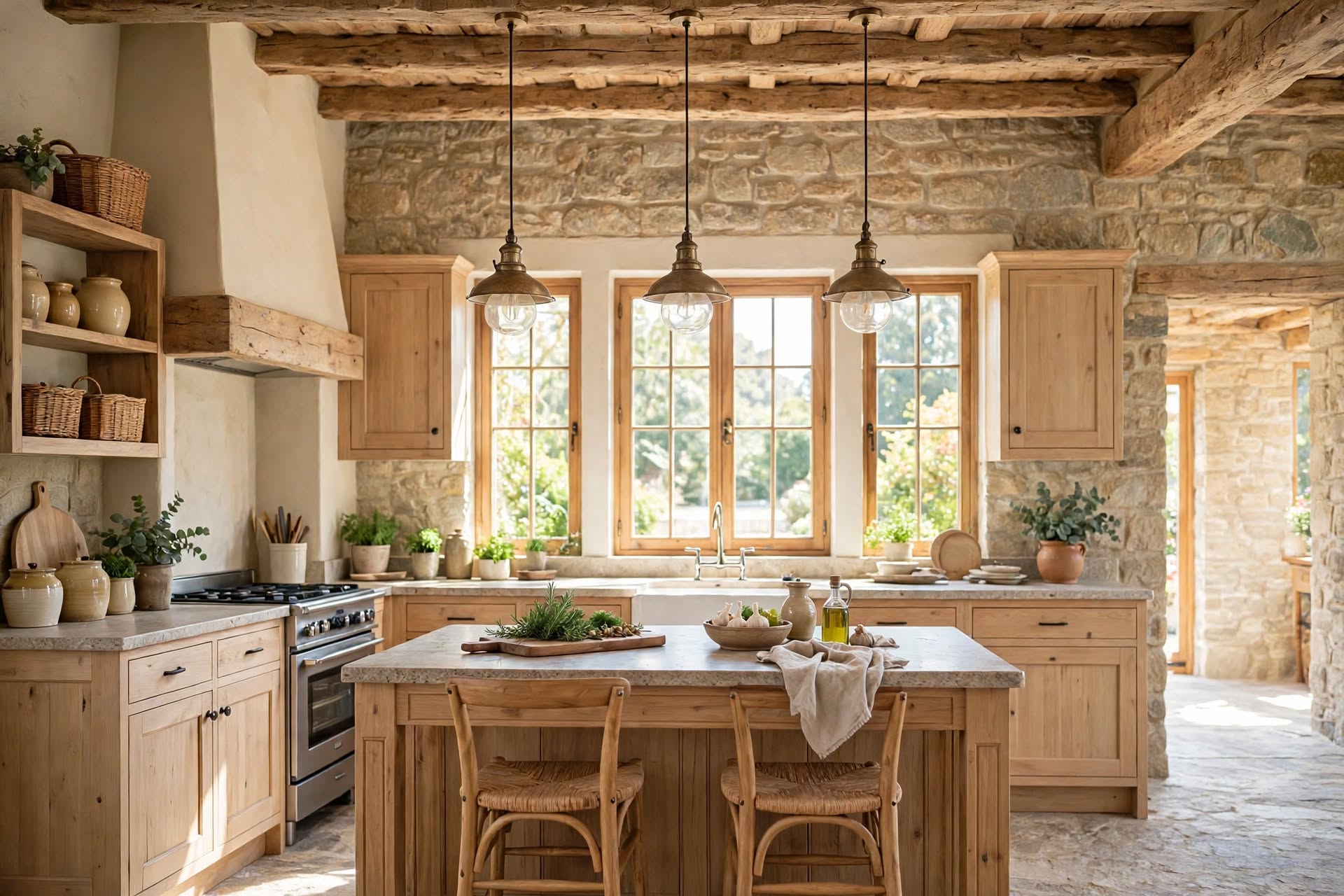
Some kitchens are rooms. A stone kitchen is a memory with a roof.
It is the kind of place where morning light moves slowly across an old wall, where a wooden table collects little marks from years of use, and where the smell of fresh bread seems to belong to the building itself.

Stone has a reputation for being cold. And, visually, it can be. A kitchen with gray stone walls, hard floors, sharp lines, and little natural light may feel more like an old cellar than the heart of a home.
But stone was never meant to work alone.
Pair it with warm wood, handmade ceramics, soft lighting, natural fabrics, and a few signs of everyday life, and the atmosphere changes completely. The walls become a beautiful backdrop rather than the main event. The kitchen begins to feel grounded, welcoming, and quietly timeless.
The secret is not to hide the stone. It is to give it something warm to stand beside.
These 21 stone house kitchen ideas explore how to create that balance — whether you are renovating an old farmhouse, updating a Mediterranean home, or simply bringing a little rustic character into a modern kitchen.
Part One: Let the Stone Speak First
Before choosing cabinets, shelves, or decorative accessories, look at the stone itself. Its color, texture, shape, and age can guide the entire design.
The goal is not to make every surface compete for attention. Let the stone be the foundation, then build the room around it.
1. Let One Stone Wall Become the Star
Not every wall needs to be exposed.
In fact, one beautiful stone wall can have more impact than an entire room covered in the same material. Choose the wall with the most interesting texture or the best natural light. It might be the wall behind the dining table, the area around the cooking zone, or a section visible as soon as you enter the kitchen.
Keep nearby finishes relatively quiet. Simple cabinetry, understated hardware, and a restrained color palette allow the irregular shapes and natural variations of the stone to stand out.
If the original stone is hidden beneath plaster, resist the temptation to start knocking it away immediately. First establish what is behind the surface. Older walls may contain wiring, plumbing, structural elements, or materials that need specialist assessment.
Design tip: A single exposed wall looks especially effective when the remaining walls are finished in warm white, soft cream, or a muted mineral shade.
2. Choose Cabinets That Complement the Stone
Stone walls already have plenty of visual movement. Cabinets should bring a little order to the room.
Warm white, mushroom, oatmeal, muted olive, and soft taupe are all worth considering. These shades work particularly well with beige, honey-colored, and warm gray stone.
For a more dramatic kitchen, deep green or charcoal cabinetry can create a beautiful contrast. The important thing is to test the combination in the actual room. Stone can change appearance dramatically depending on daylight, artificial lighting, and surrounding finishes.
Flat-front cabinets create a cleaner, more contemporary look. Shaker-style doors or simple framed fronts introduce a traditional character without making the kitchen feel overly decorative.
Avoid matching every finish too perfectly. A stone house often looks more interesting when its materials feel related rather than identical.
3. Bring Warmth to the Floor
A stone wall paired with a cold-looking floor can make a kitchen feel visually heavy. The floor needs to balance the walls, not compete with them.
If the original stone floor is in good condition, consider keeping it. Its uneven tones and natural wear may be part of the home’s character. A professional can advise on cleaning, repairing, sealing, and protecting the particular type of stone.
If you are choosing new flooring, consider warm-toned terracotta, natural wood, or stone with softer beige and earthy undertones.
Wood flooring can make a stone kitchen feel especially inviting, although the right construction and finish matter in a room exposed to water and cooking spills. Choose flooring designed for the conditions and follow the manufacturer’s installation and maintenance guidance.
A small detail that makes a difference: Repeat the floor’s warm undertones in a wooden stool, cutting board, or dining table. These small connections help the room feel intentional.
4. Let One Stone Surface Run Wild
Stone does not have to be perfectly polished to look beautiful.
A rough limestone wall, an irregular stone backsplash, or a naturally textured section around a doorway can give the kitchen a sense of age and individuality. These surfaces bring visual depth that is difficult to reproduce with perfectly uniform materials.
The trick is restraint. If the wall is highly textured, choose smoother cabinet fronts and simpler countertops. If the countertop has dramatic natural movement, keep the backsplash and accessories quieter.
There is also a practical side to consider. Rough, porous stone in cooking and food-preparation areas may be harder to clean and may require suitable sealing. Ask a stone specialist which treatments are appropriate for the specific material, especially near sinks and cooktops.
The best result is not necessarily the most polished one. It is the one that allows the natural material to look beautiful while still working for everyday life.
Part Two: Wood — The Stone’s Best Friend
If stone gives a kitchen its structure, wood gives it softness.
The contrast is almost instinctive: one material feels solid and permanent, while the other brings warmth, grain, and a more familiar human scale.
A stone kitchen rarely needs more stone. Often, it needs a little more wood.
5. Create a Cooking Alcove With Character
A cooking alcove can become the natural focal point of a stone house kitchen.
Imagine a simple range set beneath a stone arch or framed by a textured stone surround. The effect feels architectural without needing excessive decoration. It can recall an old farmhouse hearth while still accommodating modern appliances.
Keep the design practical. Cooking appliances have specific requirements for ventilation, clearances, heat protection, and installation. A stone surround does not automatically make an appliance safe to use in a recessed space. Follow the appliance manufacturer’s specifications and local building requirements, and have the installation checked by qualified professionals.
For a softer appearance, combine the stone with a simple plaster hood, understated cabinetry, and warm metal hardware.
The alcove should feel like part of the architecture — not a decorative frame added as an afterthought.
6. Add a Wood-Burning Stove or Fireplace
Few elements create a sense of warmth as immediately as a real fire.
In a large stone kitchen, a properly designed fireplace or wood-burning stove can make the room feel like a place to gather rather than simply a place to prepare meals. The contrast between stone, dark iron, and glowing firelight is especially appealing in autumn and winter.
A stove is not a casual decorative addition, however. It requires appropriate installation, a suitable chimney or flue, correct clearances from combustible materials, adequate ventilation, and compliance with local regulations. Have the installation planned and completed by qualified professionals.
If a real fire is not practical, you can still create a similar visual atmosphere with warm lighting, natural textures, and a comfortable seating area.
The feeling of a hearth is as much about how people gather around it as it is about the flames.
7. Use Wooden Beams to Bring the Ceiling Down to Earth
High ceilings and thick stone walls can make a kitchen feel grand, but sometimes a little too grand.
Exposed wooden beams introduce a warmer visual rhythm. They draw the eye across the ceiling, add natural texture, and make a large room feel more intimate.
Dark, aged timber creates a traditional farmhouse atmosphere. Lighter oak or softly finished wood feels more relaxed and contemporary.
If the house already has original beams, consider preserving their character rather than covering them with a uniform finish. Their marks and variations can be part of the building’s history.
For new beams or decorative timber elements, make sure the installation is appropriate for the ceiling structure and any fire-safety requirements. Decorative beams should never be mistaken for structural support.
Design tip: Repeat the beam color in one or two smaller details — perhaps a dining table, open shelf, or wooden stool. This makes the ceiling feel connected to the rest of the room.
8. Choose Lighting That Makes Stone Glow
Stone changes character throughout the day.
In bright morning light, its texture may look crisp and detailed. In the evening, warm lighting can bring out golden undertones and create deeper shadows.
Rather than relying on a single ceiling fixture, use several layers of light:
- Pendant lights above an island or dining table.
- Under-cabinet lighting for food preparation.
- Wall lights to highlight textured stone.
- A warm central fixture for general illumination.
- Small accent lights in darker corners.
For a cozy atmosphere, look for warm-white bulbs, often around 2700K–3000K, while keeping task areas bright enough for safe food preparation.
If you are installing LED strips inside shelves or near stone recesses, choose products and power supplies rated for their location and installation conditions. Use a qualified electrician where wiring or electrical modifications are involved.
The aim is to make the kitchen comfortable at every hour — not simply dramatic after sunset.
Part Three: Clay, Copper, and Things That Were Fired
A stone kitchen becomes more interesting when it includes materials that show the marks of human hands.
Clay, copper, linen, and handmade ceramics bring a softer, less uniform character. They make the room feel lived in rather than staged.
9. Pair Stone With Warm, Natural Wood Finishes
Wood and stone are a classic combination, but the finish matters.
Oiled or matte wood finishes can emphasize the grain and create a softer appearance. They are especially attractive alongside textured stone because neither material looks overly glossy.
That does not mean varnished wood is always the wrong choice. A durable protective finish may be more suitable for a busy kitchen, particularly on surfaces exposed to moisture and frequent cleaning. Choose according to the use of the surface, the manufacturer’s recommendations, and the look you want.
Oak, walnut, ash, and reclaimed timber can all work beautifully. The right choice depends on the stone’s undertones and the amount of natural light in the room.
Try not to introduce too many different wood colors. Two or three related tones usually create a more harmonious result than a collection of unrelated finishes.
10. Add Open Shelves — But Keep Them Useful
Open wooden shelves can soften a stone wall and make everyday objects part of the design.
A row of oak shelves holding ceramic bowls, glasses, a few plates, and a small collection of jars can look especially beautiful against natural stone.
But open shelving should be practical, not simply photogenic.
Keep frequently used items within easy reach. Store less attractive or rarely used kitchen equipment behind closed cabinet doors. Avoid placing delicate objects where they may collect grease or dust near the cooking area.
A balanced kitchen might have two open shelves beside the cooking zone and closed storage everywhere else.
The most appealing shelves are not necessarily full. Leave some empty space so the objects have room to breathe.
11. Turn the Island Around: Stone Base, Wooden Top
A kitchen island can easily become the heaviest-looking element in a stone kitchen.
One way to soften it is to use a stone or stone-look base with a warm wooden countertop or dining extension, provided the surface is suitable for its intended use.
The combination creates a natural transition between the architecture and the furniture. The stone gives the island visual weight, while the wood makes it feel more inviting.
A wooden surface is particularly useful as a breakfast bar or casual dining area. If it will be used for food preparation, choose an appropriate food-safe finish and follow its care instructions. Protect it from standing water, excessive heat, and spills.
For a more contemporary result, keep the island’s shape simple and let the materials provide the interest.
12. Repeat the Same Wood in Three Places
A room feels cohesive when materials appear more than once.
If you introduce a beautiful oak dining table, consider repeating that tone in two smaller places: perhaps a shelf and a pair of stools, or a cabinet detail and a frame.
This does not mean every wooden object should match exactly. In fact, slight differences in grain and finish can make a room feel more natural.
The idea is to create a visual connection. Your eye moves from the table to the shelf, then to the stools, and the materials begin to feel like part of one composition.
This technique is especially useful in stone kitchens, where the wall texture already provides plenty of variation.
Part Four: Light, Fire, and the Details That Make a Room Feel Alive
A beautiful stone kitchen is not only about materials. It is also about atmosphere.
The light, the arrangement of furniture, and the small details all influence whether the room feels welcoming or overwhelming.
13. Bring in Copper and Aged Metal
Copper adds warmth without introducing another large surface.
A copper pot rail, a few hanging pans, warm-toned handles, or a simple pendant can create a subtle contrast against gray or beige stone.
Brushed brass, aged bronze, and dark iron are also worth considering. Each creates a different mood:
- Copper feels warm and traditional.
- Brushed brass adds a softer, elegant glow.
- Aged bronze feels understated and timeless.
- Dark iron creates a stronger rustic contrast.
Choose one dominant metal finish and use others sparingly. Too many competing metallic tones can make the room feel busy.
And remember: metal does not need to look brand new. A slightly aged finish often suits the character of an old stone house better than a perfectly shiny surface.
14. Soften the Floor With a Kitchen-Friendly Rug
Stone floors can be beautiful, but they are hard underfoot.
A rug or runner can introduce color, texture, and a little softness. It can also help define the working area or connect the kitchen to an adjoining dining space.
Look for a low-pile, washable or easy-care material designed for kitchen use. A non-slip backing is important, especially on smooth stone or tile. Avoid thick rugs that create a tripping hazard or are difficult to clean.
Earthy colors, muted stripes, and subtle geometric patterns work well with natural stone.
A rug should look as though it belongs in the room, not as though it has been placed there simply to fill an empty patch of floor.
15. Make Room for Handmade Ceramics
Perfectly matching kitchen accessories can sometimes make a rustic interior feel strangely lifeless.
Handmade ceramics offer a different kind of beauty. Slight variations in glaze, shape, and color make each piece feel individual.
Display a few bowls on open shelving, keep a favorite jug on the counter, or arrange everyday plates near the dining area.
Cream, sand, olive, muted blue, and earthy brown are all attractive choices for a stone kitchen.
You do not need a large collection. A handful of well-chosen pieces will have more impact than shelves crowded with decorative objects.
The best ceramics are the ones you actually use — the bowl for fruit, the mug for morning coffee, the serving dish that comes out when friends visit.
16. Use Linen to Take the Hardness Away
Stone, wood, and metal create a strong architectural foundation. Linen brings a softer note.
A linen curtain, a simple table runner, or a pair of fabric seat cushions can make the kitchen feel more relaxed without changing its overall character.
Natural shades are particularly versatile: warm white, oatmeal, flax, muted beige, and soft olive.
In a busy kitchen, choose fabrics that can be washed and maintained easily. Keep curtains and loose textiles safely away from open flames, hot surfaces, and cooking equipment.
If the kitchen has a large window, lightweight linen curtains can soften the view while allowing daylight to filter through.
The effect is subtle, but important. The room begins to feel less like a collection of hard surfaces and more like a place where people want to stay.
Part Five: The Living Details
The final layer is what makes a stone kitchen feel like a home rather than a beautiful photograph.
It is the light on the table, the chair pulled slightly away from the counter, the herbs near the window, and the small signs that the room is being used.
17. Bring in Greenery
Plants introduce life and color into a room dominated by stone, wood, and metal.
A small herb garden near a bright window is both attractive and useful. Rosemary, thyme, parsley, and basil can be good options when the conditions suit them.
The important word is conditions. Herbs need enough light, suitable containers, drainage, and watering appropriate to their growing environment. A dark corner may look charming in a photograph but may not provide enough light for healthy plants.
If the kitchen does not receive much natural light, choose plants suited to the available conditions or use fresh herbs as occasional seasonal additions rather than expecting a permanent indoor garden.
A simple terracotta pot or a few small planters can be enough to bring the room to life.
18. Create a Small Place to Sit
Not every kitchen needs a large dining area.
Sometimes a small wooden bench, a pair of stools, or a built-in seat beside a window is enough to make the room more inviting.
A stone kitchen can feel particularly welcoming when it offers somewhere to pause. Someone can sit with a cup of coffee while another person prepares dinner. A child can draw at the table. A guest can stay nearby instead of feeling separated from the conversation.
If space is limited, consider a narrow bench against a wall or a small table that can serve several purposes.
Choose seating that fits the scale of the room. Oversized furniture can make a beautiful stone kitchen feel cramped.
19. Make the Dining Table the Heart of the Room
A dining table is often the most human element in a stone kitchen.
It does not need to be large or expensive. A simple wooden table with visible grain can provide a beautiful contrast to rough stone walls.
For a traditional look, choose a substantial farmhouse table. For a lighter atmosphere, consider a slimmer design with simple legs.
Avoid decorating the table so heavily that it becomes difficult to use. A ceramic bowl, a small vase, or a linen runner is usually enough.
The table should be ready for everyday life — for breakfast, a quick lunch, a family meal, or an evening that lasts longer than planned.
20. Turn a Deep Window Into a Quiet Retreat
Old stone houses sometimes have deep window openings that are easy to overlook.
Instead of treating them as awkward architectural details, make them part of the kitchen’s design.
A wide sill can hold a few herb pots, a ceramic jug, or a small collection of objects. If the opening is deep and the structure allows it, a professionally designed window seat can create a lovely place to sit.
Imagine a simple cushion, a linen pillow, and a view of the garden beyond the glass. It is a small feature, but it can give the kitchen a sense of calm that no decorative accessory can provide.
Before adding a seat or altering the opening, check the condition and structure of the wall. Also consider insulation, condensation, and safe access to the window.
Stone can contribute to a comfortable indoor environment because of its thermal mass, but the effect depends on the building’s insulation, wall construction, climate, sunlight, and ventilation. A stone wall alone does not guarantee a warm room.
21. Let the Kitchen Age Gracefully
Perhaps the most important idea is also the simplest: do not try to make an old stone kitchen look completely new.
Stone naturally varies in color and texture. Wood develops marks. Copper changes its finish. Handmade ceramics are never perfectly identical.
These details are not necessarily imperfections to eliminate. They are part of what makes natural materials interesting.
That does not mean neglecting maintenance. Stone may need appropriate cleaning and sealing, wood needs care suited to its finish, and metal surfaces should be maintained according to their material. But the aim does not have to be a spotless, untouched appearance.
A kitchen can be beautiful while showing signs of everyday use.
A wooden table with a few marks, a well-used ceramic bowl, and a stone wall that catches the late afternoon light can create a more welcoming atmosphere than a room where every object looks as though it has just arrived from a showroom.
The best stone kitchens do not feel frozen in time. They feel as though they have a future.
An Honest Note Before You Grab a Hammer
Exposing original stone, changing a fireplace, installing a wood-burning stove, or altering a kitchen wall can involve more than a design decision.
Before removing plaster or masonry, establish whether the wall is structural and whether it contains electrical wiring, plumbing, insulation, or materials that require specialist handling. In older buildings, the condition of the masonry and the original construction method also matter.
Stone is not one universal material. Limestone, sandstone, granite, and other types have different properties and may need different cleaning, sealing, and repair methods.
For work involving structural changes, fireplaces, chimneys, cooking appliances, or electrical installations, consult appropriately qualified professionals and follow local building and fire-safety requirements.
A beautiful renovation should protect the character of the house without compromising the safety or comfort of the people living in it.
The Warmth Was Never Just in the Stone
A stone kitchen can be dramatic, rustic, elegant, or wonderfully simple. But the rooms that feel most welcoming usually have something in common: they do not rely on stone alone.
They balance its weight with wood. They soften its texture with linen. They bring in the warmth of copper, the individuality of handmade ceramics, and the gentle glow of layered lighting.
Most importantly, they leave room for ordinary life.
Because the real beauty of a stone house kitchen is not simply the wall that has stood for generations. It is the table where people gather, the window where the morning light falls, and the room that still feels welcoming when the last dish has been put away.
Stone gives the kitchen its foundation.
The life inside it gives the kitchen its warmth.