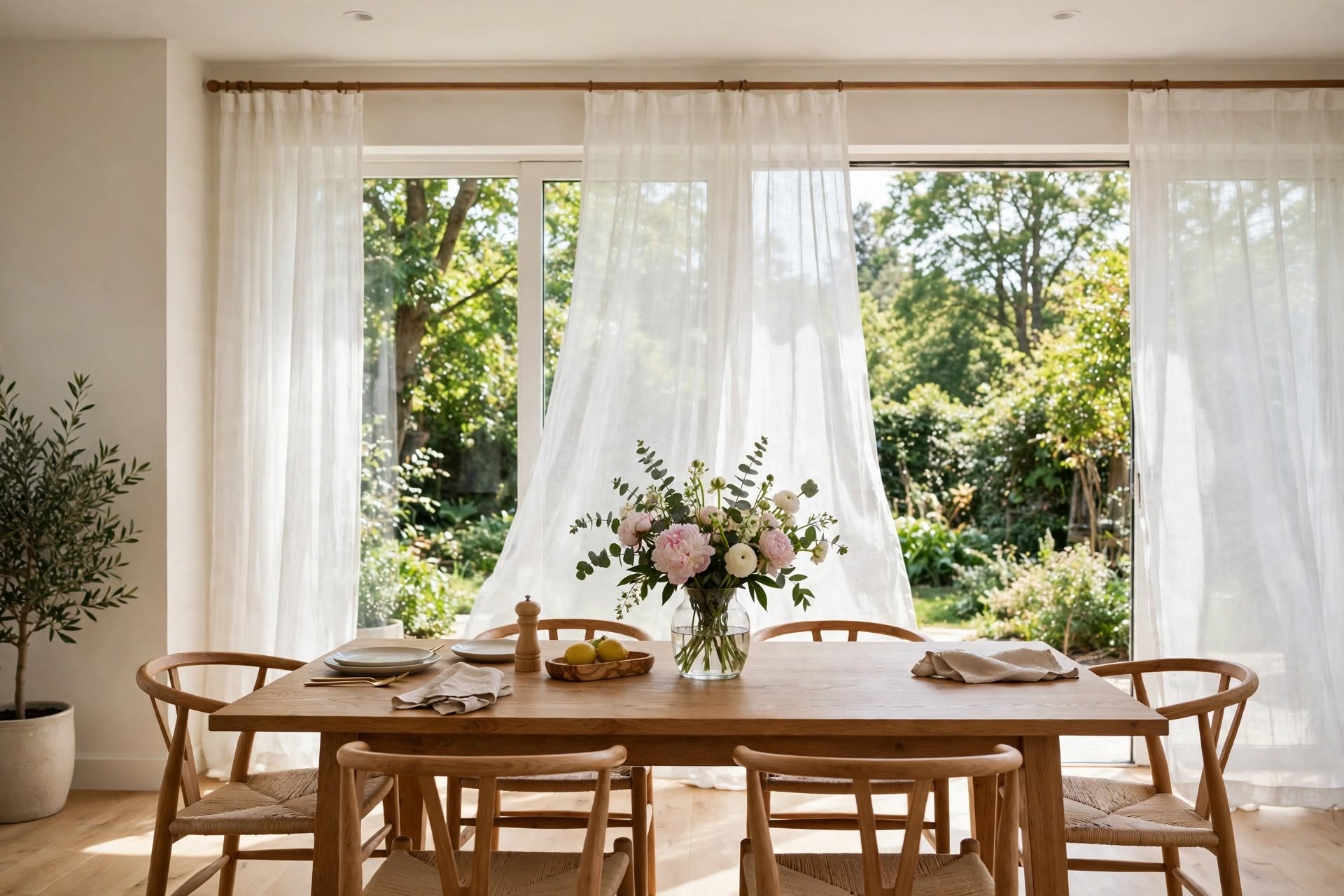
Every dinner party has a moment when it could end — and a room that quietly decides it won’t.
Dessert is finished. The wine is down to the awkward last inch. Someone glances at their phone out of pure reflex. And then… nobody moves. The candles are doing something. The light above the table has pooled like honey. The chairs, which looked merely comfortable an hour ago, now appear to be holding people gently hostage.
This is not entirely an accident, and it does not require an expensive renovation. A welcoming dining room is built from a collection of thoughtful decisions: warm lighting, comfortable seating, a table that fits the space, and little details that make people feel they belong there.
Restaurants have long understood the atmosphere created by soft, layered lighting. Our homes can borrow the same idea — without needing a reservation, a professional lighting designer, or a menu printed on heavy paper.
Here’s how to build a dining room that says stay before you ever say the word.

The Physics of Linger (Honest Version)
Let’s be precise, because this matters more than decorative accessories: a comfortable dining room is not created by one beautiful object. It comes from the way several elements work together.
Light influences the mood. Furniture determines how comfortably people can stay. Texture makes the room feel welcoming rather than empty. And the arrangement of everything determines whether conversation flows naturally.
Consider the difference:
| Element | The Less Inviting Version | The More Welcoming Version |
|---|---|---|
| Lighting | Bright, uniform overhead light | Soft, layered lighting with warm bulbs |
| Light color | Cool white that feels clinical | Warm white, usually around 2700K |
| Seating | Hard chairs with little back support | Comfortable chairs with supportive backs |
| Table surface | Completely bare and echoing | A runner, ceramics, and a simple centerpiece |
| Room layout | Chairs squeezed against walls | Enough space to sit down and move comfortably |
| Atmosphere | One bright light source | Several gentle pools of light |
Notice what’s missing: expensive furniture, a larger house, or a complete redesign.
A welcoming dining room is often assembled through small improvements rather than dramatic purchases.
Rule 1: The Overhead Light Learns to Share
The ceiling fixture in a dining room has an important job, but it does not have to do everything.
A single bright ceiling light can make an evening meal feel more like a meeting than a gathering. It illuminates every corner equally, leaving little room for atmosphere.
Instead, think in layers.
A pendant light above the dining table creates a natural focal point. A shaded table lamp on a sideboard adds a softer glow. Candles bring a little movement and warmth to the table itself.
The goal is not to make the room dark. It is to give the light somewhere to settle.
For a pendant above a dining table, a starting point is approximately 60–75 cm (24–30 inches) between the tabletop and the bottom of the fixture. However, the ideal height depends on the ceiling, the size of the pendant, and whether people can comfortably see one another across the table.
If the light hangs too low, it interrupts conversation. Too high, and it can lose its connection to the table.
Choose warm-white bulbs. Around 2700K is a reliable starting point for a cozy dining atmosphere. If you prefer a slightly softer, more candlelit appearance, you can explore warmer options, provided the light remains comfortable and practical for eating.
A dimmer is especially useful because the room has different jobs throughout the day. Bright enough for homework or serving dinner; softer when dessert arrives and nobody is in a hurry.
Rule 2: Candles, and More Candles Than You Think
One candle is a birthday. Three make an ordinary dinner feel a little more special. A thoughtful arrangement of several candles can turn an everyday table into something that feels almost ceremonial.
Taper candles in simple holders, small tea lights, or a substantial pillar candle can all work beautifully.
The secret is variation. A row of identical candles can look formal, while a mixture of heights and shapes feels more relaxed and collected.
Candlelight also introduces movement into the room. Unlike a fixed bulb, a flame changes subtly, creating little shifts of light across glassware, ceramics, and wooden surfaces.
And Tuesday-night leftovers suddenly look as though they deserve their own dinner reservation.
A practical note: open flames need care. Keep candles away from curtains, greenery, paper decorations, and trailing sleeves. Place them on stable, heat-resistant surfaces, and never leave them unattended. If children, pets, or busy evenings make real flames inconvenient, modern LED candles offer a safer alternative for everyday atmosphere.
The point is not the flame itself. It is the gentle light.
Rule 3: The Table Is a Landscape, Not a Surface
A bare table is efficient. But a dining table with a little texture feels as though someone has thought about the people who will gather around it.
The trick is to create interest without making the table difficult to use.
Start with a runner or tablecloth. Linen, cotton, and other natural-looking fabrics introduce softness and help balance the harder surfaces of wood, stone, or glass.
Then add a centerpiece.
A low bowl of greenery, a small vase of seasonal flowers, or a simple branch can bring life to the arrangement without blocking anyone’s view. If you prefer taller flowers, place them where they will not interfere with conversation.
A few more details make the table feel complete:
- Ceramic plates and bowls: Slight variations in shape or glaze give the table a collected, personal quality.
- Cloth napkins: Linen or cotton adds texture without requiring a formal table setting.
- A water carafe: Keep it within easy reach so guests do not need to interrupt the conversation to refill their glasses.
- A small serving bowl: A little space for bread, fruit, or something shared makes the table feel generous.
None of this needs to match perfectly. Mismatched ceramics can look collected; coordinated pieces can look beautifully considered. Both approaches work when the colors and materials belong together.
One important rule: leave enough clear space for plates, glasses, and serving dishes. A centerpiece should decorate the table, not compete with dinner.
Rule 4: The Chairs That Make People Forget the Time
Here is a detail that deserves more attention than it usually gets: people cannot enjoy a long dinner if they are uncomfortable.
Beautiful chairs are lovely. Comfortable beautiful chairs are considerably better.
When choosing dining chairs, look beyond their shape and upholstery. Consider the back support, seat depth, height, and the amount of room available around the table.
A few practical points make a difference:
- Supportive backs: A gently curved or upholstered back can make longer meals more comfortable.
- Appropriate seat height: Check that the chairs work with the height of your dining table and leave enough room for legs.
- Enough elbow room: Guests should be able to sit and move without constantly bumping into one another.
- Easy-care materials: Performance fabrics, washable covers, wood, and other practical finishes can be useful in busy households.
You do not need a matching set of six chairs, either.
A wooden dining table with upholstered chairs, a pair of vintage-style seats, or a simple bench on one side can create a more relaxed, individual look.
Just make sure the seating arrangement is practical. A beautiful bench is less charming when everyone has to ask three people to move before getting up.
Rule 5: The Table Should Fit the Room, Not Fight It
The right dining table does more than provide somewhere to eat. It determines how people move through the room.
A table that is too large makes a dining area feel crowded. One that is too small can look lost, especially in a spacious room.
Start with the shape.
A round table is particularly useful in smaller dining areas and square rooms. Its softer outline makes movement around it easier, and everyone faces one another naturally.
A rectangular table works well in longer rooms and open-plan spaces. It offers a clear arrangement for larger gatherings and can sit comfortably against a wall when extra space is needed.
An oval table combines the length of a rectangular design with softer edges. It can be a lovely choice when you want a generous surface without sharp corners.
Before buying, measure the room rather than relying on appearance alone. As a practical starting point, aim for approximately 90 cm (36 inches) of clearance between the table edge and nearby walls or furniture wherever possible. This gives people room to pull out chairs and move around. Smaller rooms may require a more compact arrangement, but the space should still feel usable.
If your dining room is part of an open-plan kitchen or living area, use the table, lighting, and rug to define the dining zone. The room does not need walls to have a clear sense of purpose.
Rule 6: Warmth Lives in the Walls Around the Table
The area beyond the tabletop matters too.
A beautifully styled table surrounded by dark, empty corners can feel disconnected from the rest of the room. The solution is to make the whole space feel gently connected.
A few thoughtful additions can do this without overwhelming the room.
A shaded lamp on a sideboard
This is one of the easiest ways to introduce another layer of light. A ceramic or fabric-shaded lamp creates a softer glow than a bare bulb and helps the dining area feel complete.
Artwork with a quiet presence
A large framed print, a landscape painting, or a collection of smaller pieces can give the wall behind the table a focal point. Choose colors that complement the furniture rather than competing with it.
A mirror that reflects light
A mirror can make a small dining room feel more open, particularly when it reflects a window or another attractive part of the room. It also adds depth without taking up floor space.
A sideboard that earns its place
A sideboard provides storage for table linens, serving dishes, and everyday essentials. Its surface can hold a lamp, a vase, or a small collection of ceramics.
The trick is to avoid filling every available surface. A little empty space allows the pieces you choose to feel more intentional.
And if the hallway light spilling into the dining room is noticeably cooler than the bulbs inside it, consider whether the difference is distracting. Coordinating the color temperature of nearby lights can help create a more harmonious evening atmosphere.
Rule 7: A Rug Can Make the Dining Area Feel Like a Room Within a Room
In an open-plan home, a rug can give the dining area its own identity.
It visually gathers the table and chairs into one defined space, adds texture underfoot, and helps soften a room filled with hard surfaces.
But choosing the wrong size can create more problems than it solves.
A dining rug should be large enough for chairs to remain on it when they are pulled away from the table. Otherwise, the back legs catch on the edge every time someone stands up.
A low-pile or flatweave rug is often more practical than a thick, fluffy design because it is easier to move chairs across. In a busy household, consider washable materials or patterns that are more forgiving of everyday spills.
Color matters too. Natural beige, warm gray, muted terracotta, and soft earthy patterns can complement wood furniture and warm lighting without making the room feel visually crowded.
A rug is not essential in every dining room. If the space is already small or the floor is difficult to clean, leaving it bare may be the better choice.
The goal is a room that works beautifully, not one that requires constant maintenance.
Rule 8: Daylight Is the Appetizer
A dining room that works only at night is a stage set.
The daytime version wants soft, diffused daylight. Sheer curtains can soften strong sunlight while allowing the room to remain bright. If privacy is important, layered window treatments offer more flexibility.
Natural light also brings out the character of materials. Wood looks warmer, linen reveals its texture, and ceramics show the subtle differences in their glazes.
A view of something green is a lovely bonus, but it is not a requirement. Even a small vase of seasonal branches or a bowl of fresh fruit can make the table feel inhabited during the day.
Choose a simple centerpiece that can stay in place between meals. A ceramic bowl, a small vase, or a few seasonal stems can make the dining room feel considered without turning it into a permanent display.
When evening arrives, the room changes character again. The daylight fades, the lamps come on, and the candles begin their quiet work.
The same room, a different mood.
How to Make a Small Dining Room Feel Welcoming
Not every home has a separate dining room with space for a large table and a sideboard. Sometimes the dining area is a corner of the kitchen, a narrow space between the living room and the window, or a small room that has to do several jobs.
That does not make it any less deserving of attention.
In a compact dining area, choose furniture that respects the available space.
- Try a round or oval table if it makes movement around the room easier.
- Use a bench against a wall to reduce the space needed for chairs on one side.
- Choose a pendant light to visually define the dining area without adding floor clutter.
- Use a mirror to reflect daylight and create a greater sense of openness.
- Keep the centerpiece small so the table remains practical for everyday meals.
- Consider an extendable table if you occasionally host more people than you normally seat.
A small dining area can still feel intimate and generous. In fact, a thoughtfully arranged little table often creates a sense of closeness that a much larger room cannot quite reproduce.
The secret is not to fit more furniture into the room. It is to make every piece earn its place.
The Formula, If You Only Do Three Things Tonight
You do not need to change everything at once.
Start with three simple adjustments:
- Soften the lighting. Turn down the main light if possible and add a warm lamp or pendant light.
- Give the table some texture. Add a runner, cloth napkins, and a small centerpiece.
- Make the seating comfortable. Check that chairs have enough room and that guests can move around the table easily.
Everything else — the ceramics, the linen, the perfect playlist, the beautiful rug — is a refinement, not a requirement.
The room does not need to be impressive. It needs to be welcoming.
Why “Staying Longer” Is the Whole Point
We build beautiful kitchens and carefully arrange dining rooms, sometimes forgetting why they exist in the first place.
The cooking is the excuse. The point of a dining room that glows is the extra forty minutes — the story someone tells only because the light was low enough to feel comfortable, the joke that lands at 10:47 pm, the second coffee nobody planned to have.
Rooms do not hold memories. Rooms manufacture the conditions for memories.
A comfortable chair, a table with enough room for one more plate, and a soft pool of light cannot guarantee a perfect evening. But they can make it easier for people to relax, talk, and enjoy being together.
So set the table. Dim the world. Light the small fires.
And when someone glances at their phone at 9 pm, perhaps they will put it away again.
Not because the room has asked them to.
Because they have found somewhere they would rather be.