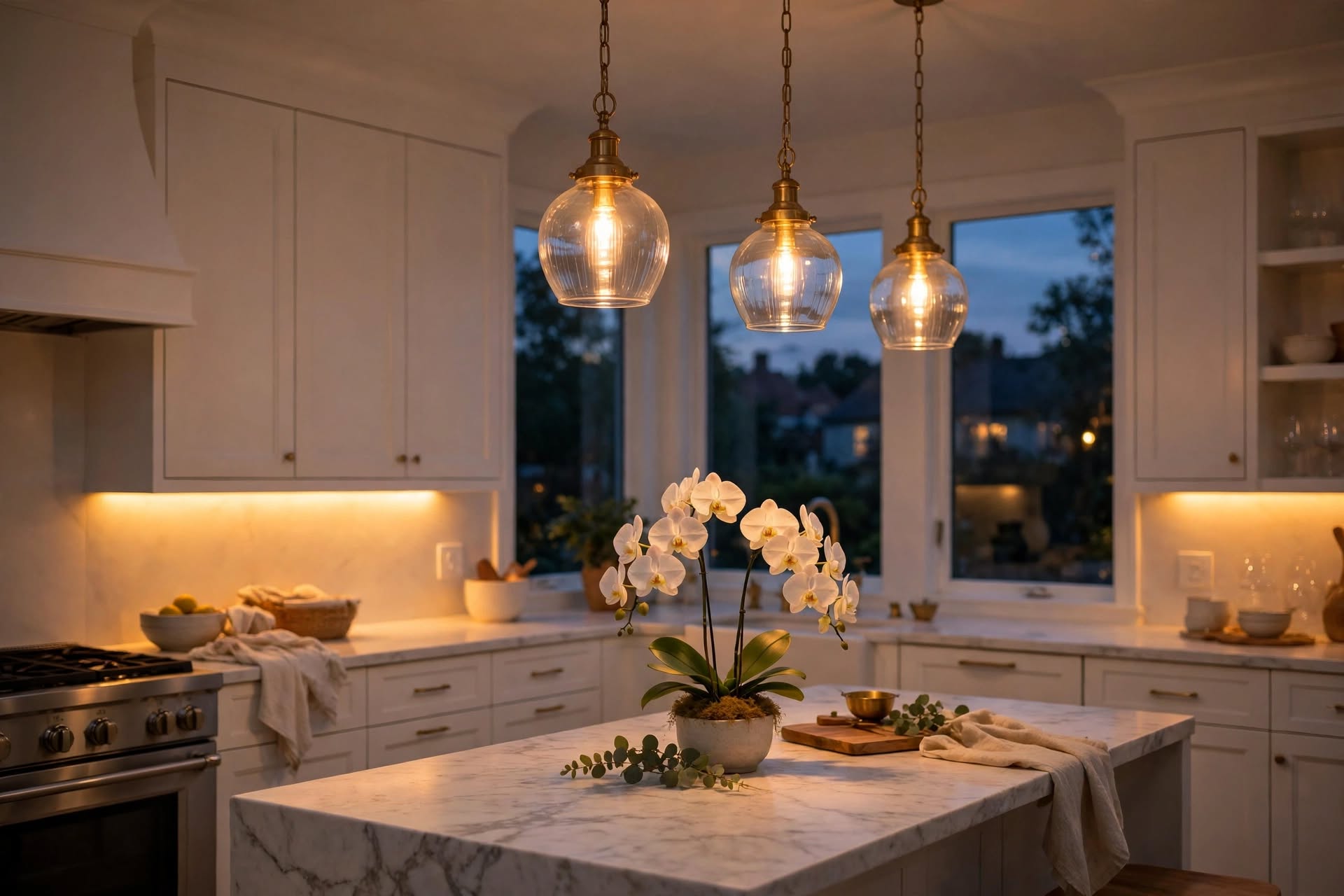

A beautiful kitchen can be more than a place to prepare meals. With white cabinetry, delicate gold hardware, natural stone, and carefully layered lighting, even an ordinary everyday room can feel like a small piece of jewelry.
You do not necessarily enter this kitchen to chop onions or boil pasta. You enter it to experience a different kind of everyday life — one where preparing coffee feels like a small ceremony and even the simplest details seem thoughtfully chosen.
Welcome to the kitchen that forgot it was merely a utility room. Welcome to the room that decided to become a tiara.
Part I: White Marble Countertops — The Beauty of Solidified Weather
Look at this island. That is not simply stone. It looks like solidified weather, a soft gray cloud caught in mid-drift and transformed into something you can lean against while drinking your morning coffee.
White marble has a history written into its surface. Formed from limestone under heat and pressure, natural marble develops distinctive veining that makes every slab different. Those delicate gray lines are not imperfections to hide. They are part of what gives the material its character.
In a white kitchen, a marble island becomes more than a practical work surface. It creates a natural focal point, introducing movement and subtle contrast without interrupting the calmness of the room.
There is, however, a practical consideration worth remembering: natural marble is porous and sensitive to acidic substances. Lemon juice, vinegar, and certain cleaning products can leave etch marks, while spills may cause staining if left unattended. Regular sealing and prompt cleaning help protect the surface, but marble will never be completely maintenance-free.
And perhaps that is part of its appeal.
Unlike perfectly uniform manufactured surfaces, natural stone develops a character of its own. Its beauty is not based on remaining untouched forever. It comes from the individual patterns and variations that make each piece unique.
If you love the appearance of marble but prefer something easier to maintain, quartz with a marble-inspired pattern is another option. It can recreate the elegant look of natural stone while offering different performance characteristics.
You do not have to choose between beauty and practicality. You simply need to understand what each material brings to your kitchen.
Part II: Gold Cabinet Hardware — The Jewelry of a White Kitchen
Observe the cabinet hardware. Thin lines of gold, barely there, like someone drew them with a pen made of sunlight.
Here is the secret of an elegant white kitchen: sometimes the smallest details make the strongest impression.
Gold cabinet handles are not simply decorative accessories. They create visual punctuation. Without them, a wall of white cabinets can feel continuous and slightly anonymous. Introduce brushed brass or warm gold hardware, and suddenly the cabinetry has definition.
The contrast is subtle but effective.
White reflects light, while gold introduces warmth. Together, they create a balance that feels sophisticated without becoming overly formal.
For a softer, more understated appearance, brushed brass is particularly attractive. Its muted finish works beautifully with warm white cabinets, natural stone, pale wood, and woven textures. Polished gold, on the other hand, creates a more noticeable decorative accent.
There is also a practical detail worth considering when choosing kitchen hardware: the finish matters.
Solid brass, brushed brass, and gold-toned plated hardware do not necessarily age in the same way. Some finishes are more resistant to everyday wear than others, and cleaning recommendations vary between manufacturers. Always check the product specifications before choosing.
The best hardware is not necessarily the most expensive. It is the hardware that feels comfortable in your hand, suits the proportions of your cabinets, and complements the rest of the room.
You are not simply opening a cabinet. You are adding a small detail that makes the entire kitchen feel considered.
Part III: White Orchids and Natural Decor — A Little Garden Indoors
Look at the windowsill. Three white orchids stand quietly in the light, like diplomats at a peace conference.
They bring something to this kitchen that marble and gold cannot provide: a living element.
A white kitchen can sometimes feel visually cold, particularly when it relies heavily on glossy surfaces, stone, and metal. Plants soften those hard edges. Their organic shapes introduce movement and make the room feel less like a showroom and more like a home.
White orchids are especially suitable for an elegant kitchen aesthetic. Their delicate flowers complement white cabinetry, while their sculptural stems add height without creating visual clutter.
But their beauty does not mean they require no attention.
Most commonly grown indoor moth orchids prefer bright, indirect light rather than harsh direct afternoon sun. They also need a suitable growing medium, good drainage, and watering that allows the roots to receive air between waterings. A kitchen windowsill can be a lovely location, provided it offers appropriate light and is away from cold drafts and excessive heat.
If maintaining living plants is not practical, a carefully chosen artificial orchid can provide a similar decorative effect.
The important thing is not the number of plants. It is their placement.
One elegant orchid on a windowsill, a small vase of fresh greenery on the island, or a branch in a simple ceramic vessel can introduce enough natural texture to soften an otherwise minimal interior.
And the mirror behind the flowers? It can reflect natural light and make the arrangement feel more substantial. In smaller kitchens, strategically placed mirrors can also create a greater sense of visual depth.
You did not simply place a plant. You introduced a little piece of calm into the busiest room of the house.
Part IV: Warm Kitchen Lighting — The Art of a Softer Evening
Look at the orchid glowing against the marble. Notice the soft light beneath the upper cabinets and the way the white surfaces seem to become warmer as evening approaches.
Lighting is one of the most important elements of an elegant kitchen.
A beautiful kitchen should not rely on a single ceiling fixture to illuminate every corner. Instead, different layers of lighting can create a room that works during the day and feels inviting after sunset.
Under-cabinet LED strips are particularly useful because they serve two purposes. They illuminate countertops for everyday tasks while creating a gentle decorative glow that makes the cabinetry appear lighter.
Pendant lights above a kitchen island provide another opportunity to introduce personality. Glass shades, brushed brass details, and simple sculptural forms can complement the jewelry-box aesthetic without overwhelming it.
For a warm and comfortable atmosphere, consider these elements:
- Under-cabinet lighting: Illuminates work surfaces and adds depth to white cabinetry.
- Pendant lights: Create a focal point above the kitchen island or breakfast bar.
- Recessed ceiling lights: Provide general illumination throughout the room.
- Warm-white bulbs: Often create a softer atmosphere than cooler lighting, particularly in the evening.
For a balanced result, many homeowners prefer warm-white lighting around 2700K–3000K for ambient areas. However, the ideal color temperature depends on the materials, natural light, and the tasks performed in the kitchen.
Good lighting should be both beautiful and functional. A countertop needs enough illumination for chopping vegetables and preparing meals, while the rest of the room can enjoy a softer, more atmospheric glow.
You are not simply turning on a light switch. You are changing how the entire room feels.
Part V: How to Create the Jewelry Box Kitchen Look
The beauty of this kitchen does not come from one expensive material or a single designer accessory. It comes from the relationship between several carefully chosen elements.
Fortunately, you do not need a complete renovation to introduce the same feeling into your own home.
1. Start with warm white cabinetry
Pure, cool white can sometimes feel stark. Creamy white, ivory, and soft off-white shades often create a more welcoming foundation. Choose a cabinet finish that works with your natural light and existing flooring.
2. Introduce gold or brushed brass accents
Replacing standard cabinet handles with warm metallic hardware is one of the simplest ways to update a kitchen. Keep the finish consistent across the main decorative elements for a more cohesive appearance.
3. Choose a countertop with natural movement
Marble, quartz, and marble-look porcelain can all contribute to this aesthetic. Look for subtle veining rather than overly dramatic patterns if you want to preserve the calm, elegant atmosphere.
4. Add natural textures
Rattan bar stools, linen curtains, wooden accessories, and woven baskets prevent a white kitchen from feeling too polished or sterile. These materials introduce warmth and make the space feel more lived-in.
5. Finish with thoughtful lighting and greenery
Warm under-cabinet lighting and one or two carefully placed plants can make a surprisingly significant difference. Avoid filling every available surface. A little breathing room is part of the elegance.
The secret is restraint. A jewelry box does not need to be covered in jewels. It simply needs a few beautiful things, arranged with intention.
Epilogue: Live in the Jewelry Box
So here is the truth, delivered with the gentleness of under-cabinet lighting:
Your kitchen does not need to be this grand. It does not need natural marble, gold hardware, or orchids that demand more attention than your weekly grocery list.
But it does need intention.
It needs one corner that says, I am worth beauty. It needs a surface that invites you to slow down. It needs a little warmth, a little texture, and perhaps one plant that makes the morning feel less hurried.
Because a kitchen is never just where you cook.
It is where coffee begins the day, where ingredients become meals, where conversations happen while someone searches for a missing spoon, and where midnight snacks somehow taste better when eaten directly from the kitchen counter.
It is a room of practical necessities, certainly. But it can also be a room of small pleasures.
Make your kitchen a jewelry box. Not for the guests who will photograph it or the strangers who will admire it online.
Make it for the person who stands at the counter at midnight, eating crackers over the sink, needing to remember that even ordinary moments can be luminous.
Now turn on the light.
The orchid is waiting.
Happy homemaking.