
You do not enter this room simply to get clean.
That is the first illusion we need to abandon. You enter this room to remember who you were before deadlines, notifications, and the endless business of being productive. Before you started treating your body like a vehicle for your brain.
The bathroom — yes, that room with the toothpaste stains and the questionable exhaust fan — can be more than a utility space. It can become the last little wilderness inside your home, a place where water, greenery, natural textures, and soft light remind you that everyday life does not always have to move at full speed.
Welcome to the rainforest bathroom: a space where stone feels ancient, plants bring the outdoors inside, and even an ordinary shower becomes something worth looking forward to.
And no, you do not need to live in Bali to create it.
Part I: Biophilic Bathroom Design — The Ecosystem You Didn’t Know You Owned
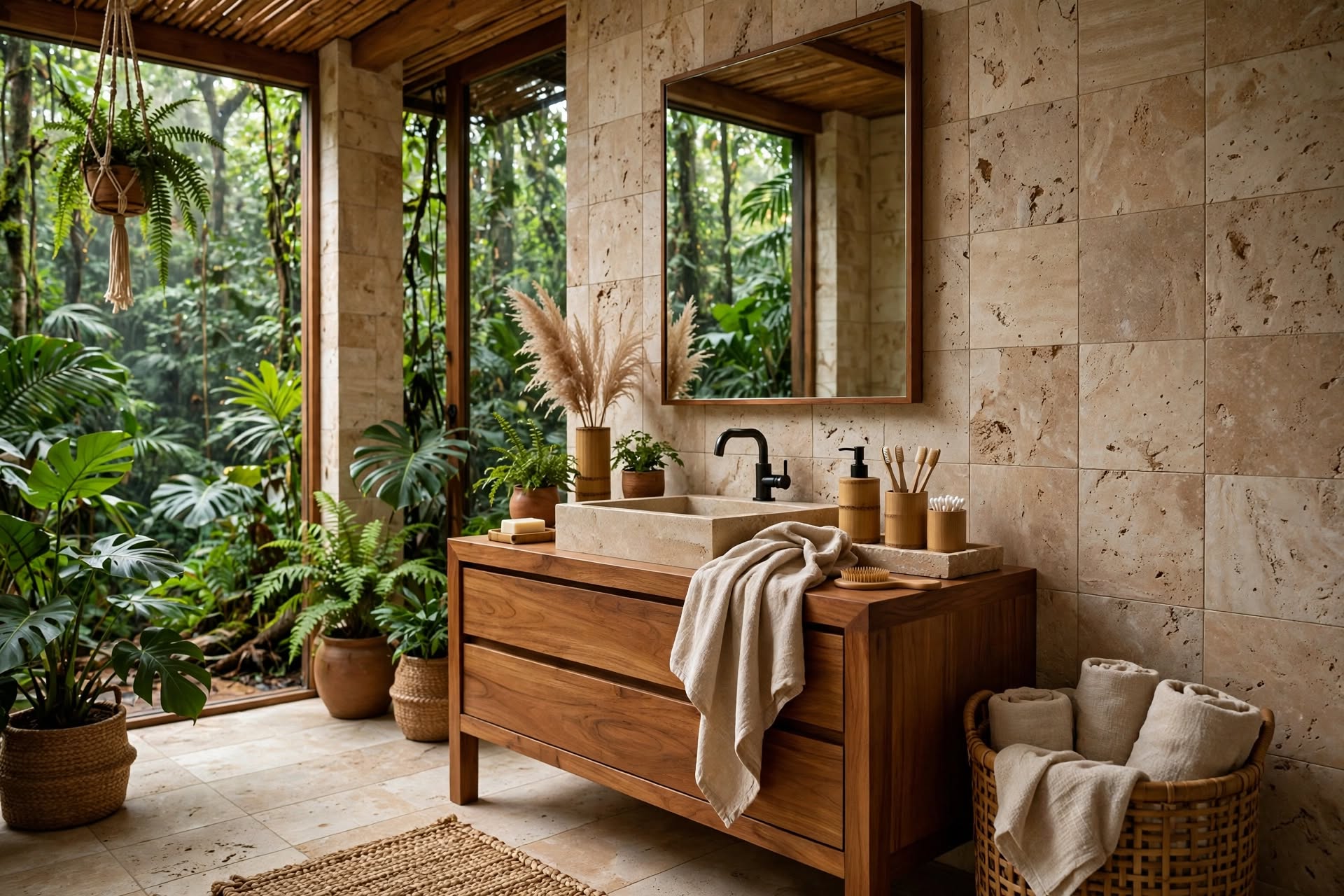
Look at this. A bathtub surrounded by glass and greenery. A sink shaped by natural stone. A mirror reflecting a garden that seems to have politely asked permission to grow indoors.
Here is the interesting part: bringing nature into a bathroom is not simply a decorative trend. It connects to an idea known as biophilic design — an approach to interiors that incorporates natural materials, patterns, plants, daylight, and views of the outdoors.
Humans have long interacted with natural environments, and research into biophilic design explores how these connections may support comfort and psychological well-being. A room filled with natural textures and greenery can feel calmer and more welcoming than one dominated by hard, artificial surfaces.
That is why a rainforest-inspired bathroom feels so different.
The stone basin introduces irregular patterns and earthy character. The wooden vanity softens the visual weight of the tile. The plants add movement and organic shapes that make the room feel alive.
Even a simple arrangement of greenery can change the atmosphere.
Consider a few plants that may work well in a bathroom, depending on the available light and growing conditions:
- Monstera deliciosa: Its large, sculptural leaves create an unmistakable tropical look. It generally prefers bright, indirect light.
- Boston fern: Its delicate, arching fronds bring softness and fullness to shelves or corners. It appreciates humidity but also needs suitable light and consistent care.
- Pothos: Its trailing vines work beautifully on high shelves and in hanging planters. It tolerates lower light better than many tropical plants, although brighter indirect light generally supports healthier growth.
- Peace lily: Its broad green leaves and white flowers suit a calm, spa-inspired interior. It prefers indirect light and evenly moist soil.
Not every bathroom is a natural greenhouse, however. A windowless room may still be humid after a shower, but humidity alone cannot replace the light plants need for photosynthesis. In bathrooms without natural light, consider suitable artificial grow lighting or realistic artificial greenery.
And remember: plants do not replace ventilation. A rainforest-inspired bathroom should feel fresh, not permanently damp.
You are not simply decorating. You are creating a small indoor landscape that makes the everyday feel a little less ordinary.
Part II: Natural Materials and Textures — The Physics of Letting Go
Zen masters spent decades learning to empty their minds. You can begin creating a similar sense of calm with something much simpler: a bathroom that feels good to enter.
Observe the materials.
Water flows downward. Steam rises. Light moves across stone, glass, and wood. These ordinary physical details shape how a bathroom feels, yet many interiors treat them as afterthoughts.
A rainforest-inspired bathroom works with the natural character of its materials.
Natural stone brings variation and depth. Marble introduces delicate veining, while travertine offers warmer, more textured patterns. Stone-look porcelain tiles can recreate a similar appearance with different maintenance requirements.
Wood introduces another kind of warmth. A teak vanity, wooden stool, or carefully chosen bath accessory can soften a room dominated by ceramic and glass. In wet areas, however, materials and finishes must be suitable for the conditions. Proper sealing, installation, and maintenance matter just as much as appearance.
Bamboo can also introduce a lighter, more relaxed character through accessories, storage baskets, and decorative details.
The secret is contrast.
Pair a smooth stone basin with a textured wooden vanity. Combine large-format tiles with soft linen towels. Let a woven basket sit beside a clean, minimalist bathtub.
These small differences prevent a bathroom from looking like a showroom where nobody is allowed to touch anything.
And here is the revelation: you do not need a bigger bathroom to create a more luxurious atmosphere.
You need a better sense of proportion.
A large mirror can visually expand a small room. A floating vanity exposes more floor area, creating a lighter impression. Glass shower screens help preserve sightlines, while large-format tiles reduce the number of visible grout lines.
Even one generous monstera leaf can introduce depth into an otherwise simple corner.
A stone tray on the vanity can organize everyday products while adding a little natural character. A wooden stool beside the bathtub creates a convenient place for towels, books, or bath accessories.
The room does not have to become a literal jungle. It simply needs enough natural detail to feel connected to the world outside.
Part III: Tropical Walk-In Showers — The Shower That Removes More Than Dirt
This is an outdoor shower wrapped in living walls. And before you say, “I don’t live in Bali” — wait.
The outdoor shower is not just a location. It represents a different relationship with water, light, and the surrounding landscape.
Imagine stepping beneath a rainfall showerhead while sunlight moves across a stone wall and greenery frames the glass enclosure.
Now translate that feeling indoors.
A tropical-inspired walk-in shower can be created with several carefully chosen elements:
Rainfall showerheads
A ceiling-mounted or generously sized rainfall showerhead creates a softer, more immersive visual experience. Choose a model that suits your water pressure and plumbing, rather than selecting one based on appearance alone.
Frameless glass enclosures
Clear glass allows the bathroom to feel more open and lets natural materials remain visible. In smaller bathrooms, this can be particularly effective because the shower does not visually divide the room.
Natural stone and stone-look tiles
Textured surfaces introduce depth and create a connection with outdoor landscapes. Porcelain tiles inspired by limestone, slate, or travertine can provide a practical alternative to some natural stones.
Natural light
A skylight or well-positioned window can transform a shower area. Daylight makes the materials more expressive and helps greenery feel like a natural part of the room.
Carefully placed greenery
Plants can soften the edges of the shower area, but they should be selected according to their light requirements and protected from constant direct water exposure. Place them where they receive suitable light and are not exposed to cleaning chemicals.
There is also an important practical detail: ventilation.
Warm showers create moisture, and a bathroom without effective ventilation can develop condensation, mold, and damage to finishes. An appropriate exhaust fan, adequate air circulation, and prompt moisture removal are essential parts of a successful rainforest-inspired design.
The goal is not to make your bathroom permanently humid.
It is to create the feeling of being surrounded by nature while keeping the room comfortable, clean, and functional.
The water does not have to wash away the entire world. Sometimes a quiet shower and a little natural light are enough to make the day feel different.
Part IV: Freestanding Bathtubs and Relaxing Bathroom Rituals — The Art of Doing Nothing
Look at this impossible room. A freestanding bathtub, warm stone beneath your feet, soft lighting, and greenery reaching toward the windows.
This is not simply a bathroom. It is a small invitation to slow down.
We have forgotten how to soak. We treat bathing like a task to optimize — in, wash, out, next. Yet a bathtub can become the visual and emotional center of an entire bathroom.
A freestanding bathtub is particularly effective in a rainforest-inspired interior because it resembles an object placed within a natural landscape rather than another built-in fixture.
Choose a sculptural white bathtub for a clean, contemporary look, or explore stone-inspired finishes for something more organic.
The surrounding details matter just as much:
- A wooden bath tray: Provides a convenient place for a book, soap, or cup of tea.
- Soft cotton towels: Introduce comfort and texture against stone and tile.
- A small stool: Adds a practical surface for folded towels and everyday accessories.
- Warm ambient lighting: Creates a softer atmosphere during evening baths.
- A simple plant arrangement: Brings natural shapes into the space without overcrowding it.
Candles can add another layer of atmosphere, provided they are placed safely away from towels, plants, and other flammable materials.
If you do not have room for a freestanding bathtub, the same feeling can be created around a built-in bath. A wooden bath panel, carefully arranged accessories, a textured wall, and warm lighting can achieve much of the same visual effect.
The rainforest bathroom does not demand luxury in the form of expensive fixtures.
It asks for thoughtful details.
The stone is cool beneath your hand. The towels are soft. The light is gentle. The plants stand quietly nearby.
Water is no longer just a tool for getting through the day. It becomes part of a small ritual you choose to enjoy.
Part V: How to Create a Rainforest Bathroom in Any Space
Perhaps you do not have floor-to-ceiling windows. Perhaps your bathroom is small, your budget is limited, or your landlord would not appreciate the idea of replacing every tile.
That does not mean the rainforest aesthetic is out of reach.
The atmosphere comes from a combination of color, texture, greenery, and light — not from the size of the room.
Here are five ways to introduce the look without a complete renovation.
1. Build a natural color palette
Start with earthy colors: warm white, soft beige, sand, muted green, and stone gray. These shades create a quiet background that allows plants and natural materials to stand out.
For a stronger tropical effect, consider a deep green accent wall or botanical wallpaper in a well-ventilated area.
2. Introduce greenery at different heights
Instead of placing every plant on the vanity, use different levels. A trailing pothos on a shelf, a medium-sized plant beside the bathtub, and a small arrangement on the windowsill create a more natural composition.
Choose plants according to actual light conditions. Do not assume that every humidity-loving plant will thrive in a dark bathroom.
3. Replace visual clutter with natural storage
Woven baskets, wooden organizers, ceramic containers, and simple trays help organize everyday products while supporting the overall aesthetic.
Keep frequently used items accessible, but avoid covering every available surface.
4. Choose lighting that feels like a warm afternoon
Combine functional bathroom lighting with softer ambient sources. Wall lights, suitable recessed fixtures, and well-planned mirror lighting can create depth without making the room difficult to use.
Always choose fixtures with the appropriate bathroom safety ratings for their installation locations.
5. Use one statement element
A sculptural bathtub, a stone basin, a dramatic tropical plant, or a beautiful rainfall shower can become the focal point.
You do not need all four.
A single well-chosen feature often creates a stronger impression than a room filled with competing decorations.
The best rainforest bathrooms are not necessarily the most expensive. They are the ones where every material, plant, and light source seems to belong.
Epilogue: Go Water Your Rainforest
So here is the truth, delivered with the gentleness of rainfall on broad leaves:
Your bathroom is not merely the room you visit between important things. It can be the room where you remember that ordinary life deserves beautiful moments, too.
The steam, the stone, the green leaves, and the soft light are not just decorations. Together, they create an environment that encourages you to pause, breathe, and enjoy the simple comfort of being at home.
You do not need a tropical garden outside your window. You do not need a bathtub that costs more than your first car. You do not even need a particularly large bathroom.
You need a little greenery, a few natural textures, thoughtful lighting, and a space that feels like it belongs to you.
Turn your bathroom into a rainforest. Not because it will look good on Pinterest, although it certainly might.
Do it because the world outside is already busy enough. Because your shoulders deserve a moment to relax. Because somewhere beneath all the efficiency, notifications, and endless forward motion, you are still the person who once understood that water, green, and quiet could be enough.
They still are.
Now go water your rainforest. The ferns are waiting.
Happy homemaking.