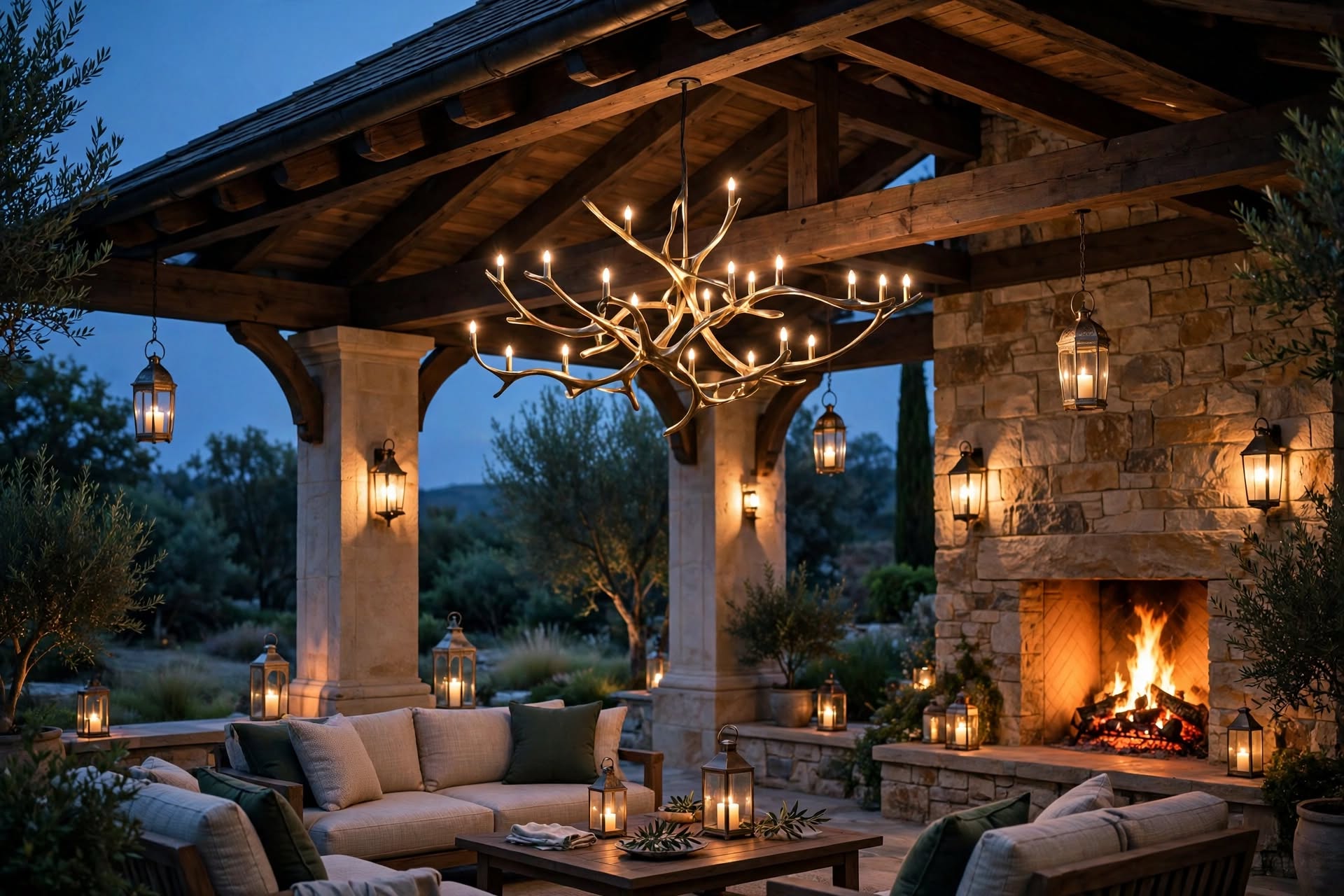

We spent ten thousand years building walls to keep nature out. Now we’re building roofs to invite it back in.
There is a peculiar moment in human history when a species looks at its own inventions and asks: what if we did the opposite?
We invented the living room — four walls, a ceiling, a screen, a fire source — to protect ourselves from rain, wind, and the general inconvenience of the outdoors. It was a triumph. Then, slowly, we started feeling nostalgic for the very things we had excluded. So we opened a window. Then a patio door. Then we removed the door entirely.
And now? Now we are building complete living rooms in our backyards, complete with stone fireplaces, weather-rated televisions, chandeliers, and wicker furniture that sometimes costs more than the sofa inside.
It makes no logical sense. Which is precisely why it works.
Welcome to the golden age of the outdoor pavilion: the room that shouldn’t exist, but absolutely must.
The Roof That Makes the Room Possible
Before choosing the fireplace, the television, or the chandelier, there is one decision that determines almost everything else: the roof.
A pavilion is more than a few posts holding up a decorative cover. It creates a defined outdoor living area, offering shade, a sense of enclosure, and a place where furniture can remain arranged rather than being moved every time the weather changes.
But not all pavilions are built in the same way.
The open timber pavilion
This is the classic version: a substantial wooden frame, a roof, and open sides. It feels connected to the garden because there is little separating the seating area from the surrounding landscape.
It works beautifully for people who want shade without losing the view, fresh air, or the feeling of sitting outdoors.
The solid-roof pavilion
A more substantial roof offers greater protection from direct sun and ordinary rainfall, depending on its design, slope, drainage, and local weather conditions.
This style is particularly useful when the pavilion includes an outdoor dining area, a lounge arrangement, or equipment that needs additional shelter.
The pavilion with partial privacy screens
Sometimes a little enclosure makes the space more comfortable. Slatted timber panels, decorative screens, or carefully positioned outdoor curtains can help soften wind, provide privacy, and create a more intimate seating area.
The important distinction is that a pavilion does not need four walls to feel like a room. It needs a clear purpose and a thoughtful arrangement.
And that is where the interesting decisions begin.
The Fireplace That Defies Gravity (and Common Sense)
Let’s start with the absurdity. A fireplace — a structure designed to contain and direct the heat and products of combustion — placed outdoors, but then immediately covered with a roof.
We didn’t trust the sky enough to leave the fire entirely exposed, so we built a chimney. We essentially recreated part of the indoors outside, then added ventilation to pretend we hadn’t.
But here is the real logic nobody talks about: a fireplace under a pavilion is not only about warmth. It’s about framing.
Inside your house, a fireplace can become background noise. Outside, beneath timber beams and open sky, it becomes theater.
The flames compete with the sunset. The stone catches the changing light. The surrounding garden becomes part of the scene.
You don’t simply have a fire in a pavilion. You witness it.
And the stone? That rough, substantial masonry surrounded by soft grass and delicate flowers? It’s a visual argument.
Stone says: I am permanent.
Everything else in your yard — the seasonal flowers, the patio cushions, your resolve to exercise more — is temporary. The pavilion fireplace gives the backyard a sense of permanence and structure.
Choosing the Right Fireplace
There are several ways to introduce fire into an outdoor pavilion:
- Traditional wood-burning fireplace: A dramatic architectural feature with real flames, crackling logs, and a strong visual presence. It requires careful planning for the firebox, chimney, smoke clearance, and surrounding materials.
- Gas fireplace: Offers convenient operation and more controllable flames, but still requires proper installation, ventilation, fuel connections, and compliance with local requirements.
- Outdoor fire pit: A more flexible option that can become the center of a seating arrangement without requiring a full masonry fireplace and chimney.
The right choice depends on the pavilion’s construction, intended use, local regulations, and the amount of maintenance you are prepared to handle.
One detail deserves particular attention: a fireplace beneath a roof must be designed specifically for that installation. Chimney height, clearances from combustible materials, roof construction, spark protection, and ventilation all matter.
Wooden beams and open flames are a beautiful combination visually, but they should never be brought together without a properly designed and professionally reviewed installation. Follow the fireplace manufacturer’s specifications and applicable building and fire-safety requirements.
TRY THIS
Make the fireplace the visual anchor of the pavilion, but don’t automatically place it in the exact center. An offset fireplace can create a more relaxed arrangement, especially when the seating area is positioned around it.
Symmetry is not compulsory. Good circulation and safe clearances are.
The Television That Betrayed the Living Room
There was a time when going outside meant leaving screens behind.
That time is dead. We have replaced it with weather-rated televisions, outdoor sound systems, and cables carefully concealed within the architecture.
At first glance, a television in a backyard pavilion is the ultimate contradiction: come enjoy nature, but also don’t miss the playoffs.
Yet this contradiction reveals something interesting about modern outdoor living. We don’t necessarily want to choose between worlds. We want to layer them.
The outdoor pavilion television is not an invitation to watch more television. It is a declaration that the backyard has become a genuine living space.
The indoor living room just got a competitor. And the competitor has better air, more natural light, and no pile of unfolded laundry in the corner.
How to Make an Outdoor TV Work
A television designed for an indoor living room should not automatically be treated as suitable for an exposed outdoor environment.
When planning an outdoor screen, consider:
- Weather protection: Choose equipment specifically rated for the exposure conditions where it will be installed. A covered pavilion is not necessarily a completely protected environment.
- Sunlight and glare: Position the screen away from direct sunlight where possible. Bright outdoor conditions can make ordinary screens difficult to watch.
- Temperature range: Check the manufacturer’s permitted operating and storage temperatures.
- Electrical installation: Outdoor outlets, wiring, and connections should be suitable for the location and installed according to applicable electrical requirements.
- Viewing distance: The screen should be visible from the main seating area without dominating the entire pavilion.
A weather-rated TV mounted on a properly designed wall or dedicated structure can look surprisingly integrated.
However, mounting a television above or beside an outdoor fireplace requires careful attention to heat exposure. Check the fireplace and television manufacturers’ clearance and temperature requirements before deciding on the location. A stone surface does not automatically make the installation safe.
QUICK IDEA
Treat the screen as one part of the seating arrangement rather than the pavilion’s only focal point. If the architecture allows it, arrange furniture so people can enjoy the fireplace, the garden, and conversation without every seat being forced to face the television.
The screen should have a place in the room.
It should not own the room.
The Chandelier in the Wilderness
If the fireplace is theater and the television is compromise, the chandelier is pure, unapologetic ambition.
Hanging a beautiful chandelier — crystal, wrought iron, or something with a more understated modern shape — from a wooden pavilion roof is a statement so unexpected it circles back to genius.
We are saying: this space is not just the yard. This is a room that simply has no fourth wall.
The chandelier doesn’t merely illuminate the pavilion. It gives the architecture a focal point. It takes the space from covered patio to outdoor living room.
But the real magic happens when the light is dimmed, the lanterns begin to glow, and the fire becomes part of the evening atmosphere.
Suddenly, the chandelier is no longer competing with the stars. It becomes another small constellation.
A reminder that humans are the only species that looks at darkness and thinks: pretty, but could use more sparkle.
Layering Outdoor Lighting
A successful outdoor lighting scheme uses several sources rather than relying on one powerful fixture.
Consider three layers:
- Ambient lighting: A ceiling fixture or chandelier provides general illumination.
- Accent lighting: Wall lights, lanterns, and subtle architectural lighting create depth.
- Atmospheric lighting: Low-level decorative lights and a safely installed fire feature add warmth and character.
For any electrical fixture exposed to outdoor conditions, choose products with an appropriate weather-protection rating for their exact location. A fixture under a roof may still be exposed to humidity, condensation, wind-driven rain, and temperature changes.
And don’t forget the practical side. Steps, pathways, and changes in floor level should remain visible after dark.
SAVE THIS COMBO
Combine a dimmable overhead fixture with warm wall lights and a few decorative lanterns. Let the brightest light serve a practical purpose, while softer sources create the evening atmosphere.
The Wicker Throne Room
Let’s talk about the furniture.
Not the Adirondack chairs of your childhood, splintered and sun-bleached, that smelled like mildew and regret.
Modern pavilion furniture is deception disguised as seating.
Wicker and rattan-inspired furniture outdoors shouldn’t work quite as well as it does. Natural woven materials can be vulnerable to moisture, prolonged sunlight, and changing temperatures. Yet here we are, arranging substantial sofas and armchairs beneath timber roofs as if the laws of decay don’t apply.
The trick is choosing materials that suit the environment.
Choosing Outdoor Furniture
Synthetic wicker
Often made from weather-resistant synthetic fibers, this is a popular option for outdoor seating. It offers the woven appearance of traditional wicker while generally being easier to maintain.
Look for products designed specifically for outdoor use, with suitable frames and cushions.
Teak and other outdoor hardwoods
Teak is valued for its natural durability and attractive grain. It can develop a silvery-gray appearance over time if left untreated, which some people love and others prefer to prevent through appropriate maintenance.
Powder-coated metal
Metal frames create a cleaner, more contemporary look. Check the finish, hardware, and manufacturer’s guidance for outdoor exposure, particularly in coastal or humid environments.
Performance fabrics
Outdoor cushions should be made from fabrics designed to handle the conditions they will experience. Look for information about UV resistance, water resistance, cleaning, and whether cushions should be stored during prolonged wet weather.
The Arrangement Matters More Than the Furniture Set
A beautiful collection of outdoor furniture can still feel uncomfortable if it is arranged poorly.
Think about how people will use the space.
A U-shaped arrangement around a coffee table encourages conversation. Two sofas facing each other create a relaxed social setting. A pair of lounge chairs near the fireplace makes a quieter corner for reading or enjoying an evening drink.
Leave enough space for people to move between the seating, dining area, and any outdoor cooking equipment.
And don’t feel obliged to purchase an entire matching collection.
Wicker sofas with stone side tables, teak coffee tables with metal lanterns, and neutral cushions in different textures can make a pavilion feel collected over time rather than ordered from a single catalog.
The furniture should look comfortable.
More importantly, it should actually be comfortable.
The Materials That Belong Outside
The materials you choose determine whether the pavilion feels like a natural extension of the garden or a living room that has been accidentally left outdoors.
The best designs usually rely on a small number of materials repeated throughout the space.
Wood brings warmth.
Timber beams, wooden ceiling details, and teak furniture soften the harder surfaces of stone and metal. The type of timber, protective treatment, drainage, and maintenance schedule should all suit the local climate.
Stone brings weight and permanence.
Natural stone, brick, and carefully selected masonry finishes can make a pavilion feel grounded. They work particularly well around fireplaces, outdoor kitchens, and structural features.
Metal adds definition.
Black or dark bronze metal can introduce contrast through lighting, furniture frames, railings, and architectural details.
Textiles make the space feel inhabited.
Outdoor rugs, cushions, and curtains add softness and color. Choose materials designed for exterior use, and consider how they will be stored or protected during wet and cold periods.
Three Pavilion Styles Worth Considering
Rustic Woodland
Natural timber, irregular stone, dark metal, and earthy textiles create a pavilion that feels connected to a forest garden.
Modern Organic
Light stone, warm oak, cream upholstery, and restrained black accents produce a cleaner, more contemporary atmosphere.
Mediterranean Outdoor Living
Pale masonry, terracotta, woven furniture, linen-inspired fabrics, and olive-green accents bring a relaxed holiday feeling to the backyard.
The secret is restraint. A pavilion does not need every attractive material at once. Choose two or three dominant finishes and allow the textures to do the work.
The Invisible Wall
Here is the final surprise, the logic that ties the fireplace, the television, the chandelier, and the wicker together:
The pavilion has no walls. Not really. Four posts and a roof. Yet it can feel more enclosed than some rooms inside your house.
Why?
Because enclosure is not only about walls. It’s about intention.
The roof says: we are staying.
The fireplace says: we are gathering.
The furniture arrangement says: we are facing each other.
The absence of walls doesn’t make the space feel incomplete. It allows the garden to become part of the room.
And this is where the details matter.
A carefully positioned privacy screen can soften the view of a neighboring property. Outdoor curtains can provide a little separation when needed. Planters can define the edges of the seating area without creating a solid barrier.
Plants are especially useful because they bring the garden into the pavilion rather than making it feel like a separate decorative feature.
Tall ornamental grasses can soften the perimeter. Climbing plants may introduce greenery around suitable structures, provided the supports and materials can handle their growth. Large planters can create natural divisions between dining and lounge areas.
The result is not a fully enclosed room.
It is a place with enough structure to feel comfortable and enough openness to remain connected to the outdoors.
We built the first houses to keep nature out. We build pavilions to let it back in — but politely. With a roof. And a chandelier. And perhaps a remote control.
The Pavilion That Works in Real Life
A beautiful pavilion should be more than an impressive photograph.
It needs to work on ordinary afternoons, during unexpected showers, and on evenings when the temperature drops.
Before committing to the design, consider a few practical details.
Think about the direction of the sun.
A pavilion that receives strong afternoon sunlight may need a different roof design or additional shading from one positioned beneath mature trees.
Consider the prevailing wind.
An exposed seating area can become uncomfortable even when the roof provides shade. Partial screens or carefully positioned planting may help, but the structure must still allow appropriate ventilation.
Plan for rainwater.
Roof slope, gutters, downpipes, and drainage should be considered from the beginning. Water should not collect around the pavilion’s posts or flow directly into the seating area.
Keep pathways practical.
The route from the house to the pavilion should be convenient, particularly if the space includes an outdoor kitchen or dining area.
Think about seasonal storage.
Cushions, decorative textiles, and smaller accessories may need to be stored or protected during winter or prolonged wet weather. Built-in storage or a nearby garden shed can make maintenance easier.
Check local requirements before construction.
Depending on the size, location, foundations, roof, fire features, and services, a pavilion may be subject to local planning, building, or safety requirements. Check the applicable rules before construction rather than assuming that an open-sided structure is automatically exempt.
These details may not be the most exciting part of the design process.
But they are what allow the beautiful parts to work.
Why This Room Should Exist
A pavilion is an unusual investment.
It is a room you build without walls, furnish with outdoor furniture, illuminate with a chandelier, and sometimes equip with a television. It is a place where the weather is invited in, but only to a certain extent.
It is also a reminder that a beautiful backyard does not have to be something you simply look at through a window.
It can become a place to eat, read, gather, celebrate, and spend an evening without checking the time.
The fireplace gives it a focal point. The furniture gives it a purpose. The roof gives it structure. And the open sides allow the garden to remain part of the experience.
The pavilion does not need to imitate the living room inside your house perfectly. It needs to offer something the indoor room cannot: the feeling of being sheltered while still being outside.
We spent thousands of years learning how to build walls.
Perhaps building a room without them is not such an absurd idea after all.
So bring out the chairs. Turn on the lights. Let the garden become part of the evening.
And when someone asks why you built an entire room in the backyard that you didn’t technically need, you can give them the simplest possible answer:
Because sometimes the best room in the house is the one that isn’t in the house.